The EOS 6D Will Not be Replaced by a Mirrorless Camera

Re: The EOS 6D Mark II Will Not be a Mirrorless Camera

preppyak said:
Crosswind said:
How much smaller can it be without loosing its perfect ergonomics? Down to mirrorless is out question. Down to the size of the SL1 is very unlikely. But could it at least shrink down to the size of a xxxD? Or are we talking more about millimeters, rather than centimeters...
The short answer is a lot smaller, but, then it wont have an EF mount. Which means it'd need an entire lens line, which is a 5+ year reality for useable professional system. Hell, Sony's only just getting there here in 2016, three years into their A7 line. And it certainly is nowhere close to the variety of the EF line.

A Sony a7 + kit lens is much smaller than a 6D + kit lens (comparison). And I find the ergonomics of that system just about as good. But I sacrifice a lot in AF performance for that weight difference. And battery life. And a variety of other very useful things

unless you are talking mount diameter, changing the registration distance of the EF mount wont' change much at all.

in most cases, the depth of the flash food over the viewfinder and/or the grip exceeds that of the mount.
 
Upvote 0
Re: The EOS 6D Mark II Will Not be a Mirrorless Camera

3kramd5 said:
Well, you'll have a camera which can provide mirrorless functionality and SLR functionality, but not at the same time; you have to choose. For mirrorless functions, the mirror has to be locked up (drawing power by the by), hence SLR advantages are lost. For SLR functions, the mirror has to be down, hence mirrorless advantages are lost.

yes, but when you usually use those MILC advantages, you atypically aren't also looking at times in which you need SLR advantages and vis versa.

canon's hybrid viewfinder tech may augment this enough .. but that's not coming out on a lowly 6D.

a hood mounted external EVF is such an easy solution though for the video crowd.
 
Upvote 0
I don't care about that other website. CANON WTCH. There is no genuine log in section that I feel safe with. Anyway here's what I was about to post there:

You did hedge a bet a few days ago and you were quite emphatic about it!

My opinion is that a 6D Mark II will eventuate.

A full frame mirrorless will come in 2018 for those that want it. Canon have invested too much in their dual pixel tech that quite frankly has been overlooked by most reviewers, but not customers.
 
Upvote 0
I don't care either way. This is how I will do this as a long time investor in Canon:

A) I will get a 5D Mark IV to do misc, underwater housing, people, parties, wide field/landscape astro. It is the best at everything above ISO 200 - DR and noise. The D5 might beat it above ISO25600. I don't care about that.

B) Next gen Sony A7rIII and have it full spectrum converted.
It means that I will have everything from infrared, astro (deep sky and wide field), and normal landscape shooting from all my Canon mount lenses with the new side slot in filter converter mount (heaps cheaper for filters - just pick your spectral range!) ****** it.

I will have a two cam system that will nail everything I need for the next 5 years.
 
Upvote 0
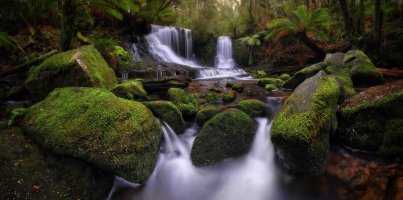
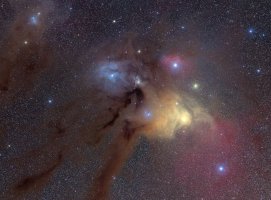
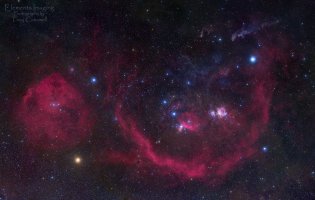
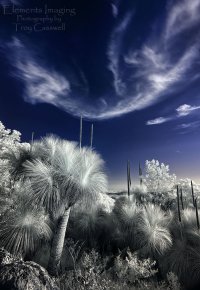
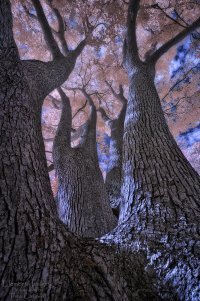
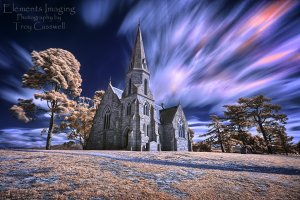
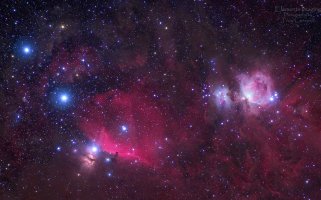
Here's a few more just to demonstrate how versatile a full spectrum camera can be. This includes the waterfall in the previous post. One camera - different filters!
 

Attachments

  • SF135 Antares River 160418.jpg
    SF135 Antares River 160418.jpg
    891.1 KB · Views: 175
  • Orion135 - Finshed - 160602.jpg
    Orion135 - Finshed - 160602.jpg
    772.5 KB · Views: 178
  • Sunset IR Grasstrees 403.jpg
    Sunset IR Grasstrees 403.jpg
    210.9 KB · Views: 1,158
  • Reaching Up - 150816.jpg
    Reaching Up - 150816.jpg
    479.8 KB · Views: 160
  • IR-Church---Finished.jpg
    IR-Church---Finished.jpg
    551.9 KB · Views: 156
Upvote 0
Thank you Don and LordofTackle!

This is about is about the 6D, and how it is (esp when converted to full spectrum).

Back to my original point - I do see both a full frame mirrorless cam in 2018 and a 6D mark II beforehand.

But, I do see myself getting a 5Div (so hammered and so underrated in reviews, and fits my existing underwater housing),
and also a next gen Sony A7rIII (and get it FS converted) to fulfil my wide spectrum fetish.
 
Upvote 0
cazza132 said:
Thank you Don and LordofTackle!

This is about is about the 6D, and how it is (esp when converted to full spectrum).

Back to my original point - I do see both a full frame mirrorless cam in 2018 and a 6D mark II beforehand.

But, I do see myself getting a 5Div (so hammered and so underrated in reviews, and fits my existing underwater housing),
and also a next gen Sony A7rIII (and get it FS converted) to fulfil my wide spectrum fetish.

You are welcome troy :)

It's a Bit off Topic but: Can you elaborate more on the Full spectrum conversion? How? Where? And how you work with it? Do you Need Special Filters? Could you Point me somewhere where i can learn more about it?

Thanks in advance
Sebastian
 
Upvote 0
Another point - so many people have whinged and bitched about the 5DIV.
Right now, it is the best all round rock solid cam on the market.
And almost everyone has overlooked the DPAF and its potential.
Upload some freak AI software/firmware (Canon needs to haul ass on this) and you have 3D tracking and -4ev AF that knocks the block off anything in the market.
 
Upvote 0
Sorry Sebastian, yes a bit off track. I do kinda use my modded 6D without its mirror. It is always up.

A full spectrum 6D gives the following options:
On lens filters (77mm (depending on lenses in bag) range of IR filters, the B+W 403 IR+UV, astro filters (suited to longer focal lengths) and on lens IR/UV cut filters) - full AF
Clip in filters - live view contrast detect only. Normal white balance UV/IR cut filters (normal cam), IR 642nm band pass (best IR filter out there), all astro filters (Ha, OIII, SiII, etc) when angle of incidence is minimised.

This is why a full spectrum mirrorless option is better - have a side flip out filter lens adapter so you don't have to remove the lens to change the filter. And there are loads of filter options (esp for astro) that are much cheaper and much easier to manage this way.

I cannot see a Canon FF mirrorless that can keep ahead of the game for pure IQ grunt alone in the next 3-4 years, but the dual pixel system will give it capabilities none can match for AF (if worked and implemented with a sort of subject AI).
 
Upvote 0
Awesome images Troy!

I very much like my 6D. Use mostly for landscapes and nature. What is needed most (for me) would be an upgrade in regarding focus points, but overall, very pleased. If I were into bird flight photography, or fast sports (the 6D works fine at running events) I would certainly prefer a 5DIV.
 
Upvote 0
LordofTackle said:
cazza132 said:
Thank you Don and LordofTackle!

This is about is about the 6D, and how it is (esp when converted to full spectrum).

Back to my original point - I do see both a full frame mirrorless cam in 2018 and a 6D mark II beforehand.

But, I do see myself getting a 5Div (so hammered and so underrated in reviews, and fits my existing underwater housing),
and also a next gen Sony A7rIII (and get it FS converted) to fulfil my wide spectrum fetish.

You are welcome troy :)

It's a Bit off Topic but: Can you elaborate more on the Full spectrum conversion? How? Where? And how you work with it? Do you Need Special Filters? Could you Point me somewhere where i can learn more about it?

Thanks in advance
Sebastian

Most (all?) DSLRs filter infrared light before it hits the sensor. If you remove the internal filters (replace them with clear glass to maintain the optics) and want to take shots which don't include false color and other artifacts of near IR, you therefore need to use an external filter.
 
Upvote 0
While we're at it, and it's Christmas, here's what else I have on my wish list. I want an EF mount, flexible built in flash, full sized battery, IBIS, 4K video, crop mode/digital zoom, wireless charging, Bluetooth, tilting touchscreen, and the ability to add custom apps, giant battery and compact body with good grip.
 
Upvote 0
3kramd5 said:
LordofTackle said:
cazza132 said:
Thank you Don and LordofTackle!

This is about is about the 6D, and how it is (esp when converted to full spectrum).

Back to my original point - I do see both a full frame mirrorless cam in 2018 and a 6D mark II beforehand.

But, I do see myself getting a 5Div (so hammered and so underrated in reviews, and fits my existing underwater housing),
and also a next gen Sony A7rIII (and get it FS converted) to fulfil my wide spectrum fetish.

You are welcome troy :)

It's a Bit off Topic but: Can you elaborate more on the Full spectrum conversion? How? Where? And how you work with it? Do you Need Special Filters? Could you Point me somewhere where i can learn more about it?

Thanks in advance
Sebastian

Most (all?) DSLRs filter infrared light before it hits the sensor. If you remove the internal filters (replace them with clear glass to maintain the optics) and want to take shots which don't include false color and other artifacts of near IR, you therefore need to use an external filter.

Thanks SUNDOG04 and Click

@ 3kramd5 - mostly correct, but I use clip in filters mounted between lens and camera with my full spectrum 6D. They allow you to shoot with any lens - including unfilterable lenses (front mount at least), like fisheye, 11-24mm, etc. But, you do loose your mirror and its AF in normal operation (mirror stays up), so LV focus only. A company called Astronomik makes them: http://www.astronomik.com/en/
I have clip in filters for the following:
- OWB filter - a filter that allows you so shoot like a normal camera (without use of mirror as above)
- 'L' filter - for astro work that has IR/UV cut while maintaining Ha (hydrogen alpha) sensitivity
- 12nm Ha band pass filter - to target Ha emission nebula only (astro)
- 642nm IR filter - a good infrared pass filter that gives shutter speeds similar to a normal camera (shoot 1/200s with normal cam = this with fs cam with same settings)

On lens filters are also an alternative, which I sometimes use:
- B+W 403 dual band IR/UV (blocks visible light);
- light pollution filters (astro);
- various IR filters (590nm, 630nm, 650nm, 680nm, 720nm, 760nm, 850nm and 950nm) for different subjects.

My wish is that Canon release a full frame mirrorless camera with the following:
- 5DIV or next gen 5Dsr sensor;
- DPAF tech with next gen AF AI scene recognition that's better than current;
- shallower flange distance to allow an adaptor with slot in filters;
- IBIS is an overused and abused acronym (a whinging point against Canon) because in-lens gyro-stability is still better for long lenses, and the 16-35mm IS f4 L is already outstanding at IS!
- A touch multi-directional flip out screen while maintaining the weather integrity of the 6D (cannot expect 5DIV integrity)
 
Upvote 0