scyrene said:
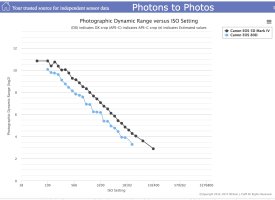
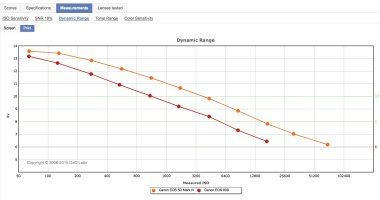
Sure, but wasn't the argument that a crop camera is better in some circumstances than FF because you get more pixels on target? Maybe someone else was saying that. The difference may be greater at higher ISOs, but it's there at base ISO too, surely? The whole thing is rather muddy, anyhow.
But I'm sure the 80D is an excellent camera. I considered it too, when it came out, as it had such a high pixel density (along with the 750/760D). I went the other route, and got the 5Ds, which allows the best of both worlds, but is obviously more expensive and has lower fps than the 80D. As for ISO 100, once again all I can say is: lucky you! I have shot almost no bird photos at base ISO, and even ISO 400 is low by my standards, but I live in a not-very-sunny place, and often shoot at f/10. Everyone's different

I was trying to say that if you have a focal range constraint -- and I was using 600mm as an example, because this is the biggest lens I own -- there are times when you just can't get enough pixels out of a 20-30 megapixel full frame camera. Because sensor is 1.6x larger, and the pixel density is only a little bit larger, there will be times when you get a gorgeous photo where a bird is just 600 pixels tall, and that's not a usable photo no matter how good those 600 pixels are.
Although I was using eagles as examples, those are pretty easy to photograph using shorter focal lengths and FF cameras because they're such big birds. There are plenty of birds that are much smaller, and often shy, and I just can't get close enough.
I live in the west coast of Canada, where it's often rainy. But birding is a hobby, not a job, so I only go photographing birds on clear days. Mostly, this evolved simply because I like taking hikes in sunshine, not in rain
I also don't enjoy trekking in mud.
AlanF said:
+1
I too have never shot a bird photo at iso 100. As I invariably use iso 640 or higher, on FF, APS-C and 5DSr, all of my photos must be unacceptable to Talys. Using the sunny 16 rule for exposure, a fully illuminated bird on a bright sunny day at f/16 at iso 100 would require an exposure of 1/100s, or 1/400s at f/8. A top bird photographer like Ari Hazeghi uses exposures of 1/2500s or faster at f/8, which requires an iso of usually more than 800 (see eg http://arihazeghiphotography.com/blog/how-to-set-exposure-in-bird-photography/) and goes up to 3200 or so on FF in poorer light. His work must be unacceptable too.
I think ISO 600 photos on an 80D looks grainy, whereas ISO 600 photos from a 5D4 looks pretty good. I have never had the pleasure of using a 5DS, 5DSR, or 1D so I can't say with those. If you don't/can't shoot at low ISOs and you want pictures that are free of digital noise, I'd definitely recommend a full frame camera. If a bird is too far away to get a good picture because of resolution and focal range, c'est la vie -- be patient and pray it comes closer, sneak up if you can, or go and buy a ridiculously expensive longer lens or low aperture lens that you can throw a teleconverter on.
An exposure of 1/2500 at f/6.3 ISO 100 does happen. It occurs on a clear day, when the sun is behind you, and you're shooting a bird in flight. It's also the best way to capture the bird's plumage.
A perched bird, or one that's nesting does not require 1/2500. For those shots, I can usually take them at 1/500 f/6.3 ISO 100, or at worst, 1/250. Just use a tripod on big lens; handheld is fine on 70-200L or 70-300 if you have IS and are willing to shoot a few extras and cull ones that aren't quite in focus.
I understand a lot of people don't like using tripods; if that's the case, and you want to use a heavy lens, then, yeah, you need to raise the ISO so that you can raise the shutter speed. But hey, life is full of compromises, right? I'm just suggesting the one where you use a crop sensor, a tripod, low ISO, and long telephoto range as one solution to capture nice bird pictures at far distances; I've never said it's the
only way to do it.
By the way, I initially responded because someone posted that people should just give up on APS-C -- that it and EFS are essentially a waste of time. I just fundamentally disagree. As someone who has used both, I've chosen to stay with APS-C for my birding, a conscious choice after
wanting to buy a FF camera. On the flip side, I think APS-C and EFS lenses are a great way to get people into photography and ILCs as a hobby, while the investment required to make a decent go of FF is daunting to most.