Where has the post with the complaint about the 80D's IQ gone?

May 11, 2016
153
53
6,201
Eearlier I read a post from a guy (sorry, can't remember the posters name) who more or less said that he had had it with his 80D. The complaint was (IMOW) that the IQ was bad when lighting was poor.

I think it was in this subforum, but I cannot find it any more.
Has it been put in another subforum, perhaps with another title?
 
Neuro's right about YeungLinger being the original poster. If you can pm him you might find out where the post went.
Maybe he will read this post and respond here. I read it too with much interest on the problems being experienced with the 80D. I think the post was "I'm done with 80D". I got the impression that the 60D did better the 80D in what he was shooting and that he was on his second body. I was interested to find out the end result and am sorry to not being able to find the post. I'm sure other members can be more helpful.
 
Upvote 0
haggie said:
Eearlier I read a post from a guy (sorry, can't remember the posters name) who more or less said that he had had it with his 80D. The complaint was (IMOW) that the IQ was bad when lighting was poor.

I think it was in this subforum, but I cannot find it any more.
Has it been put in another subforum, perhaps with another title?

Ok, I deleted it because the title was written in a moment of frustration with my second 80D.

I sent back the 80D due to an overall dissatisfaction with the IQ in sunlight (not overcast, soft glowy light). The demand for samples was reasonable, but I looked at the images that I based my decision on, and knew that if I posted those, there would be lots of fuss about whether they were bad enough to reject the 80D altogether. In my opinion they were, but didn't want to get into lots of explanations about technique, shutter speed, focal length, and on an on.

I felt the camera struggled in light my 20D, 60D, and 5DIII handled well. In fact, most of the worst images, about 90% of what I shot, had already been deleted just due to culling.

So, my opinion is that for anything other than family fun or very well controlled lighting situations, the camera, because of IQ, is not for me. But to say that it is a failure is too harsh, and so I just deleted the complaint.

Working mornings and caring for two babies from mid-afternoon til midnight, I've decided to let it go. Would I ever give the 80D another chance? Maybe next year? Possible, but not likely. Just thought the IQ, especially with longer lenses (100-400mm) was not pleasing.

Just one consumer's opinions!
 
Upvote 0
That's a shame. There was a comment in there by Mount Spokane Photography (I think) about the M5 being slightly disappointing by having the features of a P&S based on a read through of the manual, and I was keen to see that thought elaborated.
 
Upvote 0
The second body did not have the AI Servo issues the first one clearly did. Other than post out of focus images, there isn't much to show for the first body.

The second body had good AI Servo performance, and I set it different ways, including tracking where I chose the starting AF point. No complaint about it.

One technical issue I'm certain about--the histogram did not indicate blown-out areas when they were clearly present in DPP and LR. In fact, the histogram rarely got close to the right edge even when I was overexposing a bit. On the other hand, I could recover much more from the highlights than on my 60D, so that might have been part of a learning curve.

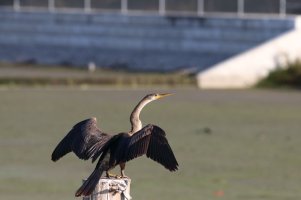
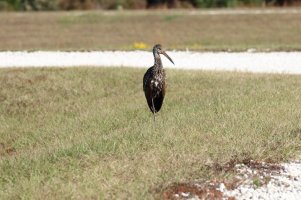
Just to try not to be too annoying or coy or vague, here are some samples. I only kept a few of my "non-keepers." It isn't normal to keep stuff that isn't up to par, but when I hit a critical mass of images that just did not satisfy, the impulse hit and I sent the camera back.

Next time, before posting something as controversial or momentous, I will be methodical, a little scientific in my approach. I feel I made the right decision to send it back, but I didn't gather enough data to put this into a negative review form. So, apologies for such a vague post, what amounted to a brief rant without the evidence.

To sum up--the two 80D's I tried were problematic, and, for me, not my camera. I really wanted it to work because of the fantastic ergonomics, specs, and video features.

Here are some that just didn't cut if for me. These are unedited, converted by DPP.
 

Attachments

  • IMG_0517.JPG
    IMG_0517.JPG
    296.2 KB · Views: 200
  • IMG_0817.JPG
    IMG_0817.JPG
    1,019.7 KB · Views: 155
  • IMG_0856.JPG
    IMG_0856.JPG
    550.5 KB · Views: 179
Upvote 0
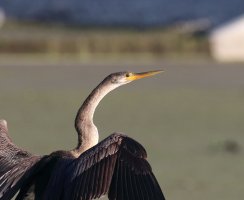
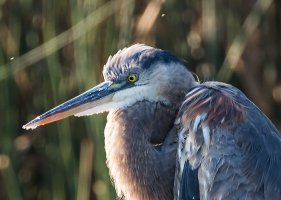
Here's a crop of one of the birds. ISO 400. Still no edits (other than the crop).

See the glare along the bottom of the throat? I don't like the way specular highlights are being handled at all. When the light is soft, it really doesn't show up, and, except for a bit more noise than expected after reading reviews, portraits are pleasing.

Sports or wildlife in harsher light, it just doesn't work for me.

Again, my standards should be the 20D and the 60D, but I have been spoiled by the 5DIII, and I might not be able to avoid some comparison to its noise, buttery transitions, and overall IQ.
 

Attachments

  • IMG_0517.JPG
    IMG_0517.JPG
    1.3 MB · Views: 217
Upvote 0
A true SNR curve in a digital camera has several domains.These domains are described by Photon Transfer theory, and are:

1) Read Noise Limited Domain
2) Shot Noise Limited Domain
3) FPN Limited Domain
4) Saturation Domain

Read noise is a temporally and spatially random noise that is fixed in amplitude.
Shot noise is a temporally and spatially random noise that grows in amplitude with signal strength: SQRT(S)
FPN, or Fixed Pattern Noise, is a temporally FIXED noise that is spatially random that grows linearly with the signal: SQRT((S*DSNU + S*PRNU)^2)

Saturation domain is where noise actually drops rapidly as pixels saturate, and variance diminishes to zero.

DSNU stands for dark signal non-uniformity, and is a "quality factor" that determines the rate at which FPN grows relative to dark signal. PRNU stands for pixel response non-uniformity, and is a quality factor that determines the rate at which FPN grows relative to the light signal. DSNU is often 10-40% for modern sensors, and PRNU is often around 1% for modern sensors, although it can be as high as 3%, depends on the design of the sensor.

A photon transfer curve fully characterising the noise performance of a camera often looks like this:

photon_transfer_curve.jpg


The nature of FPN is intriguing, and also potentially annoying, because it grows with the signal. Once FPN grows enough to overpower shot noise (which is usually around the upper midtones unless FPN is particularly bad), you have reached your maximum SNR. Because FPN will continue to grow with the signal, any further acquisition of signal will no longer allow improvements in SNR.

FPN due to PRNU is relative to the photoelectric signal. As such, there is a gain component, meaning the higher the gain, the faster FPN will limit your SNR, since the amplifier will be amplifying spatial variance as well.

For the most part, this is not much of an issue for daytime photography, as PRNU tends to be low enough and signal strengths tend to be high enough that the human eye cannot really tell the difference. However, there are some cameras these days that have higher PRNU which might lead to SNR limitations early enough that they can be detected. It may well be that the 80D has higher PRNU, which leads to higher FPN which would limit SNR sooner. Additionally, low light photography that uses a high gain may experience limitations due to both PRNU and DSNU derived FPN sooner as well.

There are some sensors these days that have FPN so low that it does not overtake shot noise until just before the saturation point. Some cutting edge sensors may even have FPN so low that it never overtakes shot noise. As read noise and dark current levels get smaller and smaller, FPN will become one of the more significant sources of noise and limitations on SNR unless PRNU and DSNU are also reduced. Canon definitely seems to have improved their read noise with the 80D, which expanded it's dynamic range and overall quality. It may simply be that that is making the point where FPN becomes the limiting factor a little more stark than it was in the past. This limitation can occur right around the upper midtones, which is often one of the tonal ranges where we are most sensitive to noise as well. I think the 7DC was another Canon camera that had higher FPN and issues with noise in the midtones, and it turned a lot of people off. It may have also been a problem with the 5D III. The 5DS, 5D IV, 1D X II all seem to have much improved noise characteristics across the board.

 
Upvote 0
The reason I asked where this post had gone, was the fact that I recognized a lot of what Yuenglinger wrote about the 80D.

I thought I just shared my experiences with the 80D. I have my 80D for little over 4 months now, as a replacement for my 3-years old 70D. I have used it a lot and in many lighting conditions. I shoot landscapes, buildings (interiors and exteriors), nature with an occasional BIF and airplanes every now and then.

I see a lot of improvement in the 80D’s image quality (IQ) over that of the 70D. And I can confirm what Yuenglinger wrote in his post about the 80D’s IQ in bright lighting (thanks for your reply, Yuenglinger). When the light is bright, I also see what Yuenglinger described in his reply above in the bird’s throat. Especially when additional sharpening is needed (and this is usually the case because the 80D’s photos are quite soft by themselves), this quickly gives bad results.
I even got Topaz Denoise, but that does not help much, although it does a slightly better job (once you figured out all the settings).

When in bright light the subjects are such that these situations do not arise, I found that the images of the 80D give better freedom for post-processing in LR and/or PS than the 70D did.

But I also noticed something else, and I thought that Yuenglinger referred to that in his initial post (hence my interest in it). But he does not mention it again, so I must have misunderstood.

In a situation of not bright lighting, the images of my 80D tend to get very ‘flaky’ and also more noisy. To elaborate: I do not mean ‘dark’ or ‘dim’ lighting, but ‘equal lighting that is not bright’ (like a heavy overcast or very uniform indoor lighting).
The color noise is much less than in the 70D. But white noise is there in abundance then.
Using Lightroom’s ‘Noise Reduction’ does not do much good: the noise only gets eliminated when the level of Luminance so high that the images become unnaturally soft and neither does Topaz Denoise. This is (far) worse than what I saw from another camera and the 70D did not have this to the same extend as my 80D does.

I can remember a photo added with a post of some time ago (it was of an F-35 flying by on a rainy day) where this phenomenon was visible (I looked for it, but cannot find it…..).
I did not pay too much attention to it then. Only now I own the 80D I see its relevance.

Perhaps jrista’s clear description points to the cause of this and the design of the new sensor of the 80D is at the max what Canon engineers can do. I simply do not know enough about the materials and manufacturing methods used, but this being a new type of sensor for Canon I can only hope they have a steep learning curve.

To sum it up: I like my 80D a lot and when lighting is good, the IQ is okay. In general the 80D’s room for improvement in post-processing is quite a bit better than the 70D’s. That is: with the exception of the situation that Yuenglinger described and showed above.
It is in uniform and slightly darker (but not dark!) lighting that I expected a similar improvement (based on the reviews and charts), but was disappointed to see images even become a bit flaky.
 
Upvote 0
Extremely interesting replies and insights regarding perceptions of different types of noise. On a much simpler level of attempting to explain the 80D's limitations, a close friend who is a phenomenal bird photographer reminded me that in photography we always have trade-offs. If light and small are the priority, and we add in a ton of video capabilities, image quality for lenses over 200mm might be somewhat less attainable--which is why wildlife photographers are willing to pay for and drag around much heavier bodies.

More subjectively, I was finding during post processing that, in the more contrasty lighting, edges and fine detail did not have the typical photographic appearance of a print or older sensors. Attempting to sharpen and enhance the images sometimes is producing an almost illustrated look, as if edges were inked or penciled in. Yes, subjective, and at a 100% view (which is what many of us zoom into for sharpening, right?).

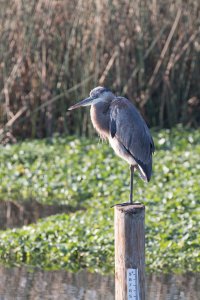
One more bird image, full size, unprocessed, and then a detail after my typical sharpening and enhancing. ISO 400, and this is one of the best of 100's of shots. I just could not get clean backgrounds when they were busy. The heron's beak and head seemed to go right into that illustrated type feel.

Finally, this is all incredibly subjective, as admitted, and many people will justifiably see me as being too picky, quibbling over what are decent results from a "Swiss knife" camera. Note that for family portraits in overcast light, I did get lovely results.
 

Attachments

  • IMG_0599.jpg
    IMG_0599.jpg
    2.7 MB · Views: 172
  • IMG_0599-Edit.jpg
    IMG_0599-Edit.jpg
    1.1 MB · Views: 189
Upvote 0
Hi YuengLinger,

Sorry for you that it doesn't have the IQ that you wished it had.
Have you tried the Highlightprotect option in your camera, and how about white balance between warm color and light priorities?
But you do realize your bird shot could have looked better if you the sun was behind you instead of an incoming from the right or left?

Now for your autofocus problems I would really like to know what your settings were.
I use the 80D myself, but don't do much action. But I can tell you that you should never use more af points than actually fit in your subjects. I only use single point af with centre average metering or 9 centre points with spot metering.
You should not believe youtube videos reviews at all.
The 7DmII and 5DmIV all have a double digit processor that use some kind of algoritm to remember which auto focus point of the 60+ was locked when the mirror flaps up and gives it an priority in servo to the next shots as the mirror flips down, so the complete large zone metering with 60+ af points on the 7DmII is therefor 200% better than the 80D.
I mentioned already on the forums here, you should really go for the 7DmII if you want birdies and wildlife and all.

Also I use 1st shot focus priority and 2nd shot focus priority in the C.FN2 settings.
Which someone else mentioned here already.

I can show you some shots I did with my settings on driving cars (60mph) with focus on license plates that show that it really gives usable results with this settings, just to show you it can give usable results.

I might mind you only 1% of the camera buyers get to know the camera till its full potential, you need more than 50.000 shots to make before you can operate your camera blindfold, so don't give up yet please.

Car shots


Holding Backbutton focus, no focus hunt on 1/60 shot
 
Upvote 0
YuengLinger said:
More subjectively, I was finding during post processing that, in the more contrasty lighting, edges and fine detail did not have the typical photographic appearance of a print or older sensors. Attempting to sharpen and enhance the images sometimes is producing an almost illustrated look, as if edges were inked or penciled in. Yes, subjective, and at a 100% view (which is what many of us zoom into for sharpening, right?).
I remember when I had my old Rebel XT (8 megapixel), and how the contours of the objects seemed natural to me, not looking like oversharp.

I think the "per pixel" sharpness on the 24 megapixel cameras will inevitably be lower, and it causes the temptation to process the images with too much sharpness, generating nasty artifacts.

Would not that be the reason for your disappointment with 80D? The desire for a very high sharpness, when one has much more megapixel, can cause frustration.
 
Upvote 0
OK. I have a perhaps silly question (no flames please! ::) ). How will all of this sensor discussion relate to the Canon mirror-less line? The M5 is not really out in a lot of hands, yet. But it is said to have the same sensor as the 80D. I recently added an M3 to my kit. Clearly, it is not the same IQ as my 5Diii but I did not expect it to be. Frankly, the improvement over the original M1 is significant so maybe I am a bit forgiving.

Thoughts?
 
Upvote 0
I've found this to certain degree with the M3. The conversion profile on both DPP and ACR is far too aggressive IMO. I have been able to solve the problem to a certain degree by tweaking the curve profile before conversion.

I have found some of the files from the 5Ds / sr that I have down loaded to have similar characteristics.

Same thing with the brittleness on sharpening, I have to make sure that there is absolutely no pre raw sharpening going on in the background. Even then the M3 can produce a brittle picture when reduced down to normal viewing size and sometimes I'm putting a 0.2 pixel gaussian blur over it to get the result I want.
 
Upvote 0
YuengLinger said:
Extremely interesting replies and insights regarding perceptions of different types of noise. On a much simpler level of attempting to explain the 80D's limitations, a close friend who is a phenomenal bird photographer reminded me that in photography we always have trade-offs. If light and small are the priority, and we add in a ton of video capabilities, image quality for lenses over 200mm might be somewhat less attainable--which is why wildlife photographers are willing to pay for and drag around much heavier bodies.

More subjectively, I was finding during post processing that, in the more contrasty lighting, edges and fine detail did not have the typical photographic appearance of a print or older sensors. Attempting to sharpen and enhance the images sometimes is producing an almost illustrated look, as if edges were inked or penciled in. Yes, subjective, and at a 100% view (which is what many of us zoom into for sharpening, right?).

One more bird image, full size, unprocessed, and then a detail after my typical sharpening and enhancing. ISO 400, and this is one of the best of 100's of shots. I just could not get clean backgrounds when they were busy. The heron's beak and head seemed to go right into that illustrated type feel.

Finally, this is all incredibly subjective, as admitted, and many people will justifiably see me as being too picky, quibbling over what are decent results from a "Swiss knife" camera. Note that for family portraits in overcast light, I did get lovely results.

Part of the issue here is dynamic range, contrast and bird photography technique. The single biggest issue I see in the photo you shared in this post is that the bird is BACKLIT! A backlit bird, or a backlit anything, is by far the easiest way to rip through every last scrap of dynamic range your camera has, and then some. Now in your image, you were lucky that there was some haze, which seems to have scattered more light and softened the background a bit so that the contrast of the scene was not ridiculously high. In the end, that actually gave you a fairly clean noise profile in the background.

However lacking that haze, you would have undoubtedly run into dynamic range limitations due to the brightness of the edges of the Heron where the sun hits it, and the darkness of all the other backlit objects. You need to make sure your subject is properly illuminated. In this case, I would have moved around the bird until the sun was over your left shoulder. That would give you a largely illuminated bird with some slight shading across the surface to enhance contours. With bright illumination like that, you should have far fewer issues with high contrast, especially ultra bright areas that ultimately force all the rest of the signal to drop into the lower midtones to shadows.

The moment that does happen...when the bulk of your signal drops into the midtones, especially if there is high microcontrast, you are going to see more noise. This could be exacerbated by high FPN, as it is in the midtones that FPN will often start rearing it's ugly head, and if it does, no amount of additional light will really help improve SNR...and in the midtones, it can be annoyingly obvious. But the key is high microcontrast, which can make any amount of noise look worse. If you stretch these midtones, that will increase microcontrast, which will make the noise look that much worse.

With nature photography, bird, wildlife, anything with a subject other than a landscape, you need to make sure you get your scene properly illuminated, and you will want to watch the microcontrast. Avoid backlit subjects.
 
Upvote 0
I have noticed similar with the Canon 7DII. First the color noise from earlier sensors is almost gone. I find myself as a first step removing the default noise reduction Second the per pixel sharpness on Canon is slightly less than the 60D. The true is after shooting with a Sony for a while all Canon APS-C appear soft. I have come to believe that Canon has put an AA filter that is just too strong.

I think you are finding the same two issues I have. At higher ISO's there is non color noise that difficult to get rid of that makes the image look soft on a per pixel basis. If you add in the softness that exists because of the overly strong AA filter then you simply cannot get back per pixel sharpness that existed on earlier sensors.

I do not like overly sharpened images. I found that I can get generally acceptable results when viewed full size. But I wish they had a weaker AA filter. So that sharpening would not need to be added.
 
Upvote 0
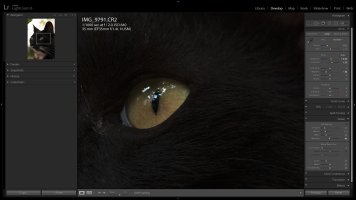
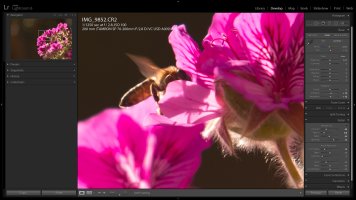
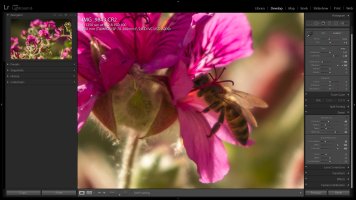
I'm quite happy with the IQ from my 80D. Here are a couple of 100% crops of back-lit subjects taken with my 80D. Bee shot is at base ISO 100. Cat shot is at ISO 640. You can see what Lightroom edits I've done in the develop module.
 

Attachments

  • Backlit Black Cat (80D IQ).jpg
    Backlit Black Cat (80D IQ).jpg
    729.1 KB · Views: 156
  • Backlit Bee (80D IQ).jpg
    Backlit Bee (80D IQ).jpg
    793.9 KB · Views: 158
Upvote 0
Here's another back-lit shot with extreme highlight and shadow recovery + heavy contrast and sharpening as well. I think the file holds up pretty well. Any flaws in the image come down to lens properties, technique and post processing rather than the sensor IMHO.
 

Attachments

  • Backlit Bee 2 (80D IQ).jpg
    Backlit Bee 2 (80D IQ).jpg
    812.7 KB · Views: 168
Upvote 0
jrista said:
YuengLinger said:
Extremely interesting replies and insights regarding perceptions of different types of noise. On a much simpler level of attempting to explain the 80D's limitations, a close friend who is a phenomenal bird photographer reminded me that in photography we always have trade-offs. If light and small are the priority, and we add in a ton of video capabilities, image quality for lenses over 200mm might be somewhat less attainable--which is why wildlife photographers are willing to pay for and drag around much heavier bodies.

More subjectively, I was finding during post processing that, in the more contrasty lighting, edges and fine detail did not have the typical photographic appearance of a print or older sensors. Attempting to sharpen and enhance the images sometimes is producing an almost illustrated look, as if edges were inked or penciled in. Yes, subjective, and at a 100% view (which is what many of us zoom into for sharpening, right?).

One more bird image, full size, unprocessed, and then a detail after my typical sharpening and enhancing. ISO 400, and this is one of the best of 100's of shots. I just could not get clean backgrounds when they were busy. The heron's beak and head seemed to go right into that illustrated type feel.

Finally, this is all incredibly subjective, as admitted, and many people will justifiably see me as being too picky, quibbling over what are decent results from a "Swiss knife" camera. Note that for family portraits in overcast light, I did get lovely results.

Part of the issue here is dynamic range, contrast and bird photography technique. The single biggest issue I see in the photo you shared in this post is that the bird is BACKLIT! A backlit bird, or a backlit anything, is by far the easiest way to rip through every last scrap of dynamic range your camera has, and then some. Now in your image, you were lucky that there was some haze, which seems to have scattered more light and softened the background a bit so that the contrast of the scene was not ridiculously high. In the end, that actually gave you a fairly clean noise profile in the background.

However lacking that haze, you would have undoubtedly run into dynamic range limitations due to the brightness of the edges of the Heron where the sun hits it, and the darkness of all the other backlit objects. You need to make sure your subject is properly illuminated. In this case, I would have moved around the bird until the sun was over your left shoulder. That would give you a largely illuminated bird with some slight shading across the surface to enhance contours. With bright illumination like that, you should have far fewer issues with high contrast, especially ultra bright areas that ultimately force all the rest of the signal to drop into the lower midtones to shadows.

The moment that does happen...when the bulk of your signal drops into the midtones, especially if there is high microcontrast, you are going to see more noise. This could be exacerbated by high FPN, as it is in the midtones that FPN will often start rearing it's ugly head, and if it does, no amount of additional light will really help improve SNR...and in the midtones, it can be annoyingly obvious. But the key is high microcontrast, which can make any amount of noise look worse. If you stretch these midtones, that will increase microcontrast, which will make the noise look that much worse.

With nature photography, bird, wildlife, anything with a subject other than a landscape, you need to make sure you get your scene properly illuminated, and you will want to watch the microcontrast. Avoid backlit subjects.

jrista, thanks for the very helpful suggestions regarding the lighting for birds, and for pointing out that haze was a factor in the heron shot. I'm seeing that haze was a bigger factor than I accounted for. That said, there are things, with the same lens, I can "get away with" using a 5DIII, and to a lesser extent even the 60D, that I couldn't during my brief time with the 80D. If I had kept it, I probably would have learned the strengths and weaknesses, the necessary compromises.

Regarding AF, it was not an issue with the second body--please read my post again in this thread to see I actually praise it. The first 80D I bought and returned did have a faulty AI Servo function--using same lenses, techniques, and settings as on the second. AI Servo was defective on the first unit, meaning that I was certainly more critical overall with the second 80D, admittedly.

Thinking about the 80D's IQ today, I'm beginning to think that we've now had a full decade of sensors, and perhaps some of us are developing preferences for their output. Film photographers love some types of film and would never want to use other types. Certainly with software we can radically alter a RAW file, but we are still starting with a base image that is sensor dependent. In my case I was very happy with the RAW files from the 60D and the 5DIII, but in comparison, the RAW output of the 80D was not to my taste.

Being an imperfect photographer who will not wade into gator and moccasin infested swamps to get a shot of a heron with the sun behind my shoulder, I like a sensor that is a little more forgiving!
 
Upvote 0