If Sony had come out with a sensor with on-die 16-bit ADCs, that would have been far, far bigger news than the fact that it can do ISO 409k. No one really cares about ISO 409k. The noise levels at that ISO are a simple matter of physics when it comes to stills.
When it comes to the A7s video performance, their DSP, BIONZ X, is the bigger news, since it's doing a significant amount of processing on the RAW signal to reduce noise at ultra high ISO settings. The BIONZ X image processor does 16-bit IMAGE PROCESSING, however the sensor output is 14-bit, and the output of the image processing is ALSO 14-bit. There is a page on Sony's site somewhere that describes this, soon as I find it I'll link it.
The BIONZ X processor is the same basic thing as Canon's DIGIC and Nikon's EXPEED. It's the in-camera DSP. Canon's DIGIC 6 has a lot of similar capabilities to Sony's BIONZ X. They both do advanced noise reduction for very clean high ISO JPEG and video output. They both do high quality detail enhancement as well. I don't believe Canon's DIGIC 6 does 16-bit processing, it's still 14-bit as far as I know. The use of 16-bit processing can help maintain precision throughout the processing pipeline, however since the sensor output is 14-bit, you can never actually increase the quality of the information you start with. That would be like saying that when you upscale an image in photoshop, you "extracted" more detail out of the original image. No, you don't extract detail when you upscale...you FABRICATE more information when you upscale.
Same deal with BIONZ X...during processing, having a higher bit depth reduces the impact of errors (especially if any of that processing is floating point), however it cannot create more out of something you didn't have to start with. That is evident by the fact that Sony is still outputting a 14-bit RAW image, instead of a 16-bit RAW image, from their BIONZ X processor.
UPDATE:
From the horses mouth: http://discover.store.sony.com/sony-technology-services-apps-NFC/tech_imaging.html#BIONZ
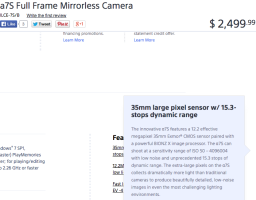
Higher precision processing, but still 14-bit RAW. The fact that the raw sensor output is 14-bit means that the dynamic range of the system cannot exceed 14 bits. The use of 16-bits during processing increases the working space, so when Sony generates a JPEG or video, it can lift shadows and compress highlights with more precision and less error. I suspect their "15.3 stops of dynamic range" is really referring to the useful working space within the 16-bit processing space of BIONZ X. Simple fact of the matter, though, is that when it comes to RAW...it's RAW. Your dynamic range is limited by the bit depth of the ADC. Since the ADC is still 14-bit, and ADC occurs on the CMOS image sensor PRIOR to processing by BIONZ X, then any processing Sony does in-camera can do no more, really, than what you could do with Lightroom yourself.
When it comes to the A7s video performance, their DSP, BIONZ X, is the bigger news, since it's doing a significant amount of processing on the RAW signal to reduce noise at ultra high ISO settings. The BIONZ X image processor does 16-bit IMAGE PROCESSING, however the sensor output is 14-bit, and the output of the image processing is ALSO 14-bit. There is a page on Sony's site somewhere that describes this, soon as I find it I'll link it.
The BIONZ X processor is the same basic thing as Canon's DIGIC and Nikon's EXPEED. It's the in-camera DSP. Canon's DIGIC 6 has a lot of similar capabilities to Sony's BIONZ X. They both do advanced noise reduction for very clean high ISO JPEG and video output. They both do high quality detail enhancement as well. I don't believe Canon's DIGIC 6 does 16-bit processing, it's still 14-bit as far as I know. The use of 16-bit processing can help maintain precision throughout the processing pipeline, however since the sensor output is 14-bit, you can never actually increase the quality of the information you start with. That would be like saying that when you upscale an image in photoshop, you "extracted" more detail out of the original image. No, you don't extract detail when you upscale...you FABRICATE more information when you upscale.
Same deal with BIONZ X...during processing, having a higher bit depth reduces the impact of errors (especially if any of that processing is floating point), however it cannot create more out of something you didn't have to start with. That is evident by the fact that Sony is still outputting a 14-bit RAW image, instead of a 16-bit RAW image, from their BIONZ X processor.
UPDATE:
From the horses mouth: http://discover.store.sony.com/sony-technology-services-apps-NFC/tech_imaging.html#BIONZ
16-bit image processing and 14-bit RAW output
16-bit image processing and 14-bit RAW output help preserve maximum detail and produce images of the highest quality with rich tonal gradations. The 14-bit RAW (Sony ARW) format ensures optimal quality for later image adjustment (via Image Data Converter or other software).

Higher precision processing, but still 14-bit RAW. The fact that the raw sensor output is 14-bit means that the dynamic range of the system cannot exceed 14 bits. The use of 16-bits during processing increases the working space, so when Sony generates a JPEG or video, it can lift shadows and compress highlights with more precision and less error. I suspect their "15.3 stops of dynamic range" is really referring to the useful working space within the 16-bit processing space of BIONZ X. Simple fact of the matter, though, is that when it comes to RAW...it's RAW. Your dynamic range is limited by the bit depth of the ADC. Since the ADC is still 14-bit, and ADC occurs on the CMOS image sensor PRIOR to processing by BIONZ X, then any processing Sony does in-camera can do no more, really, than what you could do with Lightroom yourself.
Upvote
0