Will Canon Answer the D4s? [CR2]

MichaelHodges said:
When approaching the conversation with intellectual honesty, one cannot dispute that low ISO IQ is an important aspect of photography....especially for nature photographers.

AN important aspect of photography. Not THE important aspect of photography. You made my point for me.

Yes, it is important, I said as much. It is no where near as important as a growing number of photographers seem to think. It is AN important factor of IQ, but by no means the singular most important one. You are also missing part of my point. Canon has dynamic range, quite a lot of it in the grand scheme of things. The argument I was debating was that Canon so utterly and desperately needed more low ISO DR.

I levy the question again...how many of your shots are at ISO 100, and more importantly, of those ISO 100 shots, in how many did you desperately NEED to push shadows more than two or three stops?

Privatebydesign offered part of the answer:

privatebydesign said:
That is an interesting question that illustrates why there are so many diverse opinions about th same piece of equipment, we all use them differently.

As for me I took a look, of my last 19,500 images, 9,000 were at 100iso, 7,500 at 200iso, 2,000 at 400 iso and 1,500 at 800 and other random intermediate iso stops.

I'd like higher low iso image quality. But I am not going to spit my dummy out waiting for it.

We know how many he takes at low ISO. He takes a lot, but that doesn't address my actual question, and the question that actually pertains to having more than 12 stops of DR at ISO 100: How many of those 9000 ISO 100 images needed to be pushed by four, five, or six stops? I would guess VERY FEW. Practically none, unless PBD shoots exceptionally difficult scenes with massive dynamic range on a regular basis/for a living. If that is the case, then hell, I highly recommend a D800 for him. In the grand scheme of things, though, I doubt most photographers even think about pushing shadows that much (or could even find a legitimate reason to.)

Personally, I've taken about 55,000 photos at ISO 800 - 3200. I've taken about 15,000 at ISO 400, and less than 10,000 at ISO 100 and 200. Of the ISO 100 photos, I have needed more dynamic range than my 7D offers in about 2000 shots, however I am usually short by maybe one stop (and that is more because of the 7D pixel size...if I had a 5D III, I would have what I need for pretty much everything I've shot before.) In the cases where slight vertical banding noise did show up in the shadows (maybe a couple hundred at most)...I used Topaz DeNoise 5, and was not only able to remove the banding, but I also gained more dynamic range (that's what happens when you reduce noise anyway...you gain DR, but Topaz has a feature that attempts to further recover DR that was lost to shadow noise due to a loss of tonal fidelity, which gains me even more.)

I use GND filtration for my landscape photography, so dynamic range is actually something I have a lot of control over in the field. I would actually greatly appreciate more native sensor DR, as it would reduce my need to use GND filters. It would also help me avoid that unsightly GND artifact where mountaintops end up dark or even black when you need to use more than two to three stops of filtration. That is the single situation where I think having more dynamic range would actually be the most important factor for IQ...ONE situation. I also suspect that tonemapping 14 stops into 8-10 stops without ending up with quirky shifts in contrast and color fidelity would still be very challenging, and I highly doubt I would stop using GND filters even if I had a D800. I still doubt I would push shadows around more than 2-3 stops....but it would be 2-3 stops along with fewer GND filters, which still makes the job easier in the end.

Again, I am not saying more DR is bad. Certainly not. I would just like to know, given how many people have started complaining about it since the release of the D800, how many of them actually have a real-world USE for more DR. Of PBD's 9000 ISO 100 shots...in how many did he actually push shadows around more than 2 stops? That's the real indicator of how much dynamic range we NEED, vs. how much more dynamic range we just WANT because, well, you know...the other guy has it.

Personally, I know the use cases I would love to have more DR for. It's a small fraction of my work. I also know that the kind of photography I do most is in line with the majority of DSLR users...action. Action photographers are what make the Canon Photography world go round. There are far more action shooters than any other kind of shooter, when you factor in sports, air shows, car races, bike races, watersports, wildlive, birds, and all those little children running around dimly lit houses. I want more DR, but I also know it isn't the singular most important IQ factor that so many forum talkers seem to think it is. If more people would honestly answer the question: "How often do you NEED to lift ISO 100 shadows more than 2-3 stops?" I think people might get a clearer picture of how important more dynamic range actually is to their work.
 
Upvote 0
mkabi said:
This is interesting. I've never tested it in pictures, but I know in video that ISO noise is non-linear. So technically 160 is better than 100, and 320 is better than 200 or 250, so on and so forth. Wouldn't it be the same in terms of pictures?

This is a Canon quirk. It's actually one of the very few things I hate about my Canon cameras. Canon doesn't have native third-stop ISO settings. Unlike Nikon and Sony (and probably others) who use electronic gain to boost the signal on-sensor for all ISO settings (up to a certain point, like ISO 1600 or 3200, after which more complex means are usually employed to boost the signal), Canon uses a downstream secondary amplifier to additionally adjust for third-stop ISO settings.

This is also where the "ISO 160 base ISO" MYTH for Canon cameras comes from. Canon's native base ISO is literally ISO 100, no question. Canon employs a full stop gain for ISO 200. For ISO 160, Canon does a downstream third-stop "push" for ISO 125, which actually COSTS you a third of a stop of dynamic range (clipping highlights). Since it is a post-read push, it also amplifies read noise by a third of a stop (not much, but if you do end up having to push shadows around a LOT, you notice it.) For ISO 160, Canon does a downstream third-stop "pull", which again costs you a third of a stop dynamic range (crushing blacks). Since it is a post-read push, it reduces read noise by a third of a stop (hence, the notion that ISO 160 is "cleaner" than ISO 100...it is, by a minuscule amount.)

The push pattern is used for all third-stop settings just above full stops (125, 250, 500, etc.) The pull pattern is used for all third-stop settings just below full stops (160, 320, 640, etc.) Depending on the camera, this pattern is abandoned at higher ISO. It used to be that all Canon cameras employed this push/pull third-stop pattern up through ISO 1600, after which a different and more complicated approach was used. With the 5D III and 6D, I believe the pattern is employed up through ISO 6400, beyond which their more complicated approach is used. The 1D X does not seem to exhibit the same differences in noise and DR for third stops as all the rest of Canon's cameras. I am not sure why, but for whatever reason, the 1D X third stops are much better and more linear overall, and therefor much more usable (with no loss of DR.)
 
Upvote 0
100 said:
jrista said:
Statistically, higher ISO settings are used more frequently these days than lower ISO settings...so it really baffles me that this is such a broad and ubiquitous issue. I am not saying that better low ISO DR is a bad thing, of course it's good...but it is still only one IQ factor out of many. Given how well the D800 has sold, I wouldn't go so far as to say Canon is now playing "catchup" in the low ISO DR arena yet.

Which statistic? Can you point to the result of a scientific study?

And what exactly do you mean by “higher ISO settings”? Higher than 100, 400, 800, 1600…?

I buy into a camera system and the sensor is just one part of the system, but I would love to have the low iso DR of the D800 in my 5DIII.
It’s the one area Canon is really outperformed by just about all other manufacturers. I think they should address that for the next generation and they probably will.
All manufacturers are playing catchup in some way, because none of them are the best at everything.

High ISO...I'd call that ISO 800 or above. ISO 100, 200, and 400 I consider low ISO, although ISO 400 is kind of in the middle there, and others might have a different opinion.

I don't have a specific study. It's a simple observation, however on that I have been making over the last four years or so. (FYI, I've moderated photo.stackexchange.com since 2010, and have encountered and chatted with quite a number of photographers over the last four years from a wide range of photographic endeavors.) How many white Canon lenses do you see at pretty much every sporting event around the globe? Hundreds to thousands at each and every event. Canon dominates sports, hands down, no question. They really dominate action, not just sports. I spend a lot of time out in nature, and meet a fair number of nature photographers. The very vast majority of the people I've met out in the wilderness, including both wildlife and bird photographers as well as landscape photographers, overwhelmingly have Canon equipment. Canon 1D IV, Canon 5D III, and Canon 1D X are becoming almost ubiquitous in the wildlife and bird world. Canon great white lenses, 300s, 500s, and 600s, are extremely common (particularly the 500 Mark Is...lot of wildlifers and birders use that lens, guess it's at a sweet spot of weight and cost). I've met a few who have Nikon equipment, two of whom use D800's for bird photography. I know of one (now a good friend) who uses Pentax and Nikon. I also know and have encountered/chatted with a decent number of wedding & portrait photographers. Most use the Canon 5D II. A few still use the 5DC (they don't seem to care about resolution). Some use the 5D III (and all of the 5D line wedding photographers had one consistent complaint before the 5D III: Sucky AF.) I know of several wedding photographers who use Nikon and other brands (some have gone to mirrorless as of late, with a variety of brands.) I know two wedding and portrait photographers who use Nikon exclusively. One uses a D800 and D3, the other uses a D7000, with a D800 planned for very soon. I would say that Nikon seems to have a growing following in the strait portraiture arena...not so much for DR, but for the sheer amount of detail the D800 or D600 bring to the table...seems that ridiculous, razor-sharp detail that brings out every single pore is really "in" right now, and there is no question that the D800 offers that in spades.

So, sorry, I don't have an official study for you, but it really isn't a difficult observation to make. Just look around. It's a very well-educated guess. The number of cameras and lenses that you can spot in the world that say "Canon" on them vastly outnumber any other brand. Of those, the biggest group that uses the most cohesive set of camera features are the action shooters. Sports/Olympics, Wildlife, Birds...and you can throw in car racing, air shows (know a few guys who do this, damn good at it too), kayaking, boat racing, pretty much anything you could remotely call a sport, or has moving subjects...the camera is going to be at a higher ISO setting, and is probably a 5D III or a 1D X. The next two biggest groups would be Wedding & Portrait, and Landscapes. Not sure which is bigger...seems pretty evenly split here in Colorado, but if you hit larger metropolitan areas, I would make the educated guess that Wedding and Portrait photographers would end up significantly out-pacing the Landscape photographers (and I mean real landscape photographers...I know more people than I can count who use entry level cameras, Canon, Nikon, Sony, Pentax, everything...and call themselves landscape photographers, but their work wouldn't land on anyones walls (no offense to anyone like this, but)...blown clouds, random people in the frame, lack of interesting composition, effectively point-and-shoot mountain peaks and a few scattered rocks or stubby evergreen trees here and there, never any post processing, thrown up on Imgur, PhotoBucket, or Facebook.)

I honestly don't have all that much knowledge about studio photographers. I can't really say how big a customer segment studio photographers might be for Canon...but I guess big enough for them to create the 1Ds line in the past. What I DO know about studio photography, it seems to lean medium format (or maybe Leica S-system) a lot more than it leans Canon, Nikon or Sony. Phase One also seems to be the brand I hear about most from the studio photogs I do know or have crossed paths with.
 
Upvote 0
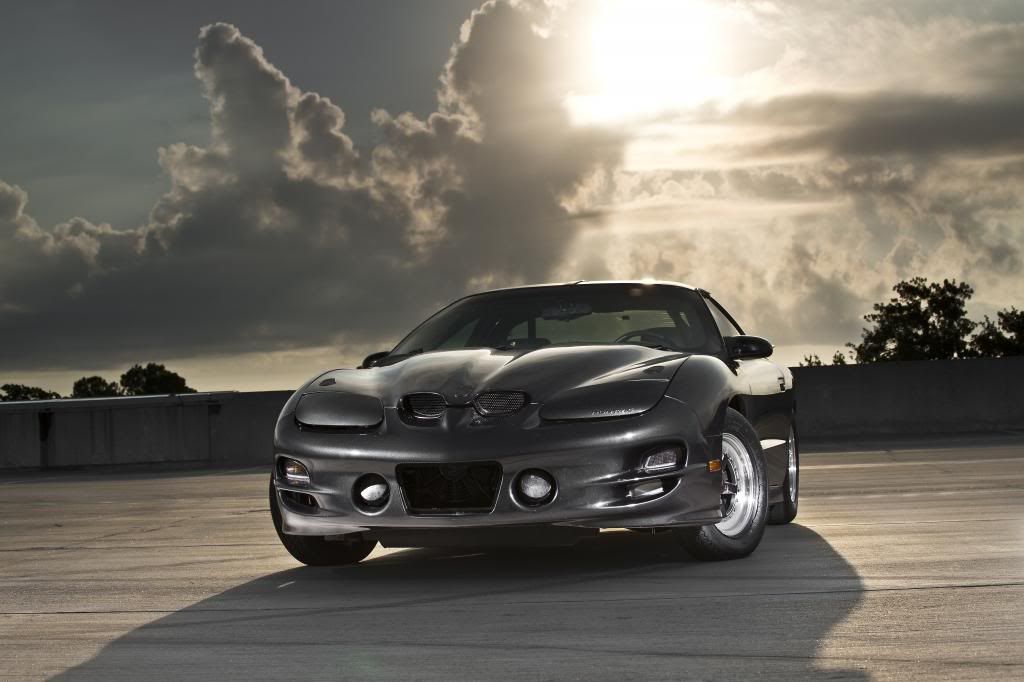
I'm quite content with the DR of my 5D3 ;D

_L3C3775_zps85e5f9d7.jpg
 
Upvote 0
MichaelHodges said:
neuroanatomist said:
Of those low ISO images, for how many did you have to blow highlights or block shadows to preserve the other end AND you had a difference of not more than 2-stops such that the greater low ISO DR of the Sony/Nikon sensor would have solved the problem AND of that subset, how many of those shots were rendered unusable by the lost detail in the shadows or highlights?


You could apply this logic to every facet of image taking when arguing against technological improvements:


"Of all your high ISO shots, how many were so truly noisy that you simply couldn't use the image?"

"Of all those shots of grizzly bears, how many were truly ruined by using only a 2-stop IS system?"

etc....

The point is that Canon addressed those issues. We no longer rely on 2-stop IS systems, we have 4- to 5-stop IS systems. We no longer have to worry about noise at ISO 3200 or even ISO 6400, with the 1D X, 5D III, and 6D, they are amazingly clean.

Canon addressed the most vocal demands of their customers. Solving the problems you listed above were at the top of the customer demand list. Does no one remember what all the pros were literally demanding from Canon before the D800 hit the streets? Fewer megapixels! Better high ISO! An AF system that doesn't suck like the 1D III's did! Canon delivered what their customers asked for...so no, we no longer have to deal with the issues you listed.

I also believe Canon will deliver on the DR front. Why? Because its what the largest and most vocal group of Canon users are screaming for now. Canon users weren't calling for more dynamic range before the D800...they were all largely satisfied with what they had. It's only SINCE the D800 that the customer demand has changed...which indicates it is more a result of "Hey, that other guy over there has more DR than I do! I want more DR, too!" syndrome (all while concurrently ignoring that they already have better AF, faster frame rate, better frame buffer handling, better glass options, better...), than the all-encompassing, singularly important, most absolutely critical factor for IQ that photographers thing it is. I mean...no one complained about it when 11-12 stops was "all" ANY camera offered, including $60,000 MFD systems (which, ironically, is what they are STILL limited to...an yet no one complains!)...

Anyway...this is the same old thing that always crops up. Yeah, more DR == good. DR != Single Most Important IQ Factor (SMIIQF...pronounced like a "squeaky chick fart"). I'm out! Peace out! 8)
 
Upvote 0
V8Beast said:
jrista said:
I've always loved your cars! Great stuff!

Thanks. I've learned a ton from your technical ramblings, and find it very informative. I haven't posted the "EOS Bodies" forum in quite some time, but I see everyone's still whining about the same thing :)

Oh, the DR debate has actually died down a lot as of late. It's actually kind of surprising...this is the first time since he-who-shall-not-be-named was everbanned that it became a major issue again.

I am still interested in an answer to my question...I really wonder how often people actually need to lift low ISO shadows more than a couple stops. I am entirely willing to admit I'm wrong if something like a hundred people said they always need to lift four or five stops...it would really blow my mind...but I'd still happily admit I was wrong. (I don't suspect I'll have to admit anything, though...if people really need to lift that much that frequently, they should probably head back to Photography Basics 101...)
 
Upvote 0
jrista said:
Rick said:
Canon hasn't answered the D800/E yet.

Why is that an issue? Why is it necessary for Canon to "answer" ANYTHING from the competition? I feel like I just answered this in another thread...Canon has never directly competed model for model with their competition. Instead, Canon produces what their customers ask for, and so far, given their track record, they WILL release compelling products that Canon customers want in the years to come.

whats odd to me is that there 2 topics basically talking about the same thing right now --- jrista, I actaully cross quoted you within these! ( I don't remember which one at this point).
 
Upvote 0
V8Beast said:
I'm quite content with the DR of my 5D3 ;D

_L3C3775_zps85e5f9d7.jpg

Lovely shot. But is it only me who feels that a bit more detail in the burnt out sun area would be nicer? A grad filter or change in lighting. Just wondering... I know the hot spot is interesting but JUST A BIT MORE DETAIL perhaps?
 
Upvote 0
jrista said:
V8Beast said:
jrista said:
I've always loved your cars! Great stuff!

Thanks. I've learned a ton from your technical ramblings, and find it very informative. I haven't posted the "EOS Bodies" forum in quite some time, but I see everyone's still whining about the same thing :)

Oh, the DR debate has actually died down a lot as of late. It's actually kind of surprising...this is the first time since he-who-shall-not-be-named was everbanned that it became a major issue again.

I am still interested in an answer to my question...I really wonder how often people actually need to lift low ISO shadows more than a couple stops. I am entirely willing to admit I'm wrong if something like a hundred people said they always need to lift four or five stops...it would really blow my mind...but I'd still happily admit I was wrong. (I don't suspect I'll have to admit anything, though...if people really need to lift that much that frequently, they should probably head back to Photography Basics 101...)

I do not need to generally. But but but, if I ever needed to, it would be nice to be able to do that. Peace!
 
Upvote 0
Orangutan said:
MichaelHodges said:
Orangutan said:
Of course it is. But what fraction of the total market do nature photographers comprise?

A ton of people get into DSLR's for landscape and wildlife. This is where you have zero control of light (or wildlife) so the ability to recover highlights is critical.

Why aren't those people buying a ton of D800's, since it appears to be the best landscape DSLR on the market now? I can think of two explanations: either landscape photographers don't know how to choose the right gear, or the number of landscape-oriented photographers is not as large as you believe.

I suspect most consumers buy a DSLR for vacation photos, bling, and to be their children's first paparazzo.

The reason sales numbers are important is that they give us data against which to test our assumptions. If we believe that most people want model X, but many more people buy model Y, then it shows that our belief is not supported by the data, and may well be wrong.

I'd suspect it's basic economics. It was asked by another person - how many out there are full time landscape photographers? When I say full time, I don't mean my wife is a a lawyer and earns 3 figures and I sell a few large prints per year and earn maybe 10 k. I'm talking full time, this is my business - landscape photography, you support yourself, pay your rent and all the other costs associated with that?

I'd say the # of people doing that is fairly small. And most of them wouldn't be on tech rumor sites bashing their gear provider!

That leaves the part time guys - and that crosses some spectrums from shooting fine art but also portraits and commercial stuff to pay the bills (still a full time photog !) - to those who keep their day jobs and travel on their vacations take nice shots and sell them at the art fair.. to those that don't do festivals, but are happy to shoot and post a few, maybe sell some here and there...and yeah there is a lot of in between there!

This is a large group of shooters, but, they lack the financial resources to devote to it --- to many even the expense of the body (yet along the system!) is more than they can justify ($3k on a camera is a lot of $$$).

Oddly enough as i think on it...If Canon introduced a 50 MP body with 14 stops of DR and priced it at $4500 body only --- how quickly would this conversation change from - when will the answer the d800/when will they innovate to - why is it so costly.. hmmmmmmmm
 
Upvote 0
sanj said:
V8Beast said:
I'm quite content with the DR of my 5D3 ;D

_L3C3775_zps85e5f9d7.jpg

Lovely shot. But is it only me who feels that a bit more detail in the burnt out sun area would be nicer? A grad filter or change in lighting. Just wondering... I know the hot spot is interesting but JUST A BIT MORE DETAIL perhaps?

Personally, I like it how it is. I might actually increase the glare just a bit. Not every region of a photo needs more detail, sometimes lower detail and less contrast is exactly what you want.
 
Upvote 0
jrista said:
V8Beast said:
jrista said:
I've always loved your cars! Great stuff!

Thanks. I've learned a ton from your technical ramblings, and find it very informative. I haven't posted the "EOS Bodies" forum in quite some time, but I see everyone's still whining about the same thing :)

Oh, the DR debate has actually died down a lot as of late. It's actually kind of surprising...this is the first time since he-who-shall-not-be-named was everbanned that it became a major issue again.

I am still interested in an answer to my question...I really wonder how often people actually need to lift low ISO shadows more than a couple stops. I am entirely willing to admit I'm wrong if something like a hundred people said they always need to lift four or five stops...it would really blow my mind...but I'd still happily admit I was wrong. (I don't suspect I'll have to admit anything, though...if people really need to lift that much that frequently, they should probably head back to Photography Basics 101...)

My answer to this is.... when I totally blow it!!! Head outside of the church to snap a few, then head back in and something pops up before i think to reset the settings...more times than not the scene in that sitatuion is never important enough to actually try to lift the shadows...

Or, I have my triggers on camera, and it rubs on my leg and turns it off, no flash burst...again, problem noticed quick, fixed, and there wouldn't be anything missed that couldn't be captured later....
 
Upvote 0
jrista said:
sanj said:
V8Beast said:
I'm quite content with the DR of my 5D3 ;D

_L3C3775_zps85e5f9d7.jpg

Lovely shot. But is it only me who feels that a bit more detail in the burnt out sun area would be nicer? A grad filter or change in lighting. Just wondering... I know the hot spot is interesting but JUST A BIT MORE DETAIL perhaps?

Personally, I like it how it is. I might actually increase the glare just a bit. Not every region of a photo needs more detail, sometimes lower detail and less contrast is exactly what you want.

I see your point.
 
Upvote 0
jrista said:
I levy the question again...how many of your shots are at ISO 100, and more importantly, of those ISO 100 shots, in how many did you desperately NEED to push shadows more than two or three stops?

You keep falling into the logical fallacy trap. The logic you are using can be applied to every argument ever made against improving imaging technology:

"If you need fancy image stabilization, you aren't using a tripod properly. How many of your shots actually need this? Is your hand-holding technique sound?"

"Jimmy, do we really need fancy auto focus? Won't this just make cameras even more expensive? Why not just improve your manual focus skills? How many shots *really* need auto focus if you know what you are doing?"

An improvement in technology is an improvement, regardless of how many use the improvement, or how skilled or not skilled you may feel the person is.

You've posted large blocks of text concerning how many photographers use Canon (one might even say heavy cheer-leading), but that's a red herring when applied to the context of technological improvements.
 
Upvote 0
MichaelHodges said:
jrista said:
I levy the question again...how many of your shots are at ISO 100, and more importantly, of those ISO 100 shots, in how many did you desperately NEED to push shadows more than two or three stops?

You keep falling into the logical fallacy trap. The logic you are using can be applied to every argument ever made against improving imaging technology.

An improvement in technology is an improvement, regardless of how many use the improvement.

You've posted large blocks of text concerning how many photographers use Canon (one might even say heavy cheer-leading), but again that's a red herring when applied to the context of technological improvements. Again, an improvement is an improvement, regardless of usage or popularity.

Sorry, but you are still misunderstanding. I am not arguing against improving technology. I am trying to make the point that more DR is not as important as a great number of photographers these days think it is, the same great number of photographers who regularly bitch about Canon not having a mere two stops of additional DR (DR they probably wouldn't use most of the time.) I've never once said Canon shouldn't improve DR...your reading into something that simply isn't there (I actually have stated I have great confidence that Canon WILL improve DR.)

If someone has a critical need for more DR RIGHT THIS VERY MINUTE, they could have more DR. Just buy a D800, or a D600. I mean, that's the only option right now. I'm not arguing against DR...if you really need it, you really need it.

It just isn't nearly as common to need that much dynamic range, and it isn't so critical to image quality in general that it is the sole thing that would improve most photographer's work. For anyone who shoots ISO 400 and higher most of the time, I would actually offer that Canon currently offers the best gear which offers the best overall image quality for the greatest number of situations: Better AF, better high ISO, faster maximum frame rates, deeper frame buffers, more consistent and continuous frame rates after the frame buffer is full, and still good DR (even though it isn't "the best") that serves the majority of photographers needs most of the time.

My posts so far are making the point that for the majority of photographers who bitch and moan and complain about Canon's low ISO DR, even if they had it, they wouldn't actually need it most of the time. I've never made the point that we shouldn't try to progress technologically on all fronts (of course we should.)

The same general argument I'm trying to make could be applied to cameras that have no AA filter on the sensor. That seems to be as much a fad right now as more DR. I am always surprised by how many photographers blather on about how they want Canon to remove the AA filter from the next camera they want, "just like Nikon did." There are SOME cases where not having an AA filter can be useful, but it is far from a particularly desirable thing. Photographers just want it because its the new thing, and its "that thing the other guy has that I want." The lack of an AA filter, unlike DR, can actually result in a detrimental impact on IQ in a lot of circumstances. AA filters are actually useful and necessary most of the time, to avoid overly sharp and "nonsense" detail that can actually detract from overall IQ. I would really like to know how many photographers that want the AA filter to be removed would actually truly benefit from that...vs. how many would actually suffer from it. I think landscape photographers are really the key group who might benefit from no AA filter...but as others have argued, landscape photographers are a rather small segment of photographers at large.
 
Upvote 0
jrista said:
sanj said:
V8Beast said:
I'm quite content with the DR of my 5D3 ;D

_L3C3775_zps85e5f9d7.jpg

Lovely shot. But is it only me who feels that a bit more detail in the burnt out sun area would be nicer? A grad filter or change in lighting. Just wondering... I know the hot spot is interesting but JUST A BIT MORE DETAIL perhaps?

Personally, I like it how it is. I might actually increase the glare just a bit. Not every region of a photo needs more detail, sometimes lower detail and less contrast is exactly what you want.

It's a lovely shot and one I really like...but that sky is blown out. An ND grad would render the sky darker and probably lost detail in the darker sky areas. It would have increased contrast where it wasn't wanted. The only way to have fixed this here is to have taken a 2nd photograph but at a 2-3 stop darker exposure and then blended the highlight areas carefully in photoshop using a layer. Shadows can be pulled but clipped highlights are not recoverable. It's also important to render the sky brighter than the foreground, another error I regularly see where ND grads are employed. If an ND grad was used with the above photo, the sky would have been darker than the foreground and wouldn't look right.

Many people here are talking about the D800's extra DR, but the truth is that it's only in the shadows...or rather it's the push-ability in the shadows during post production with low iso noise is really what is being talked about. Highlight clipping / blown highlights occurs at pretty much the same between the 5DIII and D800. So it's not really any extra DR, just better iso thresholds in the deep black areas.
 
Upvote 0
jrista said:
High ISO...I'd call that ISO 800 or above. ISO 100, 200, and 400 I consider low ISO, although ISO 400 is kind of in the middle there, and others might have a different opinion.

I don't have a specific study. It's a simple observation, however on that I have been making over the last four years or so. (FYI, I've moderated photo.stackexchange.com since 2010, and have encountered and chatted with quite a number of photographers over the last four years from a wide range of photographic endeavors.) How many white Canon lenses do you see at pretty much every sporting event around the globe? Hundreds to thousands at each and every event. Canon dominates sports, hands down, no question. They really dominate action, not just sports. I spend a lot of time out in nature, and meet a fair number of nature photographers. The very vast majority of the people I've met out in the wilderness, including both wildlife and bird photographers as well as landscape photographers, overwhelmingly have Canon equipment. Canon 1D IV, Canon 5D III, and Canon 1D X are becoming almost ubiquitous in the wildlife and bird world. Canon great white lenses, 300s, 500s, and 600s, are extremely common (particularly the 500 Mark Is...lot of wildlifers and birders use that lens, guess it's at a sweet spot of weight and cost). I've met a few who have Nikon equipment, two of whom use D800's for bird photography. I know of one (now a good friend) who uses Pentax and Nikon. I also know and have encountered/chatted with a decent number of wedding & portrait photographers. Most use the Canon 5D II. A few still use the 5DC (they don't seem to care about resolution). Some use the 5D III (and all of the 5D line wedding photographers had one consistent complaint before the 5D III: Sucky AF.) I know of several wedding photographers who use Nikon and other brands (some have gone to mirrorless as of late, with a variety of brands.) I know two wedding and portrait photographers who use Nikon exclusively. One uses a D800 and D3, the other uses a D7000, with a D800 planned for very soon. I would say that Nikon seems to have a growing following in the strait portraiture arena...not so much for DR, but for the sheer amount of detail the D800 or D600 bring to the table...seems that ridiculous, razor-sharp detail that brings out every single pore is really "in" right now, and there is no question that the D800 offers that in spades.

So, sorry, I don't have an official study for you, but it really isn't a difficult observation to make. Just look around. It's a very well-educated guess. The number of cameras and lenses that you can spot in the world that say "Canon" on them vastly outnumber any other brand. Of those, the biggest group that uses the most cohesive set of camera features are the action shooters. Sports/Olympics, Wildlife, Birds...and you can throw in car racing, air shows (know a few guys who do this, damn good at it too), kayaking, boat racing, pretty much anything you could remotely call a sport, or has moving subjects...the camera is going to be at a higher ISO setting, and is probably a 5D III or a 1D X. The next two biggest groups would be Wedding & Portrait, and Landscapes. Not sure which is bigger...seems pretty evenly split here in Colorado, but if you hit larger metropolitan areas, I would make the educated guess that Wedding and Portrait photographers would end up significantly out-pacing the Landscape photographers (and I mean real landscape photographers...I know more people than I can count who use entry level cameras, Canon, Nikon, Sony, Pentax, everything...and call themselves landscape photographers, but their work wouldn't land on anyones walls (no offense to anyone like this, but)...blown clouds, random people in the frame, lack of interesting composition, effectively point-and-shoot mountain peaks and a few scattered rocks or stubby evergreen trees here and there, never any post processing, thrown up on Imgur, PhotoBucket, or Facebook.)

I honestly don't have all that much knowledge about studio photographers. I can't really say how big a customer segment studio photographers might be for Canon...but I guess big enough for them to create the 1Ds line in the past. What I DO know about studio photography, it seems to lean medium format (or maybe Leica S-system) a lot more than it leans Canon, Nikon or Sony. Phase One also seems to be the brand I hear about most from the studio photogs I do know or have crossed paths with.

If you present something like some sort of statistical fact, you need to prove it. If it’s just an educated guess based on personal observation, it’s not a very strong base to build an argument on because it has no more value than any other personal observation claiming the opposite unless you have some proven authority on the subject. I have no way of knowing how well-educated your guess is. Please point me to your scientific publications in this particular field of research because moderating a website about photography doesn’t make someone a statistical expert. Ask yourself if the people visiting the website you moderate are even close to a cross section of camera users worldwide (that needs to be true if you want to extrapolate).

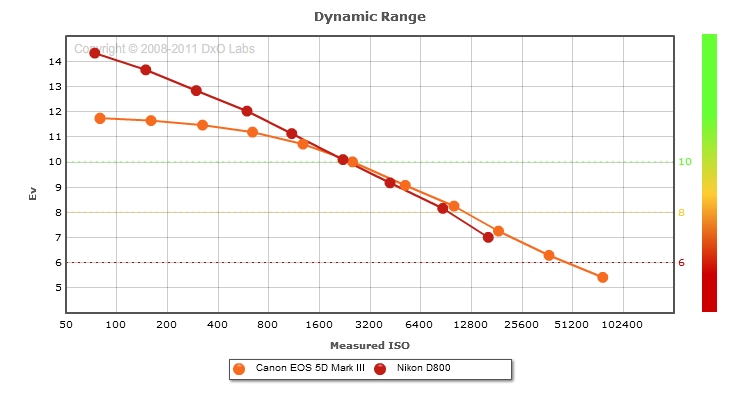
Anyway, if iso 800 and above is high iso, just look at the facts as they are presented by DxO mark. I’m not looking for (yet another) debate about DxO sensor scores. Just look at their measurement.

canon_5d_mk_III_vs_nikon_d800_dynamic_range.jpg


ISO 800 (high iso by your standard) on the Nikon D800 is as good as ISO 100 on the 5D3 (that’s a 3 stop ISO difference).
At ISO 3200 and above the 5D3 gets me marginally better results.

The reason I think “playing catchup” in the DR department is true for Canon is because they are not purposely crippling the 5D3. It’s not like the autofocus or fps on the 5D2. Canon doesn’t have a senor in production with the low iso DR capabilities of other manufacturers and at some point they need to catchup.

But don’t get me wrong, I’m not arguing the D800 is a better camera or Nikon has better camera systems. I know there is more to photography than dynamic range and sensor resolution. I’m happy with my 5D3 and my Canon TS-E 24mm f/3.5L II is much better than the Nikon 24mm PC-E but as Canon users we probably will be better off if we encourage Canon to catchup in the DR department.
 
Upvote 0
jrista said:
For ISO 160, Canon does a downstream third-stop "pull", which again costs you a third of a stop dynamic range (crushing blacks). Since it is a post-read push, it reduces read noise by a third of a stop (hence, the notion that ISO 160 is "cleaner" than ISO 100...it is, by a minuscule amount.)

Bill Claff's data show the 'jagged' relationship of read noise vs. ISO, where the 'valleys' of noise are 160-320-640-. But, his data show the same jagged plot for DR vs. ISO, except the 'peaks' are the inverse of noise, with the greatest DR at 160-320-640. Your statement of a loss of 1/3-stop ISO at 'pulled' settings doesn't jive with his data that ISO 320 has greater DR than ISO 400 as well as less noise.

You express certainty that ISO 100 is the true base, but I think a model where the real base ISO was somewhat lower than 100, such that multiples of 100 are a light push, multiples of 125 are a harder push, and multiples of 160 are a light pull, would explain Claff's data.

Any idea what's going on there?
 
Upvote 0