5DS scores at DXO **now posted**

When will DXO drop the chaos bomb on the interwebs?

http://www.dxomark.com/Cameras/Compare/Side-by-side/Canon-EOS-5DS-versus-Canon-EOS-5DS-R-versus-Canon-EOS-5D-Mark-III___1008_1009_795

My guess: if the score eclipses the D810, they will announce late on a Friday and effectively bury the story.

If the score is less than the D810, it will be announced on a Monday morning. :P

- A

About £400 to spend

So, just had a fistful of cash for my birthday... About £400

Was considering a EF-M 11-22 for my EOS-M, but been toying since its launch the EF 35 f2.0 IS.... Given my current kit, my preference for handheld and landscape, plus keen to lighten my load whilst out hill walking, I like to play, so have various filters already, plus I love my Lensbaby - Alreadykitted up with the Sweet 35, Fisheye and various optics....

So, I'm looking for some second opinions.

My current kit is in my signature.... Any better ideas or off the wall ideas ?

5D3 - shooting stills while shooting video = dead camera

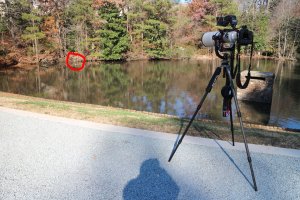
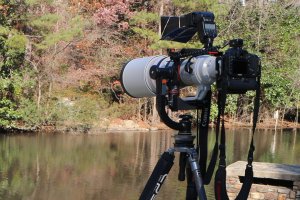
Yesterday I was using my 5D3 with the 70-200 F/4 IS as a hand held video camera to shoot a blues band at an outdoor blues festival. It was a warm day and the camera got a bit warm from being in the direct sun.

After shooting a minute or two of short video clips, I got the bright idea to shoot some stills without stopping the video recording - just wanted to see how that worked. After a few shots, the camera locked up. No LED or LCD display, no response to any controls. Switched off and on again.... still dead.

I took out the battery for a few seconds and put it back in.... still dead. Checked to see if the mirror was locked up and it was not.

I walked back to my gear bag, where my assistant was watching the primary tripod mounted camera, and replaced the battery with the backup battery. Everything worked fine then and I was able to record the rest of the performance. When I wanted to shoot some stills, I switched out of video mode first.

I was suspicious that the third-party battery might have been at fault, so when I got home I put it back in the camera and everything worked fine.

I guess the camera just had a temporary nervous breakdown from being asked to do too many things at once!

I am still pretty new to the world of video - first time this has happened to me. Has this happened to you?

Breakthrough Photography ND10 filters

Just wondering if any other member here have purchased one of Breakthrough Photography's ND10 filters? If so, have you noticed any issues with the filter coating?

I ordered one in an 82mm size at the end of May, after reading Brian @ TDP's excellent comparison of 10-stop NDs -
http://www.the-digital-picture.com/Reviews/10-Stop-Neutral-Density-Filter.aspx

It arrived in good time, is very nicely constructed, but was a little dusty straight out of the packaging. While using a blower rocket to puff the dust away, and holding it up to a light to check, I noticed there were a couple of areas on the filter where the coating seemed lighter, as if some of the coating had smeared off during the manufacturing process. Taking it outside and checking against a clear sky showed the same thing - two distinct areas showed a band of lighter coating. This was viewable looking through from either side (i.e. definitely not a reflection). The largest of the areas was maybe 18-20mm long by 5 or 6mm wide, so a noticeable size even on an 82mm diameter filter.

I emailed Breakthrough Photography, and received a quick reply from Graham there, who hadn't seen this before, and quickly offered to send a replacement. This arrived quickly (in the meantime I sent the first one back for inspection by B.P.), however the second filter exhibited a different problem - two points on the surface where there didn't appear to be any coating at all - a torch held behind the filter revealed two bright points of light. Think of the pinholes in a pinhole camera x2, about a 7 or 8mm apart, and 15mm in from the edge of the filter frame.

Another email to Graham, another replacement sent, and I returned the second filter (but not before snapping a quick photo of the problem, attached, showing a red LED torch positioned behind the filter).

The third filter arrived late this week, and I finally had time to open it today for a look. Like the first filter, this one has an area where the coating seems lighter, and a light source viewed through it is slightly brighter then when viewed through the rest of the filter. The band is smaller than on the first sample, thankfully, and not quite as light either - it's a closer density to what it should be, however it still points to some kind of manufacturing issue with the coating or whatever is responsible for attenuating the light.

Whether it will have any visible effect on image I've yet to determine. I suspect the first sample might have, the second on definitely would have, but this third one might be ok. Given that I've now had three samples, all with potential issues, I suspect I'm not the only one who might have purchased one of these filters exhibiting this issue. Anyone here have one they'd be willing to check?

Cheers,
d.

Attachments

  • BreakThrough82mmND10_no2.jpg
    BreakThrough82mmND10_no2.jpg
    110.6 KB · Views: 226

Tripod

Hi all,
At the moment I've got a Manfrotto 055XPro tripod for two years now. The ballhead doesn't work well anymore. So I went for a better ballhead and after looking at Benro, Markins and RRS, I prefer the RRS BH-55. Next step is a new tripod. I am a tall guy (1.94m) and going for quality (I hope), the Gitzo 3542XLS is a great choice. I slept over it and now I am doing some more research on the net. Travelling a lot to Scotland (Shetland and Harris/Lewis) I will be out in salty circumstances. Gitzo doesn't like salt I've read. So, I thought, maybe I can use the "old" battered Manfrotto tripod with the RRS ballhead in those situations instead of the Gitzo. Do you think this RRS ballhead matches the Manfrotto tripod?

Mr Anonymous

This man smoked and his mush was interesting too. Double bonus....an interesting smoker as camera fodder. I asked if I could portrait him as he sat smoking and drinking beer in a local coffee bar. He said OK. He noticed my tremor and raised a brow. "Parkinson's....I am on medication" He said "So am I". "Parkinson's"? I asked. "Nah........anti psychotic" I stood back, pleased I had the 100-400. He looked a cross between an older McEnroe and a younger Keith Richard(!) In any event....he loved the camera and posed for all he was worth

The thick black lines on his face are shadows from the pergola in the cafe garden

Out of theShadows 2 by Pete Tachauer, on Flickr

Out of the Shadows by Pete Tachauer, on Flickr

Cinema glasses as live view screen?

Hi Guys,

I’m wondering if these glasses would work as an external screen (live view mode) so I can see what’s going on in the desert sun when shooting Motorsport events?
I don’t see how they wouldn’t work as my 70D has an HDMI output, what’s the general consensus on this as a practical option?

http://merlin-digital.com/itheatre-vr-3d.html

Cheers
Stewart

4k displays: difference between $1.5K and $3K IPS?

I am getting serious about upgrading my dual 27” Apple Cinema displays on a new Mac Pro soup can to dual 4k displays.
- Purpose: photoedit (naturally) and book layout in Quark and ID, the usual computer stuff (web, office, db, pp, dreamweaver). No video or gaming.
- I have (and use) a Colormunki spider.
- Size: given the smaller pixels, should the physical size be larger? I used to have 30" displays when they existed, and that was OK.

The top contenders are:
- LG 31MU97-B IPS 31.5” 320 cd/m2 $1200/1400, 99.5% AdobeRGB [review notes that it does not get 4k res on Mac pro].
- ASUS PQ321Q 32” IGZO (TN/IPS?) 350 cd/m2 $1500
- Samsung U32D970Q 32” type? 350 cd/m2 1000:1 S1700. 99.5% Adobe RGB

- NEC PA322UHD IGZO-IPS 32" 350 cd/m2 1000:1 $3K (136.6% sRGB, 99.2% Adobe RGB)

Has anybody seen side-by-side NEC vs the $1.5K crowd displays? What is the difference? Thanks for any insight.

Higher pixel density => more noise?

A video of Tony Northrup about noise vs. sensor size vs. pixel density: https://www.youtube.com/watch?v=_KYvp8PrCFc

One of the messages is that the total amount of light captured is determined by the sensor size, not the pixel size and that scaling down a high-megapixel photo to compare with a different sensor with less megapixels is the way to go. So yes, higher pixel density gives more noise per pixel, but scaling down also "scales down" noise.

DxO found similar noise levels between 5D3 and 5Ds when both compared at 22 megapixels.

If noise is ignored, is the amount of detail captured on a 22 megapixel sensor exactly the same as on a 50 megapixel sensor when the image is scaled down to 22 megapixels in postprocessing? If so, why would you then not just buy only a 50 megapixel camera and just scale down all high-iso stuff to end up with 5D3-like images? (Ignoring capture speed, AF-accuracy etc.)?

I'd like to have your toughts about this. :)

Niels

Kill Basti V2.0 Online

Dear Friends of Canon Gear,
I like to show you a movie, that was not filmed completley with a DSLR, but half with a Canon HV20 (HDV Camcorder) and half with a Canon EOS 5D MK II. So I think it matches.
It's a short (7 min.) and cheap made (100€) amateur movie. The central motivation is REVENGE! It was filmed 2008 and 2009. The Visual Effects took me longer than I thought and so on, but finaly it's done now. I am not sure if I can embed here, but you can see it at vimeo:

https://vimeo.com/132314851

I hope you enjoy it.
Greets,
Frankie

Increasing or decreasing Update circles with current lens technology?

With most lenses becoming better all the time ... What is your opinion about future update circles ? Will Canon replace its highly successful EF lenses e.g. the 11-24, 70-200 IS II, 24-70 2.8 II or the gen2 Supertelephotolenses again in some years or do you think there is not much to gain in IQ anymore with the top of the line EF lenses and therefore these will stay for another 15-20 years before they even think about an replacement ...

This more a general question about the length of update circles, so please please stay general and don't break this down into things which might only apply for one or two lenses ...

Why no high-fps?

For couple years now I've been hoping any decent price camera to have high fps. All new video cameras seem to go for 4k, while I'd be happy for even 720p240. Is it really that no-one (but me) wants high speed, and thus manufacturers don't care about it? I'd kill for 1080p480.

The best options are few Panasonic models which do 1080p120 or 1080i240, or iphone which does 240fps but it's not the greatest video camera. Some P&S also goes up to 1000fps, but resolution was something like 105x72, or so. GoPro is also good alternative.

So why none of the ~$500-$2000 cameras have nothing to offer there?

Am I only one to hope for higher fps even when taking (reasonable) hit on the resolution?

10 Years of the EOS 5D Line: The Movie

HTML:
<iframe src="https://www.youtube.com/embed/aJhHJWB6cDU" width="728" height="409" frameborder="0" allowfullscreen="allowfullscreen"></iframe></p>
<p>Back in May Canon started celebrating the <a href="http://www.canon.com/news/2015/may28e.html" target="_blank">10 year anniversary of the EOS 5D line</a>.</p>
<p>Yesterday they released a short movie showing the development of the line from the EOS 5D, to the EOS 5D Mark II and EOS 5D Mark III and most recently the EOS 5DS and EOS 5DS R.</p>
<p>It has been a revolutionary line of cameras in various ways, and hopefully we get more innovation in the future. I’m talking to you EOS 5D Mark IV!</p>

TheDigitalPicture.com: 5Ds vs 5Ds-R crops posted

The guys at TDP have posted resolution-chart crops of one of the sharpest lenses available, the Canon EF 200mm f/2 L USM lens, tested on both the Canon EOS 5ds and 5Ds-R. You can take a look by following the link:

http://www.the-digital-picture.com/Reviews/ISO-12233-Sample-Crops.aspx?Lens=458&Camera=980&Sample=0&FLI=0&API=0&LensComp=458&CameraComp=979&SampleComp=0&FLIComp=0&APIComp=0

Patent: EF-S 15-105 f/2.8-5.6 IS STM

HTML:
A patent for a what looks to be a competitor to the <a href="http://www.canonrumors.com/2015/07/nikon-announces-the-new-af-s-dx-nikkor-16-80mm-f2-8-4e-ed-vr-lens/" target="_blank">16-80mm f/2.8-4 VR that Nikon announced yesterday</a>. Included in this patent is an optical formula we already have, the EF 24-105 f/3.5-5.6 IS STM, but it also shows an EF-S 15-105 f/2.8-5.6 IS STM (24-168mm in 35mm) for APS-C cameras.</p>
<p>Patent Publication No. 2015-118141</p>
<ul>
<li>Published 2015.6.25</li>
<li>Filing date 2013.12.17</li>
</ul>
<p>Canon patents</p>
<ul>
<li>Positive and negative positive and negative positive and negative positive 7-group zoom</li>
<li>Inner focus (fourth group)</li>
</ul>

  • Poll Poll
Who would like Canon to upgrade the 300mm f4 L lens?

Just out of curiosity and after a number of lenses are already available in their 2. Version. Who wo

  • Hm, the present 300mm f4 is still good enough for me

    Votes: 1 11.1%
  • YES, I would like to have such a lens

    Votes: 1 11.1%
  • I have other lenses to cover that focal range, like the 100-400 or 70-300.

    Votes: 6 66.7%
  • And it should also be a DO lens to make it even lighter and smaller.

    Votes: 1 11.1%
  • I have no interest at all in this kind of lens/focal range.

    Votes: 1 11.1%

Hi all
Thinking about new lenses I was looking at my old but trusty 300mm f4 L. I wonder what would be the chances for this lens to be upgraded.

Sony to Raise Nearly $4 Billion, Ramp Up Sensors Business to Anchor Turnaround

HTML:
Japan’s Sony Corp plans to raise nearly $4 billion via new shares and bonds to plough into image sensors as it reinvents itself as a niche component maker, pulling back from consumer goods like TVs that dragged it into losses.</p>
<p>In Sony’s first new share issue in 26 years, the firm said on Tuesday it expects to raise 321 billion yen ($2.62 billion) from a public stock offering after a rally that has seen its market value double in a year. It will raise a further 119 billion yen from a convertible bond issue to fund a boost in sensor output capacity at its advanced plants in Japan.</p>
<p>Worth close to a tenth of its current market value, the share issue provides the clearest signal yet that Chief Executive Kazuo Hirai is prioritizing the sensor business to anchor Sony’s turnaround. The firm has long been plagued by losses in branded goods like smartphones, hit by fierce competition from both cheaper rivals in Asia and industry giants like Apple Inc and Samsung Electronics Co.</p>
<p><a href="http://www.reuters.com/article/2015/06/30/us-sony-issue-idUSKCN0PA0EG20150630" target="_blank">Read more…</a></p>
<p>Photo Credit // REUTERS/YUYA SHINO</p>

Nikon Announces the New AF-S DX NIKKOR 16-80mm f/2.8-4E ED VR Lens

HTML:
<strong>MELVILLE, NY (July 2, 2015 at 12:01 A.M. EDT)  —</strong> Today, Nikon Inc. announced the new AF-S DX NIKKOR 16-80mm f/2.8-4E ED VR lens – an amazingly versatile DX-format lens that is well suited for advanced and enthusiast photographers. The NIKKOR 16-80mm features a combination of the best Nikon lens technologies, some never before seen in a Nikon DX-format lens, including Nikon’s legendary Nano Crystal Coat. The resulting lens gives a wide variety of photographers an all-purpose optic to help take their photography further and tell their story with clarity and precision.</p>
<p>“The NIKKOR 16-80mm f/2.8-4 is a very exciting addition to the NIKKOR DX-format lens lineup, and a new milestone in the NIKKOR legacy – it combines the most advanced optical technologies with an extremely useful focal range to capture photos and HD video,” said Masahiro Horie, Director of Marketing and Planning, Nikon Inc. “This new lens is a great companion for Nikon’s high-performance, lightweight series of DX-format DSLR cameras.”</p>
<p><!--more--></p>
<p><strong>DX-Format Versatility</strong>

Make no mistake, the new AF-S DX NIKKOR 16-80mm f/2.8-4E ED VR is premium glass for those who desire a fast and highly capable wide-angle zoom lens. The lens features a popular, wide 24-120mm (FX-format equivalent) focal range, which makes it ideally suited for a variety of shooting disciplines. From wide-angle landscapes, tight portraits or for those looking for an all-in-one tool for travel, this lens does it all. The large f/2.8 – f/4 aperture lets photographers shoot in challenging light with ease, with the creative flexibility afforded by a shallow depth-of-field. Whether photographing friends’ faces or a festive plate full of local flavor, the 16-80mm’s fast aperture lets users blur the background to create that dramatic separation between subject and background that emphasizes and flatters a subject. For creative close-ups of everything from passion-projects to flowers, the lens has a very useful minimum focusing distance of merely 1.2 feet throughout the entire 5x zoom range.</p>
<p>To further enhance its low-light capability, the new NIKKOR 16-80mm f/2.8-4 lens also features Nikon’s Vibration Reduction (VR) image stabilization technology, which provides up to 4 stops of image stabilization<span class="green">*</span>, helping to create sharp images while shooting handheld or in challenging light. As an added benefit to landscape and wildlife photographers, this lens features VR with automatic tripod detection, to counteract vibration when mounted on a tripod.</p>
<p><strong>Latest Optical Technologies</strong>

The new AF-S DX NIKKOR 16-80mm F/2.8-4E ED VR boasts some of the best optical innovations from Nikon, and is the first Nikon DX-format lens to wear the gold “N” emblem, to indicate the presence of Nikon’s exclusive Nano Crystal Coat. This advanced optical coating significantly reduces instances of ghosting and flare for the highest quality images. The front and rear elements also integrate a fluorine coating to make it easier to remove dirt, moisture and smudges from the lens surface. This is also the first Nikon DX lens to feature an electromagnetic diaphragm; this innovation electronically adjusts the aperture within the lens, resulting in consistent exposure during high speed shooting.</p>
<p>The new NIKKOR 16-80mm lens features robust construction while retaining a lightweight and compact body. The lens features four Extra-Low Dispersion (ED) elements and three aspheric elements to further combat instances of ghost, flare and chromatic aberration. The lens is constructed of 17 elements in 13 groups, and features a seven-blade diaphragm to create a circular, natural bokeh for a pleasing out of focus area of the image. For fast, accurate and quiet AF performance, the 16-80mm also features Nikon’s Silent Wave Motor (SWM) technology.</p>
<p><strong>Price and Availability</strong>

The new Nikon AF-S DX NIKKOR 16-80mm f/2.8-4E ED VR will be available in July for a suggested retail price (SRP) of $1,069.95.<span class="green">**</span> For more information on NIKKOR lenses as well as other Nikon products, please visit www.nikonusa.com.</p>

Big Difference in real focal lenth btw. 100-400 Mk II and 70-200 IS MK2 + 2xEXT3

Just tried my 70-200MK II with Ext III against my 100-400 Mk II and found that there is big difference in focal length between the two:

400mm on the 70-200 MKII +Ext III looks much longer than 400mm on the 100-400 MKII. How could that be ? I mean I know that there is some difference and that the 100-400Mk II is not really 400mm but it really looks like there is a 50-70mm difference here ?

Protecting plastic filter threads on "L" lenses.

I already knew the Canon EF 24-70 f/2.8L II was going to have plastic threads where filters attach. I do not use a UV filter to protect the front element. I've got drops and spills insurance for that. However, my new lens came with a very inexpensive set of Pro Optic filters (UV, ND, Circ. Pol.) thrown in free by Adorama. I'll never use them, or so I thought.

I'm no plastics chemist. I've no idea how tough the plastic threads or the edge of that part of the lens is. I just thought I would try something to protect that edge and those threads beyond what the lens hood offers..

I took the UV Haze filter, wrapped it in a paper towel, placed it in a ziplock bag and used a small hammer to shatter the glass of the filter. I then removed the metal filter ring from the ziplock bag and cleaned all remaining glass from it and screwed the now filter-less metal ring onto the filter threads of my lens. Voila!

Just a little peace of mind and added protection. I think so anyway.

Yellowstone Kit and ideas

Hello CR,

I will be getting to travel to Yellowstone next week and am wondering what people think are the key lenses to bring and more importantly what are the key things to see/photograph plus hopefully a few suggestions on hidden gems?

For gear:
bringing:
5DIII
a7R
16-35II if my 11-24 doesn't make it on time, might bring both for filter use
24-70II
100-400I
100L macro
Gitzo travel tripod and a full size
Leaving:
35art
50 ZE 1.4
70-200 2.8IS II
speedlites

on the gear side curious what people think on leaving the fast primes at home? would you? also thoughts on taking version I 100-400 over the 70-200II 2.8IS, I am thinking extra range will be helpful over the stop of light and better performance? should I just bring it all and use it based on subject (I normally do this but I hate packing tons of gear only to use a portion of it)?

Thanks!!

Filter

Forum statistics

Threads
37,443
Messages
973,816
Members
24,808
Latest member
Djiran

Gallery statistics

Categories
1
Albums
29
Uploaded media
372
Embedded media
1
Comments
25
Disk usage
1 GB