5D4 Sensor Defect Discovered

Act444 said:
ilumo said:
tr573 said:
ilumo said:
Jack Douglas said:
Ha, ha, ha, you should be a comedian.

Jack

The funny thing is it was an actual test pushing a black frame I think I had to push about 6-7 stops to see noticeable banding. I'm really not sure what scenarios I have to use to replicate this issue. I'm just glad that I don't seem to be affected.

There has to be a very bright object in the left hand side of the frame, with dark areas to the right of it. Then when you bump up the shadows and exposure, there is the weird streak extended from the bright object.

Look at my previous post of the swing set in the park. I was trying to expose for the sky and it was still blown out (very bright) in some areas, and then I pushed up the extremely underexposed areas (shadows) on the bottom of the frame by +5 stops, and there was hardly ANY of the horizontal banding (streaks) that some of you guys were experiencing.

I think it only happens in low-light settings - I had a similar underexposed shot in similar lighting - outdoor sun - also scenarios where I had extremes in DR and pulled the shadows quite a bit - no streaking at all, and noticeably cleaner than with the 5D3. However, wait for night-time, take it inside in dim lighting and underexpose at low ISO and then you see it. It's rather odd, I'm not even sure I would have known about it had I not seen it reported on the internet/in this thread...

Also, your light source does not HAVE to be on the left side. I was able to reproduce the issue with the light on the right side, and even with the light source well out of the frame (although in that instance, it took a greater amount of pushing for the streaks to become visible)

yea, i'll have to try it. but it's almost an oxymoron to shoot in LOW light and then also be at BASE ISO (unless you have iso invariant sensor, which 5d4 isnt). I mean, if you're shooting in "bad quality" light, shouldnt you also be shooting higher ISO? Not sure if i've ever shot in bad light and shot at that base iso. i dont think we run into this "banding" issue at higher isos, so then that test is moot.
 
Upvote 0
The thread is interesting. I DID actually see the banding in a couple of photos that had extreme backlighting (coincidentally; I wasn't going out looking for it.)

Since then, I decided to actually apply, you know, SCIENCE!

I've ran several tests where I severely underexposed on a 5D4, a 6D, and a Sony A7S with the same image.
Pushed all the images by 5 stops exposure in photoshop; and then +100 shadows.

No banding. 5D4 was by far the cleanest (most interesting was that even on a pixel level; the noise was lower than on the 6D, despite the 6D's larger pixels. Overall image much cleaner, with better colour and detail.)
The Sony A7S came next (I hear the A7RII is better than the A7S for dynamic range.).

Clearly in the last was the 6D.

In this case, I did NOT see any banding. The test image had a white wall with a very dark brown book shelf filled with books, each taking half the image.

What I'm beginning to suspect is (as several folks have said), is that the images that have this are, well, extreme. If you have an extremely bright image on the left; and dark on the right, then the dynamic range may actually just be too great to catch -

For those who are testing this; and you have another camera available; I strongly encourage you to do the *exact* same test with the other camera; and compare them.

I'll continue to try replicate the banding in a scenario where I can then compare apples to apples with the 6D. The goal is to demonstrate that with the exact same image and exposure we have one of the following:
1. Demonstrate that there IS a sensor defect when the left side of the image is much brighter than the right by several stops, AND THE 6D/A7S PERFORM BETTER
2. The banding exists; but at this point, *other canon cameras such as the 6D have extremely poor performance as well* - i.e. the 5D4 does actually improve dynamic range in all circumstances, and this simply a situation of pushing to failure, and, well, finding it.

I'll update when I get time to try further tests.
Again; to those worried about their cameras, I'm finding the 5D4 pretty damned impressive - But I encourage you to test, and compare the exact same test, same exposure, same subject, with another camera, and post what you find.

Just looking at one subject does not an experiment make.
 
Upvote 0
If you take the image in normal bring sunlight then there is a good chance the shadows are receiving some amount of light so underexposing them by 5 stops takes them down from [pick your unit] -2 to to [pick your unit] -7.

If you then have the same sort of image with a super-strong light on one side then the camera auto exposure sets an average metering lower than in the first example above. So you end up taking the shadows from [pick your unit] -4 to [pick your unit]-9.
The signal-to-noise ratio in the shadows in the second example is far lower than in the first example. So lifting the shadows completely results in a noisier image and more banding.

So setting an under exposure as 'under 5 stops' means you are setting an exposure 5 stops under what the camera thinks it should be. And what the camera thinks it should be will vary according to the conditions.

Later models of Canon meter lower than earlier models (I have seen this consistently with my 7D2 compared to 7D and comments regards the 1Dx2 are pretty much the same) so when comparing between generational models you are also comparing the way the metering software has been programmed.

This could well explain some of the observations.
 
Upvote 0
Mikehit said:
The signal-to-noise ratio in the shadows in the second example is far lower than in the first example. So lifting the shadows completely results in a noisier image and more banding.

This is what I was thinking - which is why I think the only real validation is NOT whether you can demonstrate banding... but whether you can demonstrate banding in a situation where a previous model canon camera produces a clearly better image - *with exactly the same exposure and settings.*

My earlier tests were based off taking an initial exposure in auto to get the baseline, then setting all cameras to manual, and controlling exposure that way.
 
Upvote 0
Well folks - I think I'm going to say 'nothing to see here, move along'

I captured an extreme contrast scene with bright sun on one side, dark shadows on the other - Same exposure on the 6D and 5D4 -

And? yeah, banding on the 5D4.
And also visible streaky left/right banding on the 6D, along with vastly worse noise characteristics.

What I did note with interest is that the 5D4 banding was more of a colour cast shift between green/purple; and that the bands were NOT positioned in the same place image to image. Most peculiar. (and might mean it's not hardware related.)

i'll try get a better and clearer example over the weekend to post for folks here who are interested to view. I'll also encourage others who are worried about their cameras to do the same thing. You'll probably feel a lot better when you see the difference.
 
Upvote 0
Sorry. Haven't gone through all 15 pages. If you let me know what specific tests you need to run to replicate those results, I can try it for you guys. Maybe I can be the control.
[/quote]

Cover the middle and right side of the frame with your hand or a piece of cardboard. Take a picture of something very white or nearly overexposed on the left side of the frame. Inspect in RAW.

Ive posted the video and samples here: http://www.michaelthemaven.com/?postID=4280&canon-5d-mark-iv-sensor-problem

Poll is pretty consistent not at 50%

Thanks!

M
 
Upvote 0
MichaelTheMaven said:
Cover the middle and right side of the frame with your hand or a piece of cardboard. Take a picture of something very white or nearly overexposed on the left side of the frame. Inspect in RAW.

Ive posted the video and samples here: http://www.michaelthemaven.com/?postID=4280&canon-5d-mark-iv-sensor-problem

Poll is pretty consistent not at 50%

Thanks!

M

Michael, I'd strongly encourage you to repeat the exact same test with same exposure settings on a 6D or 5D3 and compare. I found the 6D to be much worse.

[edit] I see you said on your website that you did try a 5D3. Very nice examples of the problem there. Would love to see your 5D3 example of the same test shown for comparison.
 
Upvote 0
tr573 said:
There has to be a very bright object in the left hand side of the frame, with dark areas to the right of it.

Act444 said:
I think it only happens in low-light settings

On which day(s) of the week does the problem occur? ;)


MichaelTheMaven said:
Cover the middle and right side of the frame with your hand or a piece of cardboard. Take a picture of something very white or nearly overexposed on the left side of the frame. Inspect in RAW.

Now that seems like a reasonable, reproducible test. :)
 
Upvote 0
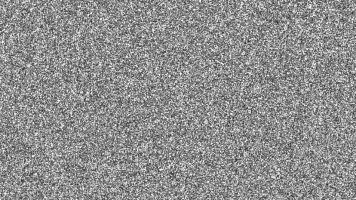
That's an amazing coincidence! I turned on my Philco TV, under-connected the antenna, and it looked exactly the same!

Alejandro said:
I just had to see this for myself, so i did this:

Underexposed a pic by 5 stops with iso 50.
Then underexposed 5 stops in post.
Then export in tiff.
Then underexpose 5 stops again.
Then export again in tiff.
Then overexpose by 15 stops.

The result was this:
 

Attachments

  • canon5d4.jpg
    canon5d4.jpg
    369.3 KB · Views: 131
Upvote 0
MichaelTheMaven said:
Sorry. Haven't gone through all 15 pages. If you let me know what specific tests you need to run to replicate those results, I can try it for you guys. Maybe I can be the control.

Cover the middle and right side of the frame with your hand or a piece of cardboard. Take a picture of something very white or nearly overexposed on the left side of the frame. Inspect in RAW.

Ive posted the video and samples here: http://www.michaelthemaven.com/?postID=4280&canon-5d-mark-iv-sensor-problem

Poll is pretty consistent not at 50%

Thanks!

M
[/quote]

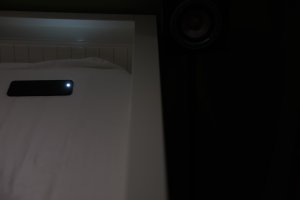
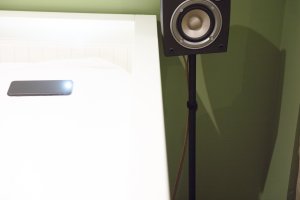
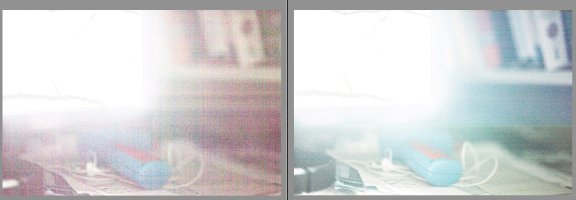
Here you go.

Very white, overexposed flash from my phone on the left, and some unlit background on the right. and then pushed 5 stops.
 

Attachments

  • test1.jpg
    test1.jpg
    435.8 KB · Views: 135
  • test2.jpg
    test2.jpg
    1.3 MB · Views: 133
  • test3.jpg
    test3.jpg
    643.6 KB · Views: 124
Upvote 0
I did a test comparing the 5D4 with the 1DX.

Conditions: Took a photo with a monitor in the upper left quadrant of the frame, and pretty much complete darkness on the right hand side. This was underexposed exactly 5 stops. Same lens, same settings.

5D4 Results: after raising 5 stops in post and pushing shadows 100 percent, you can see the band of altered color to the right of the light side with the 5D4 shot.

The 1DX shot has less obvious color and brightness alteration in that area to the right of the light side, but it has multiple bands of light, as well as an an even more problematic set of regular vertical lines. These appear to be worse to the right of the light.

Upshot: I don't think anyone is going to prefer the 1DX shot over the 5D4 shot. I can say that the 5D4 sensor performs fantastically relative to my old Mark III and the 1DX, even in these crazy conditions. However, it seems that both cameras injected some oddly specific artifacts in extreme conditions. I speculate that it might not be a sensor issue, but a read-out mechanism issue, or possibly a software issue. It doesn't make sense to me that a sensor issue would cause this behavior. Because other posters have pointed out that this happens only when the bright area is on the left, that sounds like a readout issue to me.

In the case of the 5D4, attention would naturally focus on the new on-chip ADC system they added into this new body. Perhaps this is teething pains for that new tech. If this is true, we would see the same problem on the 80D and the 1DX Mark II, which I believe share that chip. Anyone try those bodies?
 
Upvote 0
MichaelTheMaven said:
Cover the middle and right side of the frame with your hand or a piece of cardboard. Take a picture of something very white or nearly overexposed on the left side of the frame. Inspect in RAW.

Ive posted the video and samples here: http://www.michaelthemaven.com/?postID=4280&canon-5d-mark-iv-sensor-problem

Poll is pretty consistent not at 50%

Thanks!

M

This isn't an uncommon issue, although the degree to which it affects the image can vary. I just tried it on my Nikon D7200 (Toshiba APS-C sensor with one of the highest DR available today) and see similar blooming affects. Here's a full size image, shot raw and pushed +5EV in LR CC:

https://photos.smugmug.com/photos/i-rZxM8JJ/0/O/i-rZxM8JJ.jpg

Other cameras which exhibit this include the Sony A6000.
 
Upvote 0
horshack said:
MichaelTheMaven said:
Cover the middle and right side of the frame with your hand or a piece of cardboard. Take a picture of something very white or nearly overexposed on the left side of the frame. Inspect in RAW.

Ive posted the video and samples here: http://www.michaelthemaven.com/?postID=4280&canon-5d-mark-iv-sensor-problem

Poll is pretty consistent not at 50%

Thanks!

M

This isn't an uncommon issue, although the degree to which it affects the image can vary. I just tried it on my Nikon D7200 (Toshiba APS-C sensor with one of the highest DR available today) and see similar blooming affects. Here's a full size image, shot raw and pushed +5EV in LR CC:

https://photos.smugmug.com/photos/i-rZxM8JJ/0/O/i-rZxM8JJ.jpg

Other cameras which exhibit this include the Sony A6000.

NO ! This cannot happen on a Nikon camera ! Thanks horshack, you've just ruined the best part of CR ;)
 
Upvote 0
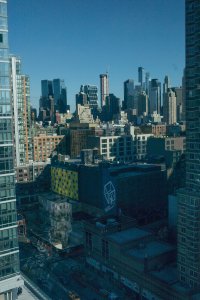
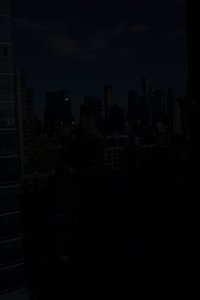
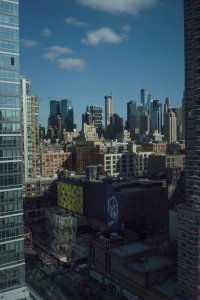
Here are some comparisons with 5D4, 6D and sony A7S - contrary to what I said yesterday; Sony does win under these *exteme* conditions (but what was to be expected). And when I say *extreme*, I mean it. I'll include the original exposure. You're just not going to do this normally. These are underexposed by about 6 or 7 stops, then pushed 5 stop in lightroom with a +100 shadows.

There is banding evident with both the 6D and the 5D4 - but the 5D4 is cleaner.
There is nothing to worry about with your nice new 5D4. It really is much better than the previous gen of canon sensors. When you don't push to breaking point, the 5D4 is even cleaner (and in my opinion and very informal testing, those slight 3 or 4 stop underexposures are where the 5D4 wins against the A7S due to nicer colour rendition.)

Other interesting notes: The camera's default white balance skews off by a fair bit when performing the test of overexposing on the left - This accentuates the purple/green banding even more - When you adjust to back to reasonable colour, it's not as obvious.

The last of the 5 images here is where I've flipped the 5D4 upside down, so that the bright sky is on the RIGHT of the sensor. Interesting result; entire colour shifts slightly; but the banding is much reduced. So keep that in mind if you are ever in this extraordinarily rare situation.

I've got more examples, but I figured these were pretty representative and covered most of what you'd want to see. the images have all been downsized to 2000x3000. I also adjusted the colour on each to be somewhat consistent - This benefited the Sony - the default in camera colour was way off compared to the canons.
Full version images available if anyone really cares.

Honestly; rather than being disappointed by 'Bandgate', I'm just blown away how impressive these modern sensors are. I can't believe I'm doing this kind of mad underexposure and actually getting an image out of it. I'm also kind of dumbfounded that it's causing so much panic.
 

Attachments

  • Test4- 5D4 - sky to right.jpg
    Test4- 5D4 - sky to right.jpg
    1.7 MB · Views: 142
  • Test3 - Original Exposure.jpg
    Test3 - Original Exposure.jpg
    164.7 KB · Views: 128
  • Test3 - A7S.jpg
    Test3 - A7S.jpg
    1.3 MB · Views: 149
  • Test3 - 6D.jpg
    Test3 - 6D.jpg
    2.5 MB · Views: 154
  • Test3 - 5D4.jpg
    Test3 - 5D4.jpg
    1.6 MB · Views: 156
Upvote 0
TimoV said:
For testing this stripes in real world, shot a night photo with clear sky and you may see “banding” kind of stripes in darker part of the sky… no need shadow boosting if you have proper monitor ;-)

Hi!

Timo I am from Finland capital area as well and got my 5D4 around 2 weeks ago. I can see some stripes as well when pushing the shadows to extreme with low ISO (100). Did just few minutes ago a test of the night sky with long exposure. It was a bit clowdy and cannot see any stripes in these frames. The stripes has been different colours from yellow to dark blue in lighter frames. Can you be so kind and post some pic as an example of the stripes in the night sky so I could compare. You/I can as well send private messages, since this would be good to get solved in Finland also - we are not the biggest market area for Canon ;-).
 
Upvote 0
Hi all!

This picture shows the problem pretty well. This was shot 5 steps under as RAW (ISO 100), then to LR and boosted exposure 5 steps back + shadows up. This is of course extreme, but the picture taken the bright side on the right did not show these "stripes" at all - actually amazing results without these stripes. There is no noice reduction used.
 

Attachments

  • IMG_0745.jpg
    IMG_0745.jpg
    3.7 MB · Views: 173
Upvote 0
JukkaS said:
Hi all!

This picture shows the problem pretty well. This was shot 5 steps under as RAW (ISO 100), then to LR and boosted exposure 5 steps back + shadows up. This is of course extreme, but the picture taken the bright side on the right did not show these "stripes" at all - actually amazing results without these stripes. There is no noice reduction used.

Of course it hasn't on the bright side, the sensor was actually able to record something !!

When the sensor has recored nothing, as in the dark side, I really don't think it matters what you see when you raise 5 stops + 100% shadows ( so about 7 to 8). It could be pink elephants for all I care.
 
Upvote 0
Sporgon said:
JukkaS said:
Hi all!

This picture shows the problem pretty well. This was shot 5 steps under as RAW (ISO 100), then to LR and boosted exposure 5 steps back + shadows up. This is of course extreme, but the picture taken the bright side on the right did not show these "stripes" at all - actually amazing results without these stripes. There is no noice reduction used.

Of course it hasn't on the bright side, the sensor was actually able to record something !!

When the sensor has recored nothing, as in the dark side, I really don't think it matters what you see when you raise 5 stops + 100% shadows ( so about 7 to 8). It could be pink elephants for all I care.

We are missing the point here. Like in this video https://www.youtube.com/watch?v=R4c78yuHgMY&app=desktop the problem is that the sensor creates these stripes which is far from normal noice. Few messages up Timo referred to a picture where only 2 steps boost (no shadows) in exposure ruined the sky in his shot. I saw his picture and can verify that it is not okay.
 
Upvote 0