5DMkIII AF performance at f/8

Mt Spokane Photography said:
I've actually been pleased with the results from my 100-400 plus MK II TC. AF is plenty fast for most good light shots, and if the focus limiter is set, its even faster.

The IQ even with TC beats any similarly priced competition. The new Tamron 150-600 is still a unknown, since we've only seen images from special hand made and tuned lenses. Like many others, I'm watching it with interest.[/quote]

Thanks, this is helpful in getting a better understanding of how this TC performs on full frame. RE the 1.4 II I am a little worried that I will feel the need to upgrade that, too if you look at these comparisons: http://www.the-digital-picture.com/Reviews/ISO-12233-Sample-Crops.aspx?Lens=113&Camera=453&Sample=0&FLI=8&API=0&LensComp=113&CameraComp=453&SampleComp=0&FLIComp=10&APIComp=2

Looks like the 1.4 TC III gives less chromatic aberration but the 1.4 TC II is sharper in the center. With CA correction enabled I wonder how big the difference will actually be on full frame. These results are apparently similar on the 70-200 IS II (which I also own) but I can tell from experience that the MkII gives marvelous results on the 70-200 2.8 IS II using a crop camera (7D), but that is obviously using the sewwt spot of this lens/tc combi.

As fot the Tamron 150-600, from the samples I've seen, the background is comparatively busy and the images lack 'pop', similar to the experience I had with the Sigma 150-500. I could be wrong though, but we'll see when the first results come in. Anyway, coming from the Sigma 150-500 before my 100-400 I'm not too excited about another third party 150-something with an f/6.3 max aperture at the long end. It'll really have to be good but from what I see there's no inexpensive way to get cracking shots at long focal lengths on a budget.

Mt Spokane Photography said:
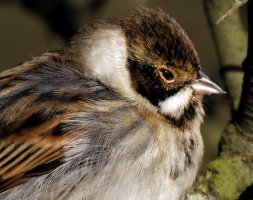
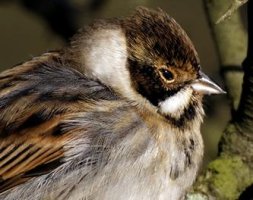
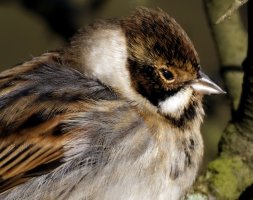
This is a little woodpecker that flew up when I was testing my 5D MK III with 1.4 MKII TC last summer. Its hand held, and more than adequate considering. I did tough it up to bring out some of the deep shadows as much as I dared. The aperture was wide open and its at 400mm, which is how it gets used most of the time.

You're giving me the confidence to use this combination, and not be disappointed when I review the pictures. Of course light will be an issue but the 5DMkIII is a good performer at high iso's.
 
Upvote 0
AF performance is horrible particularly with the 100-400 + 1.4x combo. AF performance on the 100-400 is not spectacular to begin with and adding the 1.4 renders it unusable for all but static subjects.

The 1.4x does perform ok on the 400 f5.6 in regards to AF. The images are not great but they are better then the 100-400 + 1.4x.

I personally would not recommend a tc on either of these lenses. Cropping an image in post without a TC will produce a better image.
 
Upvote 0
Mt Spokane Photography said:
I've actually been pleased with the results from my 100-400 plus MK II TC. AF is plenty fast for most good light shots, and if the focus limiter is set, its even faster.

The IQ even with TC beats any similarly priced competition. The new Tamron 150-600 is still a unknown, since we've only seen images from special hand made and tuned lenses. Like many others, I'm watching it with interest.
This is a little woodpecker that flew up when I was testing my 5D MK III with 1.4 MKII TC last summer. Its hand held, and more than adequate considering. I did tough it up to bring out some of the deep shadows as much as I dared. The aperture was wide open and its at 400mm, which is how it gets used most of the time.


100-400%20%2B%201.4X%20%284%20of%204%29-XL.jpg

Mt, you do get some really good results with your 100-400. What was the original pixel size of the crop of the woodpecker?
 
Upvote 0
Canon1 said:
AF performance is horrible particularly with the 100-400 + 1.4x combo. AF performance on the 100-400 is not spectacular to begin with and adding the 1.4 renders it unusable for all but static subjects.

The 1.4x does perform ok on the 400 f5.6 in regards to AF. The images are not great but they are better then the 100-400 + 1.4x.

I personally would not recommend a tc on either of these lenses. Cropping an image in post without a TC will produce a better image.

Good to know. The 400 f/5.6 is not a lens I would consider by the way. It needs IS first and while we're at it an updated 100-400 would be very interesting (as discussed elsewhere on this forum).
 
Upvote 0
mrsfotografie said:
from what I see there's no inexpensive way to get cracking shots at long focal lengths on a budget.

I think you will find that's pretty accurate.


Of course some people will not agree, but that's the interweb thingy for you.
 
Upvote 0
Skulker said:
mrsfotografie said:
from what I see there's no inexpensive way to get cracking shots at long focal lengths on a budget.

I think you will find that's pretty accurate.


Of course some people will not agree, but that's the interweb thingy for you.

Being as "inexpensive", "cracking", "long" and "budget" are not defined, the relevant sentence is as accurate as the old saying "how long is a piece of string". You can pick up a Sigma apo tele macro 400mm f/5.6, which has better MTFs than the Canon 400/5.6 for about £150, which probably falls into the category of inexpensive and some people would consider long.
 
Upvote 0
AlanF said:
Skulker said:
mrsfotografie said:
from what I see there's no inexpensive way to get cracking shots at long focal lengths on a budget.

I think you will find that's pretty accurate.


Of course some people will not agree, but that's the interweb thingy for you.

Being as "inexpensive", "cracking", "long" and "budget" are not defined, the relevant sentence is as accurate as the old saying "how long is a piece of string". You can pick up a Sigma apo tele macro 400mm f/5.6, which has better MTFs than the Canon 400/5.6 for about £150, which probably falls into the category of inexpensive and some people would consider long.

Haha yes it's all a matter of interpretation. Let's call >400 mm 'long', coming from a full frame shooter (who is talking about 'budget' but just bought a new 5D3). All is relative, and I can imagine dishing out 3000 € + for a 'long' lens as long as it gets a fair bit of use, which it won't in my case. Hence the quest for best available long-lens image quality 'on a budget' :D Now who mentioned that Tamron again???
 
Upvote 0
I tried to AFMA the 1.4xTC III on my 100-400 with my 5DIII using FoCal, and the software gave up! I consider anything under 600mm on the 5DIII as not long enough. As my 5DIII is going in for repair, I have used for the past few days the old 7D for bird photography. Its noise has virtually been eliminated at 640-1250 ISO using DxO PRIME. It's slow but miraculous. The noise just goes away with no perceptible loss of resolution of details of bird plumage.
 
Upvote 0
AlanF said:
I tried to AFMA the 1.4xTC III on my 100-400 with my 5DIII using FoCal, and the software gave up! I consider anything under 600mm on the 5DIII as not long enough. As my 5DIII is going in for repair, I have used for the past few days the old 7D for bird photography. Its noise has virtually been eliminated at 640-1250 ISO using DxO PRIME. It's slow but miraculous. The noise just goes away with no perceptible loss of resolution of details of bird plumage.

Interesting, here's another reason I'm keeping my 7D for now. Maybe I'll revert to that 1.6 'TC' when the light is good enough ;)
 
Upvote 0
Yesterday I was out with the 7D + 300mm f/2.8 + 2xTCIII. It was a beautiful day, with lots of light. Here is a 100% crop (1200x950) of a tree sparrow at 1/3200, f/5.6 and iso 640, processed with DxO prime and 0.5 USM. Under it is the same image reduced by 1.6x1.6 times the number of pixels (= 750x594) to mimick what would be the effect of going to FF with the same no. of megapixels on the sensor. You can see a slight amount of pixellation in the plumage at the back of the neck with the FF when enlarged to 1200x950. The lowest image is mimicking the effect of going to FF but using only 400mm focal length (= 333x264). There is a huge loss of detail on blowing it up.

So, with 400mm as the maximum focal length, you are more limited in what you can take, but you can still take fantastic photos of what is within range. That's why I want to have a 7DII and longer lenses. It may be obvious, but it may be useful seeing the images.
 

Attachments

  • 1200x950_900_7D.jpg
    1200x950_900_7D.jpg
    387.7 KB · Views: 494
  • 750x594_900_5D.jpg
    750x594_900_5D.jpg
    80.9 KB · Views: 516
  • 333x264_400_5D.jpg
    333x264_400_5D.jpg
    20 KB · Views: 455
Upvote 0
AlanF said:
Yesterday I was out with the 7D + 300mm f/2.8 + 2xTCIII. It was a beautiful day, with lots of light. Here is a 100% crop (1200x950) of a tree sparrow at 1/3200, f/5.6 and iso 640, processed with DxO prime and 0.5 USM. Under it is the same image reduced by 1.6x1.6 times the number of pixels (= 750x594) to mimick what would be the effect of going to FF with the same no. of megapixels on the sensor. You can see a slight amount of pixellation in the plumage at the back of the neck with the FF when enlarged to 1200x950. The lowest image is mimicking the effect of going to FF but using only 400mm focal length (= 333x264). There is a huge loss of detail on blowing it up.

So, with 400mm as the maximum focal length, you are more limited in what you can take, but you can still take fantastic photos of what is within range. That's why I want to have a 7DII and longer lenses. It may be obvious, but it may be useful seeing the images.

Interesting. Of course this only applies when the lens has a high enough resolving power to satisfy the higher pixel density of a crop body. What I'm thinking of is that given the same pixel count on a crop vs full frame sensor, the full frame will be more forgiving to lens resolving power, because the pixels are spaced further apart. ie a longer focal length lens that resolves less detail still may be good enough to give the same detail as a crop sensor on a higher resolving lens.
I see the effect of resizing on effective resolution
 
Upvote 0
tron said:

Thanks for the link, it is inevitable that certain topics are discussed time and time again as we're all on a different learning curve. I found the quote below to be most relevant to my current camera gear situation (5D3 + 1.4TC II + 100-400); I wonder what is meant by 'Occasionally, I find some weird pattern to the bokeh'. Oh well I guess I will find out for myself. At least I'm fairly confident that this combination is capable of delivering 'keepers'; otherwise I wouldn't try going that route in the first place - nothing more frustrating than reading out your photo's and finding they're all duds (hard to judge in the field by the small screen on the camera, even by magnifying).

Maybe I should rephrase the question to 'what lens, with or without TC delivers the best available image quality above 400 mm (500 mm+) on a full frame camera, but for less than, say 3500-4000 dollars'.

Tom W said:
I haven't given it a good full test yet, but I am enjoying backyard bird photography with the 5D3, 100-400 and the 1.4X II. Focus is reasonably quick, and it is pretty accurate. The image quality is decent, not on par with the big primes, but definitely not bad either. Occasionally, I find some weird pattern to the bokeh, but I think that's more a fault of the 100-400 than anything.

The true test will come with using some of the bigger glass and teleconverter combinations to see how it works for very long distance shooting. I've found, though, that stacking teleconverters does take its toll on IQ so that the results will be slightly less than optimal.

I'm really considering a 500/4 II in the future - somewhat light, and compatible with the 1.4X or the 2X teleconverters to give a variety of very long lens capability without the heft of the 400/2.8.
 
Upvote 0
mrsfotografie said:
AlanF said:
Yesterday I was out with the 7D + 300mm f/2.8 + 2xTCIII. It was a beautiful day, with lots of light. Here is a 100% crop (1200x950) of a tree sparrow at 1/3200, f/5.6 and iso 640, processed with DxO prime and 0.5 USM. Under it is the same image reduced by 1.6x1.6 times the number of pixels (= 750x594) to mimick what would be the effect of going to FF with the same no. of megapixels on the sensor. You can see a slight amount of pixellation in the plumage at the back of the neck with the FF when enlarged to 1200x950. The lowest image is mimicking the effect of going to FF but using only 400mm focal length (= 333x264). There is a huge loss of detail on blowing it up.

So, with 400mm as the maximum focal length, you are more limited in what you can take, but you can still take fantastic photos of what is within range. That's why I want to have a 7DII and longer lenses. It may be obvious, but it may be useful seeing the images.

Interesting. Of course this only applies when the lens has a high enough resolving power to satisfy the higher pixel density of a crop body. What I'm thinking of is that given the same pixel count on a crop vs full frame sensor, the full frame will be more forgiving to lens resolving power, because the pixels are spaced further apart. ie a longer focal length lens that resolves less detail still may be good enough to give the same detail as a crop sensor on a higher resolving lens.
I see the effect of resizing on effective resolution

The resizing experiments recapitulate the Nyquist theorem. In order to resolve two points in an image they must be cleanly separated by a pixel on the sensor. More closely packed pixels do require a sharper lens so that the points in the image are not blurred. The sharpness of good Canon lenses with high mtfs is not limiting for resolution, it is their focal lengths that are crucial.
 
Upvote 0
AlanF said:
..... Under it is the same image reduced by 1.6x1.6 times the number of pixels (= 750x594) to mimick what would be the effect of going to FF with the same no. of megapixels on the sensor. .....

You are "mimicking" a negative of the "FF", while not making any allowance for the many other differences.

For a valid comparison I would recommend that you use images for the systems you attempt to compare.
 
Upvote 0
Skulker said:
AlanF said:
..... Under it is the same image reduced by 1.6x1.6 times the number of pixels (= 750x594) to mimick what would be the effect of going to FF with the same no. of megapixels on the sensor. .....

You are "mimicking" a negative of the "FF", while not making any allowance for the many other differences.

For a valid comparison I would recommend that you use images for the systems you attempt to compare.

I have many boring images of brick walls comparing 400mm, 420mm and 600mm on my 5DIII and 7D. The trick of reducing pixel count isolates the factor from the Nyquist theory. What does '"mimicking" a negative of the "FF"' mean?
 
Upvote 0
AlanF said:
Skulker said:
AlanF said:
..... Under it is the same image reduced by 1.6x1.6 times the number of pixels (= 750x594) to mimick what would be the effect of going to FF with the same no. of megapixels on the sensor. .....

You are "mimicking" a negative of the "FF", while not making any allowance for the many other differences.

For a valid comparison I would recommend that you use images for the systems you attempt to compare.

I have many boring images of brick walls comparing 400mm, 420mm and 600mm on my 5DIII and 7D. The trick of reducing pixel count isolates the factor from the Nyquist theory. What does '"mimicking" a negative of the "FF"' mean?
You reduced the number of pixels but you could not made them bigger of course ...
 
Upvote 0
tron said:
You reduced the number of pixels but you could not made them bigger of course ...
This is one of those areas where everyone has their viewpoint, and it can be argued about forever without a meaningful conclusion.

However, as far as I'm concerned, if you downsample, it should be pretty similar to taking the image with a lower MP sensor in the first place - as long as both sensors have the same percentage of the surface area taken up with light capturing pixels. If there are notable gaps between the pixels, the higher MP sensor will obviously have a larger proportion of its surface area not gathering light - resulting a lower S/N ratio even when printed/displayed at the same size.

If we're talking gapless, perfect capture of the whole surface area, no extra noise generated by extra circuitry and the same generation sensors, the S/N ratio should be identical when printed/displayed at the same size - its just the higher density sensor allows you to magnify the image more - that is magnify both the detail and noise more.

Another variable is sharpness - downsample by a whole number like say a 6000x4000 pixel image to a 3000x2000 pixel image can overcome bayer sensor limitations at a pixel level, creating a sharper image than capturing it with a 3000x2000 pixel sensor. But downsample by a non whole number such as 5760x3840 to 5184x3456, and that can introduce softness. These two factors play off each other, so there are some gains with any downsampling ratio, and at most downsampling ratios, some losses.
 
Upvote 0
You guys wanted real photos, here are some that will bore you rigid - the pixel peepers Nirvana, photos of a brick wall. Not just any brick wall, they are of a medieval chimney seen from my garden. The mortar is lime and grit, the bricks have ancient firing cracks on them. You can check the resolution of lenses by what you can make out of the grit and cracks.

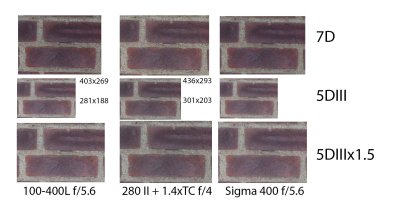
The first collage is of tiny centre 100% crops taken with a 100-400mm L at 400mm and f/5.6, 300 f/2.8 II + 1.4XTC III (420mm at f/4) and a Sigma 400mm apo tele macro at f/5.6. The top row are crops of ~ 400x300 pixels^2 from images on a 7D, the middle row of ~300x200 from a 5DIII, the bottom row is the middle row scaled up by 1.5x1.5 times to give the same number of pixels as the top. All have no sharpening, from RAW images. For these extremes of pixel peeping, the resolution of the lenses on the 7D beats the same lenses on the 5DIII, and the 420 combo beats the Sigma prime, which is marginally better than the zoom.

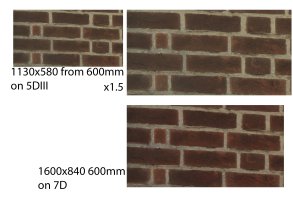
The bottom collage is of the same chimney, but of different bricks (and more of them but at the same distance) on a different day. The top row is using a 300 f/2.8 II + 2XTC III (600mm at f/5.6) on a 5DIII, with the image on the right multiplied by 1.5x.1.5 times to give the same number of pixels as from the same lens combo on the 7D at the bottom. You can easily see the huge increase in resolution on going from the 400s on the 5DIII in the first collage to the 600 on the 7D in the second.
 

Attachments

  • 400mm_5D_7D_Collage.jpg
    400mm_5D_7D_Collage.jpg
    187 KB · Views: 544
  • 7Dvs5D_600mm.jpg
    7Dvs5D_600mm.jpg
    521.5 KB · Views: 528
Upvote 0
Crop vs. FF for telephoto work - the arguments are all good and fine with bricks (I like them, Alan!). In real-world shooting, however, once you hit ISO 1600 or try to focus at f/8, the 7D falls flat, at least for my needs.

The 5DIII + 300 f/2.8L IS II + 2x III combination focuses well once you perform AFMA. I've even used it with a drop-in CPL in a moving boat with AI Servo, but I can't say that worked particularly well (~50% in focus). The biggest improvement comes from engaging the the focus limiter to keep it from hitting MFD.
 
Upvote 0