
You are using an out of date browser. It may not display this or other websites correctly.
You should upgrade or use an alternative browser.
You should upgrade or use an alternative browser.
Canon EOS 60D Pictures?
- Thread starter Canon Rumors
- Start date
- Status
- Not open for further replies.

I like the roundness of it. Looks solid.
The button on the left dial is interesting but the placement of the off-on switch seems weird...
The button on the left dial is interesting but the placement of the off-on switch seems weird...
Upvote
0
S
Sebastian
Guest
Seems like Canon wants to stick with the main power switch under the mode dial on APS-C cameras like introduced with the 7D. To be honest, I think that's a totally stupid place. Every single digital Canon camera I owned so far could be conveniently switched on and off either with the thumb or the index finger of the right hand, while holding the camera in the same way while shooting. With the power switch on the "new position" you definitely need your left hand for switching on and off. To me, that's a step-down in ergonomics.
Upvote
0
G
gkreis
Guest
afrank99 said:pierlux said:I was hoping Canon might do the same with the 60D. After all, 2x18MP APS-C cameras are already available from Canon, therefore diversifying its commercial offer could have proven a successful move.
I do think that having the highest pixel-count in the APS-C market actually is a very successful move (from an economic perspective).
By the way, lower pixel count does not mean lower noise.
Most people compare noise levels at 100% view which does not reflect reality - it's the whole image that counts.
After all, the amount of light that hits the sensor is only depending on total sensor surface area (excluding microlens gaps of course) and not on pixel size.
Wrong. This idea doesn't take into account the inherent noise in the technology.
http://www.clarkvision.com/imagedetail/does.pixel.size.matter/#Depth_of_Field_Myth
People like to point to photos that show the 7D doing just fine, BUT that is in well lit scenes. When the light begins to drop -- when some of us photographers like to shoot or are forced to shoot -- the 7D's small pixels are a problem. There is no substitute for larger pixels, period, if you are looking for better dynamic range and reduced noise. In the link above he explores the ideal pixel size (too few hurts images and too small hurts). The 7D and 50D crossed the line for the APS-C. I think a 13-14 megapixel APS-C is the sweet spot. Nikon, if the rumors are true, is being dragged into this pixel war that is not helping us folks.
Upvote
0
I
Idahophoto
Guest
I for one like the new look especially the change of the power switch. I hate where it is located on the 50D, drives me nuts. I find the Canon way of arranging buttons very frustrating since I moved over from Nikon and have thought hard about going back. This though looks like it might have merit and worth staying.
Dont get me wrong I love the 50D in many ways and tossing up buying a second one. It's a fantastic camera, but yeah I am glad to see the change in button placements. Took me like 5 min to learn all the functions on my old Nikon system after a year with Canon thee are still things I have to search for.
The body seems smaller something I am not sure if I am fond of. I for one like a hefty body, they always feel more rugged to me, I am exited though to see the tilt screen this can come in real handy I think. I cant wait to see the full specs so I can decide on buying another 50D or a 60D.
Dont get me wrong I love the 50D in many ways and tossing up buying a second one. It's a fantastic camera, but yeah I am glad to see the change in button placements. Took me like 5 min to learn all the functions on my old Nikon system after a year with Canon thee are still things I have to search for.
The body seems smaller something I am not sure if I am fond of. I for one like a hefty body, they always feel more rugged to me, I am exited though to see the tilt screen this can come in real handy I think. I cant wait to see the full specs so I can decide on buying another 50D or a 60D.
Upvote
0
Hmm... I would have preferred a Sony style vertical hinge than the side hinge myself, but this is looking interesting... the biggest question I have is: how much? Since it looks like it is a step down in target overall, then I hope the pricing goes that way too.
Upvote
0
L
Loswr
Guest
SMP_Homer said:missing joystick?
Well, that's not so good if true. AF point selection would problematic (less so assuming it maintains the 9-point AF, but it still means pressing a button then spinning the quick dial rather than just a one-step operation). Also, what about image review with magnification? How would one move about the magnified image?
But I don't think it's missing, just redesigned. Look closely at the 3rd image, between the Menu and Info buttons - that seems to be the joystick, just smaller and square, instead of bigger and round.
Upvote
0
afrank99 said:pierlux said:...for a lower MP APS-C camera, maybe offering 2x18MP and one, say, 12-14MP bodies would better cover the customers' needs. Personally, I would love to have a lower MP APS-C body to complement my 5DII in replacement of my old 300D (yes, I still use, though not much, the original Rebel!).
I don't see any advantage in having a lower pixel count.
Not noise wise, not dynamic range wise and obviously not detail wise.
If it's the file sizes, why not use mRAW?
Some guys even say the 7D produces 10MP mRAWs that look better than any 12 or 14MP DSLR.
Well, not noise wise, but as concerns dynamic range I should say an advantage exists for low pixel density sensors over those having tightly packed photosites. Let's put it this way: at high ISO, I like the 40D image quality better than that of the 50D. There's always a difference between theory and practice.
Upvote
0
chrome_dude said:Wrong. This idea doesn't take into account the inherent noise in the technology.
Right, not wrong.
I think both my physics degree and 10 years of experience in semiconductor production do help me having a clear understanding what goes on in a solid-state imaging sensor and signal processing in general.
Resizing a 18MP image to 10 MP using a decent algorithm is not very much different to using a 10MP sensor with larger pixels in terms of signal processing. After all it's always about integrating photon impact over time and position - it doesn't matter so much if it's done in the hard or the software.
Upvote
0
L
laxative
Guest
Look closely under the back wheel. It's still there! Phew, thought i would be moving to Nikon for a while :afrank99 said:No - wait - there's no direct print button!

Upvote
0

Mark D5 TEAM II
Proud N0ink 0wnz0r / crApple iFruitcake H4t3r
Nice source CRGuy, first CR3 info in a long while 8). I'm glad that Canon chose the long-rumored side-hinged design for the 60D LCD rather than the bottom-hinged design on the D5000, which is unusable on a tripod or low on the ground. Would have been even better with the Sony-style folding LCD. I hope the VF view doesn't suffer due to the thicker screen. The 8-way mini-joystick inside the RCD is a good use of empty space, as is the 7D-style toggle switch for the EOS Movie/LV mode. If this is the supposed 60D and not the 2000D, then the latter would most prolly be just a rebadged 450D, like the previous rumors suggested.
Upvote
0

This may be right for DSLRs with big enough pixels. For point'n'shoots I personally think it's wrong. As far as "dynamik range" is concerned, the photogate of the pixel is "full" when a certain amount of photons are collected. The bigger the pixel, the higher the capacity of the photogate, the higher the dynamik range.afrank99 said:Resizing a 18MP image to 10 MP using a decent algorithm is not very much different to using a 10MP sensor with larger pixels in terms of signal processing. After all it's always about integrating photon impact over time and position - it doesn't matter so much if it's done in the hard or the software.
Edit: By the way, I really like the pictures of the camera. Looks like a small camera with good ergonomics and good built quality to me.
Upvote
0
afrank99 said:Resizing a 18MP image to 10 MP using a decent algorithm is not very much different to using a 10MP sensor with larger pixels in terms of signal processing.
In theory you are right but in practice you are wrong.
What you are saying is true only if the two sensors collect the same amount of light.
Consider this, though - the top surface of a sensor has an 'active' area (which collects light) and a wiring area (basically a dead area in terms of light collection).
More pixels on a sensor requires more wires.
If two sensors use the same wire size, more wires = larger dead area (and hence smaller active area).
So, an 18mp sensor will actually collect *less* light than a 10mp sensor - if both sensors use the same size wires and everythng else is the same.
FYI, Canon has not shrunk the wire size of their sensors since they started making sensors in 2003 (?).
Upvote
0
L
Loswr
Guest
x-vision said:So, an 18mp sensor will actually collect *less* light than a 10mp sensor - if both sensors use the same size wires and everythng else is the same.
FYI, Canon has not shrunk the wire size of their sensors since they started making sensors in 2003 (?).
You seem to be forgetting about microlenses, which function to minimize the effects of inter-photosite spaces. Also, while Canon may not have 'shrunk the wire size' they recently (50D, 7D, 1DIV) changed over to using gapless microlenses, meaning essentially no light lost to the spaces between the photosites. So, an 18mp sensor with gapless microlenses will collect *the same* amount of light as a 10mp sensor with gapless microlenses.
Upvote
0
E
ELK
Guest
Good news:
- there is a button on mode dial
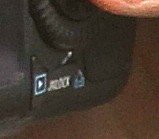
- while there is still direct print icon drawn at the right bottom, but there is no dedicated button for that - see attached slightly brightened crop. Seems it's function is combined with play/review button, which is great, imho.
Bad news:
- the body looks like non-metal as rumored
- there is a button on mode dial
- while there is still direct print icon drawn at the right bottom, but there is no dedicated button for that - see attached slightly brightened crop. Seems it's function is combined with play/review button, which is great, imho.
Bad news:
- the body looks like non-metal as rumored
Attachments
Upvote
0
- Status
- Not open for further replies.
Similar threads

- Replies
- 166
- Views
- 71K
- Replies
- 105
- Views
- 47K

- Replies
- 27
- Views
- 20K
- Replies
- 59
- Views
- 22K
- Replies
- 74
- Views
- 22K