I'd go for mechanically linked focus with full time manual override and an external distance / depth of field gauge. Everything else can remain the same that would be compatible with those requirements.
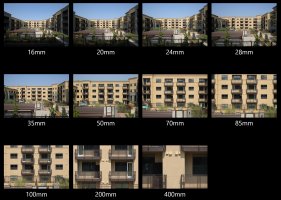
Larger optics on the exit would also be nice. If you take the 24mm f/1.4 ii USM lens and compare it to, say, the EF 24-70 f/4 IS USM lens you'll notice something interesting at 24mm for each when digital corrections are applied: more scene is displayed in the final TIFF or JPEG with the prime than with the zoom. The pixel dimensions are the same, but more scene is presented. If you turn off corrections the scene is the same. The correction for zoom requires some crop, apparently, to gets things right — but the prime, with its huge exit optics, gets by with less adjustment. I suspect that for the VCMs either Canon has oversized the intake glass or made the real mm count a tag shorter (23 vs 24, 13 vs 14) to compensate for the small exit glass or there truly is less scene captured with the VCM for the stated length and with a lack of good comparisons no one is the wiser — and hey, "good enough" is "good enough."
Now I'm not saying people shouldn't buy the VCM lenses — I think they're a great idea and serve multiple audiences at once. I have no doubt that a collection of VCMs will make someone smile for years to come.
But mechanically linked focus (no power required) and external aids (no need to chimp in the EVF or back screen) with big exit optics covering the sensor are worth something. Apparently they cost less, too, given the price of a 24mm EF prime and a 24mm VCM prime:
EF 24mm f/1.4 II USM at BH Photo - $1,549 regular price
RF 24mm f/1.4 VCM - $1,649 regular price
So I don't think it's in the realm of crazy for Canon to do the best of both for many people at a reasonable price. Canon's made "big glass and fast" for years before RF with world winning results.
Not that I think Canon is under any pressure to do so at this time. The EF lens stock for the most recent generation of quality EF glass remains large, as is the installed base. Canon has the luxury at this time of pushing as hard in innovation as they can on the RF mount without insulting too many people in this regard, and later they can bring forward some classic elements or let a third party do so. Right now solutions like VCM make good sense, with small optics and digital corrections achieving size and weight reductions; as do sports lenses that can auto-AF track with superman like ability — even if at the cost of no-mechanical linking, power-on-only, etc.




 thx
thx


