Re: Deep Sky Astrophotography
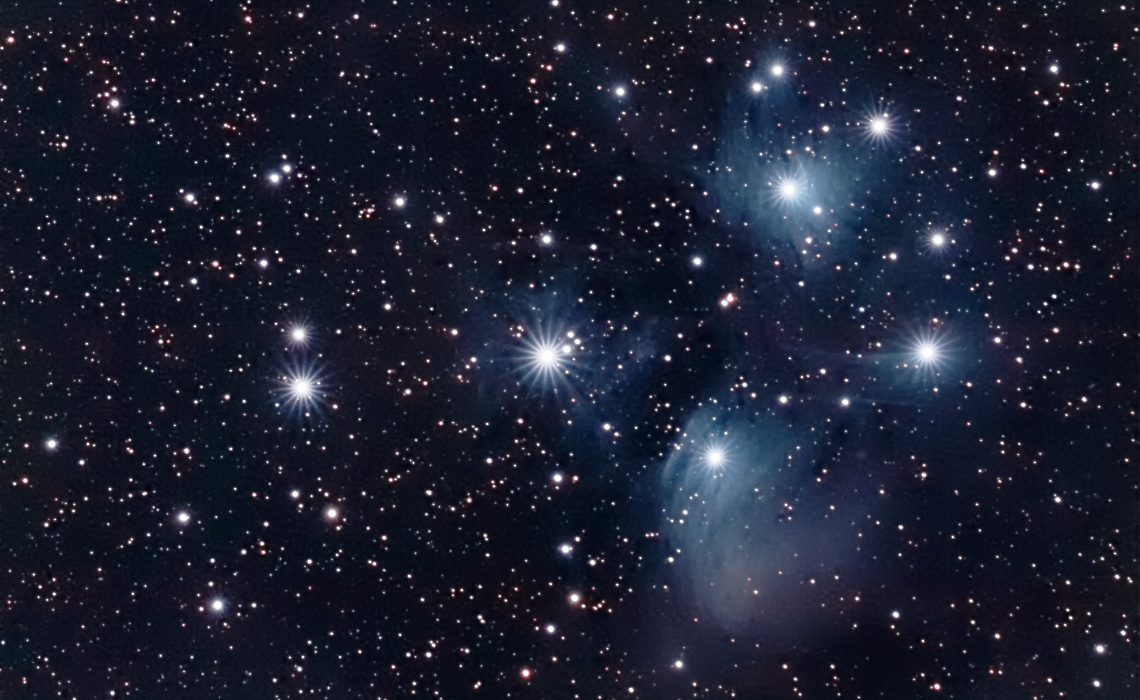
Two more images. Two nights ago, we had a fluke clear sky...forecast showed cloudy at sunset, turned out to be clear from sunset until after midnight. I got some imaging done on a number of objects, including Pleiades again.
This shot of the Pleiades was much more deeply exposed than my first attempt, however I ended up having some problems with my guiding that consumed a lot of the detail present in the nebula. I worked on this image for two days, but because of the guiding issues, I think it's the best I can do without trying again with better subs:
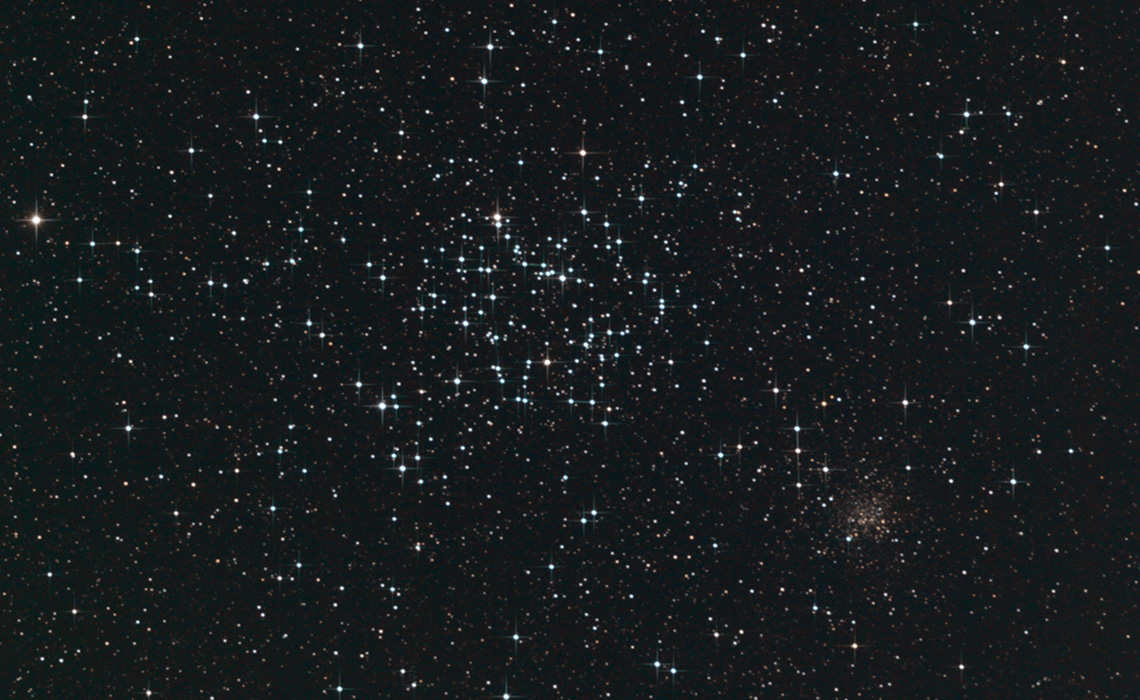
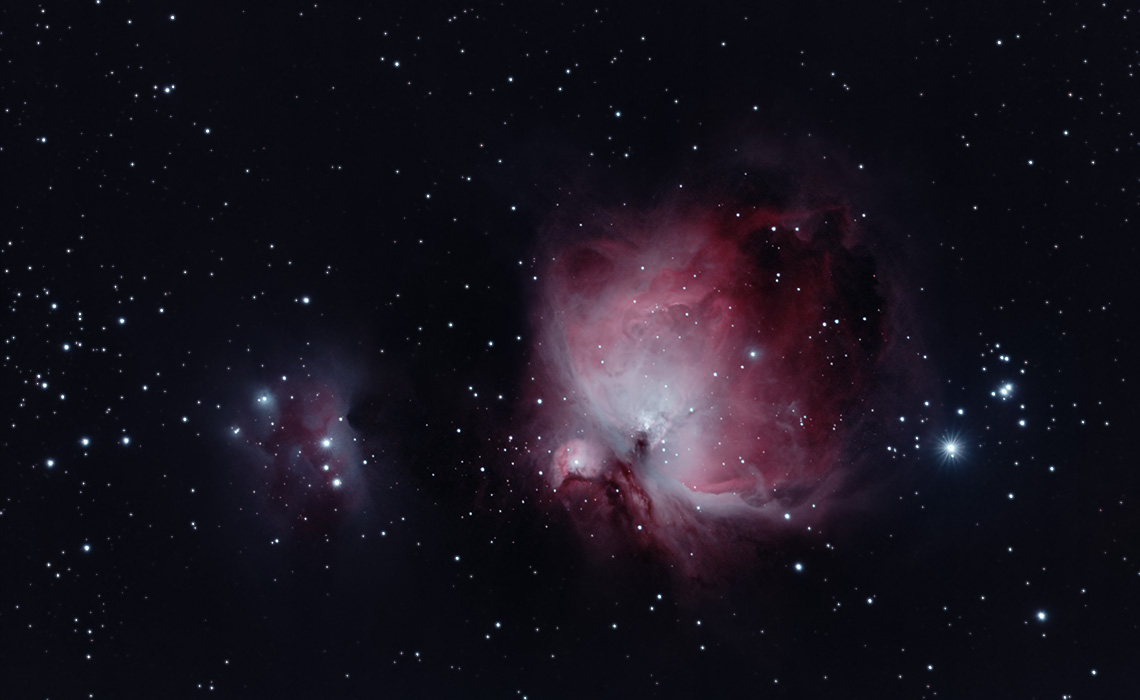
I also imaged two other regions of the sky. Orion slipped behind the trees before I had a change to get any exposure time on M78. So I looked a little higher in the sky, in Gemini. I was first looking for Jellyfish Nebula, but it is extremely dim, and I knew the mount was having problems guiding, which would have destroyed a lot of the nebula detail. So looking around the same area, I found M35 and NGC2158, two open clusters about too moon diameters above Jellyfish:
The color is slightly false...the blue stars of M35 (the larger cluster) should be just a touch paler, and the red stars of NGC2158 should be a little more varied. I have to use a light pollution filter from my back yard, and it blocks out most of the greens, hence the skewed color.
I also started imaging one of the galaxy clusters in Leo, however by the time I managed to get that sequence started, the clouds had closed in, and I only managed to get 7 subs before Leo was clouded over.
I am hoping to solve my guiding issues next time there is a clear sky. I also have the option of programming PEC, or Periodic Error Correction, in my mount, which can improve tracking accuracy even further. It's complicated, though, so I haven't tried that yet. I think I'll need about five minute exposures to get good light on the galaxies (and "Galaxy Season" is coming up...once Orion sets, the Milky Way is generally out of sight for most of the night, and the constellations that are overhead, like Leo and the Big Dipper, have bunches of galaxies in them. Until late April, early May, about the only interesting things to image are galaxies.)