EOS 7D Mark II Spec List Surfaces [CR1]

bassfield said:
unfocused said:
Okay, since I've been soundly mocked for suggesting a 1-2 stop improvement in ISO performance for a 7DII, I'm a bit stunned.

Is it the consensus of the techies on this forum that is truly impossible for any manufacturer to produce an APS-C sensor in which the noise level at 1,200 ISO is comparable to 400 ISO (a 1.5 stop improvement)? Or, for that matter, that ISO 800 could look as good as ISO 400 (a one stop improvement)?

That doesn't seem like an unrealistic expectation, but apparently it is.

If that is truly the case, then I have to wonder what is the point of any future upgrades? Yes, I understand there is more to a camera than the sensor and even with sensors there is the whole quagmire of dynamic range that I'd rather not get into. But, given some of the real world and highly impressive images I've seen on this forum and elsewhere shot with the 5DIII at, what for me as a former film shooter, are remarkable ISOs (3200, 6400 etc.) it just doesn't seem unreasonable to expect the 7DII to boost its ISO performance by even one stop.

If we are truly at the physical limits of sensor performance and can never get an additional fstop out of any future sensor, what does that mean for the industry? And, as a side note, given that Canon is poised to jump into the surveillance market in a much bigger way, is this a fool's errand if we have reached the limits of low-light performance?


Quantum efficiency (QE) is the fraction of photon flux that contributes to the photocurrent in a pixel. Increasing QE improves sensor signal to noise ratio and dynamic range.
There are sensors from Sony who has a QE of 75% and a pixel size of 1,85 micron, Canon best sensor regarding QE is in S100 compakt camera and QE 52% , 6D has the best QE among Canon SLR with 50% compared with Nikon D800 and 56% QE
The read noise from Canon are 10 times higher (6D) up to 14 times higher (1dx) than in Nikon D800 .
Improving an APS sensor with real 1,5-2 stops in terms of signal /noise is a big challenge and can not be done with Canon's existing sensor technology regarding APS and 24x36mm sensors
Quantum efficiency (QE) is the fraction of photon flux that contributes to the photocurrent in a pixel. Increasing QE improves sensor signal to noise ratio and dynamic range.
There are sensors from Sony who has a QE of 75% and a pixel size of 1,85 micron, Canon best sensor regarding QE is in S100 compakt camera and QE 52% , 6D has the best QE among Canon SLR with 50% compared with Nikon D800 and 56% QE
The read noise from Canon are 10 times higher (6D) up to 14 times higher (1dx) than in Nikon D800 .
Improving an APS sensor with real 1,5-2 stops in terms of signal /noise is a big challenge and can not be done with Canon's existing sensor technology regarding APS and 24x36mm sensors
Whew, that's a relief! So... it's still safe to go out and take photos, no? ???
 
Upvote 0
Krob78 said:
bassfield said:
Quantum efficiency (QE) is the fraction of photon flux that contributes to the photocurrent in a pixel. Increasing QE improves sensor signal to noise ratio and dynamic range.
There are sensors from Sony who has a QE of 75% and a pixel size of 1,85 micron, Canon best sensor regarding QE is in S100 compakt camera and QE 52% , 6D has the best QE among Canon SLR with 50% compared with Nikon D800 and 56% QE
The read noise from Canon are 10 times higher (6D) up to 14 times higher (1dx) than in Nikon D800 .
Improving an APS sensor with real 1,5-2 stops in terms of signal /noise is a big challenge and can not be done with Canon's existing sensor technology regarding APS and 24x36mm sensors
Whew, that's a relief! So... it's still safe to go out and take photos, no? ???

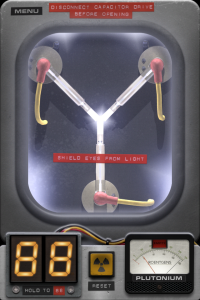
Just be sure you have a working flux capacitor.
 
Upvote 0
unfocused said:
Krob78 said:
bassfield said:
Quantum efficiency (QE) is the fraction of photon flux that contributes to the photocurrent in a pixel. Increasing QE improves sensor signal to noise ratio and dynamic range.
There are sensors from Sony who has a QE of 75% and a pixel size of 1,85 micron, Canon best sensor regarding QE is in S100 compakt camera and QE 52% , 6D has the best QE among Canon SLR with 50% compared with Nikon D800 and 56% QE
The read noise from Canon are 10 times higher (6D) up to 14 times higher (1dx) than in Nikon D800 .
Improving an APS sensor with real 1,5-2 stops in terms of signal /noise is a big challenge and can not be done with Canon's existing sensor technology regarding APS and 24x36mm sensors
Whew, that's a relief! So... it's still safe to go out and take photos, no? ???

Just be sure you have a working flux capacitor.
I have a prototype for the new 700EX-RT flash.... it has one.... and the guide number is 1,210,000,000 :)
 

Attachments

  • FluxCapacitor.png
    FluxCapacitor.png
    717.8 KB · Views: 371
Upvote 0
Lee Jay said:
traveller said:
I can't help thinking that with declining sales across the board there are too many cameras and too little real innovation in most manufacturers' line-ups. Perhaps it would be a good idea to make the 7D MkII the last conventional DSLR (at least in the APS-C range) and move towards a future without mirrors.

Good grief. EVFs are years, if not decades away from being usable in high-speed and/or low-light situations, plus we need a good factor of 4 increase in battery performance before we go that way.

Totally agree. I'll never use anything but an OVF for my wildlife and bird photography...unless they somehow do manage to create an EVF with 10,000 ppi, 20 stops DR, and a 60fps refresh rate (something I doubt will happen any time soon...)
 
Upvote 0
Lichtgestalt said:
Lee Jay said:
I don't want to get stills from video but I also don't know why I should accept poorer frames for video than I do for stills.

...
even with a 50inch 4k display you will hardly see a difference from normal viewing distances.
the human eye is not able to resolve that good.
...

Erm, this is so completely wrong. It entirely depends on your visual acuity. The whole notion of the "average" person having 20/20 vision implies that a certain percentage of people also have better vision (and some much better), and that a similar percentage of people have worse vision (and some much worse). For the people who have worse vision, corrective optics these days EASILY correct vision beyond the 20/20 mark. Personally, I am slightly near sighted, and with my contacts or glasses, I have 20/10 vision, like so many other people with corrective lenses. (At my eye doctors office, they generally purposefully try to find the absolute best correction possible, aiming for the highest visual acuity possible. They see thousands of people a year, so you have to figure that between people with excellent vision, people who are slightly far sighted, and everyone walking around with corrective lenses...the "average" visual acuity is actually higher than 20/20.)

I currently have a trusty old Samsung 46" 1080p TV, and I can just barely see pixels when sitting from the TV at a "comfortable" distance. The distance is ideal for my room setup, with the TV at the recommended distance from my couch. There is no question that bumping the resolution up to 4k would do wonders for quality. It is just simply not enough to have pixels just on the border of 20/10 visual acuity (which is what's recommended)...you need to have the pixels be much smaller in order for them to NEVER intrude on your experience.

Same thing goes for using higher resolution computer screens. Even sitting an appropriate, comfortable distance from my 30" 2560x1600 screen, which until 4k displays started arriving had one of the smallest desktop pixel pitches, exhibits this slight pixellation effect. I can't exactly see individual pixels, but they are again just on the border of my visual acuity...so they bug me. A 4k 32" display would almost reduce the pixel pitch in half, and do wonders for microcontrast and allow me to see fine detail in my photos as fine detail, rather than fine pixels that contain detail I should be able to see. Furthermore, if you print, you'll know that it is extremely difficult to soft proof a print on a screen that has at least 1/3rd the pixel density of the print. You can never really tell how the detail will turn out in a print. Personally, I'd be ecstatic with a 28" screen that had a 300ppi pixel density. I'd be able to properly soft-proof the majority of my larger prints at a directly comparable resolution.

There is a LOT going for 4k screens, both TVs as well as workstation screens. The human eye absolutely can resolve that well unless you have particularly poor vision or just have average vision and don't use corrective lenses. Same as with sensor pixel densities, however...the actual output resolution of any system is effectively approximated by the RMS of the individual components. Increase the resolution of a screen, and the ultimate resolution of what your mind's eye sees will still improve, even if you have only 20/20 vision.
 
Upvote 0
silversurfer96 said:
The new spec looks tempting. Maybe I should consider selling my current one...

I wouldn't sell until the date they will hit the shelves is known. If Canon's past camera releases are any indication, the actual arrival of any new Canon DSLR is somewhat like the return of Jesus Christ...unknown, unknowable and like a thief in the night. ;)
 
Upvote 0
bassfield said:
unfocused said:
Okay, since I've been soundly mocked for suggesting a 1-2 stop improvement in ISO performance for a 7DII, I'm a bit stunned.

Is it the consensus of the techies on this forum that is truly impossible for any manufacturer to produce an APS-C sensor in which the noise level at 1,200 ISO is comparable to 400 ISO (a 1.5 stop improvement)? Or, for that matter, that ISO 800 could look as good as ISO 400 (a one stop improvement)?

That doesn't seem like an unrealistic expectation, but apparently it is.

If that is truly the case, then I have to wonder what is the point of any future upgrades? Yes, I understand there is more to a camera than the sensor and even with sensors there is the whole quagmire of dynamic range that I'd rather not get into. But, given some of the real world and highly impressive images I've seen on this forum and elsewhere shot with the 5DIII at, what for me as a former film shooter, are remarkable ISOs (3200, 6400 etc.) it just doesn't seem unreasonable to expect the 7DII to boost its ISO performance by even one stop.

If we are truly at the physical limits of sensor performance and can never get an additional fstop out of any future sensor, what does that mean for the industry? And, as a side note, given that Canon is poised to jump into the surveillance market in a much bigger way, is this a fool's errand if we have reached the limits of low-light performance?


Quantum efficiency (QE) is the fraction of photon flux that contributes to the photocurrent in a pixel. Increasing QE improves sensor signal to noise ratio and dynamic range.
There are sensors from Sony who has a QE of 75% and a pixel size of 1,85 micron, Canon best sensor regarding QE is in S100 compakt camera and QE 52% , 6D has the best QE among Canon SLR with 50% compared with Nikon D800 and 56% QE
The read noise from Canon are 10 times higher (6D) up to 14 times higher (1dx) than in Nikon D800 .
Improving an APS sensor with real 1,5-2 stops in terms of signal /noise is a big challenge and can not be done with Canon's existing sensor technology regarding APS and 24x36mm sensors

Agreed....to get a visible improvement in high ISO noise performance on an APS-C sensor, Canon is going to have to improve their sensor technology. They will also need to improve their ADC technology as well, though, as a lot of read noise in Canon's current technology actually comes from downstream sources. Those downstream sources seem to cause worse read noise at lower ISO than at higher, but Canon's Q.E. has been improving at a snails pace, and without a significant jump, it is doubtful anyone will see any drastic improvement at higher ISO settings. Given that the 7D II is currently rumored to use a DIGIC 5+, it seems doubtful that Canon has changed any significant aspects of their design...the DIGIC chips currently house their ADCs, so it is most likely that the 7D II will just have two higher stops of even noiser high ISO, rather than an improvement in ISO 3200 by a stop or two.
 
Upvote 0
Skirball said:
Doesn't larger FWC allow more DR? Of course, as I type this I'm thinking about the D800 its DR. Ah hell, I'm going back to using the green square mode and not thinking about this crap.

Only really at the lowest ISO setting, however to get more usable DR than the best sensors offer today, you would also need to increase bit depth. The best sensors on the market (Exmor) get around 13.2 stops of DR at the lowest ISO setting. You might be able to push that to 13.8 stops and still use 14 bit data, but to get any meaningful increase, you would need to use full 16 bit data.

Full well capacity is really more a function of pixel area than pixel Q.E. Area is the defining factor when it comes to how much charge a pixel can hold. Increasing Q.E. might improve sensitivity, which is the rate at which photons convert to charge, but it doesn't do anything to increase the maximum charge (FWC) a pixel can contain. That is why cameras with larger sensors generally perform better than smaller sensors...they have historically had larger pixels.

It's a trade-off, though. While those larger pixels have less noise, they also reduce spatial resolution. If you have a FF sensor with 8µm pixels and an APS-C sensor with 4µm pixels, the FF sensor will have a higher FWC and therefor less noise, but also half the resolution.
 
Upvote 0
bassfield said:
Sorry all that I replied with facts regarding improving the Canon APS sensor sensitivity
No problem here my friend! I just wanted to lighten up the tone a bit and keep it real!

Seriously, there is a lot of interest for this body and it's a great thread! Thanks for your thoughts and input! Some of us are learning new, fun facts! ;D
 
Upvote 0
Krob78 said:
bassfield said:
Sorry all that I replied with facts regarding improving the Canon APS sensor sensitivity
No problem here my friend! I just wanted to lighten up the tone a bit and keep it real!

Seriously, there is a lot of interest for this body and it's a great thread! Thanks for your thoughts and input! Some of us are learning new, fun facts! ;D

Same here. Sorry if my flippant response seemed insulting. That was not the intent. I know exactly Jack about sensor technology (or most any technology). I was surprised that what I thought was a not unrealistic expectation was so roundly rejected as impossible. On the other hand, maybe that gives some extra life to my 7D.
 
Upvote 0
jrista said:
Full well capacity is really more a function of pixel area than pixel Q.E. Area is the defining factor when it comes to how much charge a pixel can hold. Increasing Q.E. might improve sensitivity, which is the rate at which photons convert to charge, but it doesn't do anything to increase the maximum charge (FWC) a pixel can contain. That is why cameras with larger sensors generally perform better than smaller sensors...they have historically had larger pixels.

No, larger sensors perform better (for a given exposure) because they are, well, larger. Pixel size is a secondary, mostly irrelevant factor.
 
Upvote 0
Pi said:
jrista said:
Full well capacity is really more a function of pixel area than pixel Q.E. Area is the defining factor when it comes to how much charge a pixel can hold. Increasing Q.E. might improve sensitivity, which is the rate at which photons convert to charge, but it doesn't do anything to increase the maximum charge (FWC) a pixel can contain. That is why cameras with larger sensors generally perform better than smaller sensors...they have historically had larger pixels.

No, larger sensors perform better (for a given exposure) because they are, well, larger. Pixel size is a secondary, mostly irrelevant factor.
Fairly simple reason for this..... assuming the same technology for reading the charge, if you make the photosite with twice the area, it will collect twice the charge, and the accuracy of the reading will be twice as accurate.....but this is only true until saturation is reached.... and that's why FF is so much better in poor light with less of an advantage in good light.
 
Upvote 0
If all the activity here is any indication of the pent-up demand for a 7DII, it is going to fly off the shelves when it gets introduced.... Come on Canon.... introduce it now! A 7DII would fit into my Christmas stocking :)
 
Upvote 0
Don Haines said:
Fairly simple reason for this..... assuming the same technology for reading the charge, if you make the photosite with twice the area, it will collect twice the charge, and the accuracy of the reading will be twice as accurate.....but this is only true until saturation is reached.... and that's why FF is so much better in poor light with less of an advantage in good light.

Wrong, the D800 is as good as the D600. Pixel size is an almost irrelevant factor, sensor size is the main factor (for the same exposure). You are confusing what happens at pixel level with what happens at image level.
 
Upvote 0
Pi said:
Don Haines said:
Fairly simple reason for this..... assuming the same technology for reading the charge, if you make the photosite with twice the area, it will collect twice the charge, and the accuracy of the reading will be twice as accurate.....but this is only true until saturation is reached.... and that's why FF is so much better in poor light with less of an advantage in good light.

Wrong, the D800 is as good as the D600. Pixel size is an almost irrelevant factor, sensor size is the main factor (for the same exposure). You are confusing what happens at pixel level with what happens at image level.

Could you explain so that I can understand your logic? I am not being sarcastic or trolling..... just looking for the explanation so that I can understand....
 
Upvote 0
Don Haines said:
Pi said:
Don Haines said:
Fairly simple reason for this..... assuming the same technology for reading the charge, if you make the photosite with twice the area, it will collect twice the charge, and the accuracy of the reading will be twice as accurate.....but this is only true until saturation is reached.... and that's why FF is so much better in poor light with less of an advantage in good light.

Wrong, the D800 is as good as the D600. Pixel size is an almost irrelevant factor, sensor size is the main factor (for the same exposure). You are confusing what happens at pixel level with what happens at image level.

Could you explain so that I can understand your logic? I am not being sarcastic or trolling..... just looking for the explanation so that I can understand....

A pixel twice as large will have double the well capacity but it has to collect double the light. No gain, no loss. As far as accuracy goes (read noise), it tends to get higher with the maximal charge (see sensorgen) so it all depends on the technology. The photon noise is part of the image an no trickery can reduce it.

You can just forget about the pixels. You have a sensor of a given size, illuminated somehow. If the full well capacity depends mainly on the area of the pixel, then the total capacity of the sensor remains constant. In any case, this is relevant at base ISO only. It does not matter much how you split the sensor into pixels in general - smaller pixels just record more information but with a very noisy image, there is no much information beyond some point anyway.
 
Upvote 0
Pi said:
Don Haines said:
Fairly simple reason for this..... assuming the same technology for reading the charge, if you make the photosite with twice the area, it will collect twice the charge, and the accuracy of the reading will be twice as accurate.....but this is only true until saturation is reached.... and that's why FF is so much better in poor light with less of an advantage in good light.

Wrong, the D800 is as good as the D600. Pixel size is an almost irrelevant factor, sensor size is the main factor (for the same exposure). You are confusing what happens at pixel level with what happens at image level.

Here is my logic......
Let's say that you have two cameras, one with pixels twice the size of the other. We assume a 16 bit a/d converter. We assume that all the circuitry is of the same technology.

You take a picture of the same scene with both cameras. In the first camera there are 0 units of charge in a dark pixel and 500 units of charge in a bright white pixel... Gain is applied (multiply by 128, either digital or analog) and you end up with a 16 bit number where the last 8 bits are noise.
In the second camera there are 0 units of charge in a dark pixel and 1000 units of charge in a bright white pixel... Gain is applied (multiply by 64, either digital or analog) and you end up with a 16 bit number where the last 7 bits are noise.
 
Upvote 0
Don Haines said:
Pi said:
Don Haines said:
Fairly simple reason for this..... assuming the same technology for reading the charge, if you make the photosite with twice the area, it will collect twice the charge, and the accuracy of the reading will be twice as accurate.....but this is only true until saturation is reached.... and that's why FF is so much better in poor light with less of an advantage in good light.

Wrong, the D800 is as good as the D600. Pixel size is an almost irrelevant factor, sensor size is the main factor (for the same exposure). You are confusing what happens at pixel level with what happens at image level.

Here is my logic......
Let's say that you have two cameras, one with pixels twice the size of the other. We assume a 16 bit a/d converter. We assume that all the circuitry is of the same technology.

You take a picture of the same scene with both cameras. In the first camera there are 0 units of charge in a dark pixel and 500 units of charge in a bright white pixel... Gain is applied (multiply by 128, either digital or analog) and you end up with a 16 bit number where the last 8 bits are noise.
In the second camera there are 0 units of charge in a dark pixel and 1000 units of charge in a bright white pixel... Gain is applied (multiply by 64, either digital or analog) and you end up with a 16 bit number where the last 7 bits are noise.

That is noise per pixel, not per area. The signal in the first case will have weight 1/2 of that in the second in the final image. So you multiply by 128 but when you resize to the final output image, you divide that by 2.
 
Upvote 0
Pi said:
Don Haines said:
Pi said:
Don Haines said:
Fairly simple reason for this..... assuming the same technology for reading the charge, if you make the photosite with twice the area, it will collect twice the charge, and the accuracy of the reading will be twice as accurate.....but this is only true until saturation is reached.... and that's why FF is so much better in poor light with less of an advantage in good light.

Wrong, the D800 is as good as the D600. Pixel size is an almost irrelevant factor, sensor size is the main factor (for the same exposure). You are confusing what happens at pixel level with what happens at image level.

Here is my logic......
Let's say that you have two cameras, one with pixels twice the size of the other. We assume a 16 bit a/d converter. We assume that all the circuitry is of the same technology.

You take a picture of the same scene with both cameras. In the first camera there are 0 units of charge in a dark pixel and 500 units of charge in a bright white pixel... Gain is applied (multiply by 128, either digital or analog) and you end up with a 16 bit number where the last 8 bits are noise.
In the second camera there are 0 units of charge in a dark pixel and 1000 units of charge in a bright white pixel... Gain is applied (multiply by 64, either digital or analog) and you end up with a 16 bit number where the last 7 bits are noise.

That is noise per pixel, not per area. The signal in the first case will have weight 1/2 of that in the second in the final image. So you multiply by 128 but when you resize to the final output image, you divide that by 2.

Assuming you resize.

@Don: Pi is referring to Equivalence. He has brought it up in prior threads. The source of the theory is actually very good. Read this: http://josephjamesphotography.com/equivalence/index.htm. It might clear some things up.
 
Upvote 0