Has Canon entered the Graveyard Spiral?

Status
Not open for further replies.
nightbreath said:
jukka said:
privatebydesign said:
NO , but the LCD jpg rendition mirrors the chosen profile and settings in the camera
If you look at D3s vs. D800 screen, there's visible degradation in color rendition in the latter. And it happens when you look at the same file.

Am I wrong?

no you are not wrong, but if you take a raw file from let us say d700 , or d3s and show them in d800, they are looking the same as in d700 or d3s. There are something with the jpg rendition in d800 and some motives=yellow green tint in the d800 LCD.
 
Upvote 0
privatebydesign said:
jukka said:
no, it is easier than that, if some one thinks the LCD shows to green/yellow tint in the Nikon and they are using raw they can adjust the AWB so the display shows a more red warm tone and from the jpg rendition in the LCD (has noting to do with the cameras result and raw files)

Are you serious? Are you really suggesting that the workaround to a $6,000 camera screen profiling issue is to adjust your WB and take every image at the incorrect WB and then fix every one in post? That is wrong on so many levels.....

First, a simple WB degree change almost certainly won't take a green hue out, and definitely not cleanly. Second, unless you are working in a constant light temp then you will have to work out how far out your screen is and constantly change your WB manually by that amount every image. Third, you could ignore AWB as a feature completely, but as the D4 is not designed as a studio camera and a good portion of the users are shooting to jpeg in changing lighting then all of them, because most will be using AWB as it is a robust feature and a huge time saver, are in trouble, think sports and event shooters (though wedding shooters will be shooting RAW I hope, though I know several that don't), PJ's etc etc.

I am not and have not suggested the Nikon D4 is not a good camera, but people on here get so focused on the myriad of "issues" with Canon gear they seem to forget that all manufacturers have similar problems, I was just pointing a few of them out.

jukka said:
privatebydesign said:

NO , but the LCD jpg rendition mirrors the chosen profile and settings in the camera


No it doesn't, the playback screen will show you your chosen WB, sharpness, saturation etc in a rendered jpeg format, but if the screen is profiled incorrectly then the WB is kind of irrelevant. WB, like sharpness and saturation, is not a profile and you can't profile the playback screen, that is why Nikon have chosen to address the issue with a firmware upgrade/patch.


no I say nothing about a 6000 dollars camera. I am talking about the jpg pre view colors in the LCD and d800. Nothing else.
 
Upvote 0
jukka said:
no I say nothing about a 6000 dollars camera. I am talking about the jpg pre view colors in the LCD and d800. Nothing else.

But...do you acknowledge that it's a problem? Reportedly the D4 has the same issue. Do you still think changing the AWB parameters is a viable solution?
 
Upvote 0
amazin said:
Well, look at the glass lineup Canon has and look at others... Canon Rules on this side!

So i am wondering... is there a Nikon troll who sneak in this forum to start that subject? Or are we all so fans of Canon that we are somehow blind at this supposed declined?

well ask el bouv, are you a troll?

about blindness, it is a question you and others can ask your self and only you have the answer
 
Upvote 0
neuroanatomist said:
jukka said:
no I say nothing about a 6000 dollars camera. I am talking about the jpg pre view colors in the LCD and d800. Nothing else.

But...do you acknowledge that it's a problem? Reportedly the D4 has the same issue. Do you still think changing the AWB parameters is a viable solution?

no I do not, and as I say, you get used, now my Canons LCD looks to reddish, my answer was, if you not like the the yellow tint you can adjust WB so the LCD mirrors a warmer reproduction (RAW), or use another profile (if it is important to se the colors in the LCD" more neutral" ) and regarding d800 the yellow tint are not seen in every situation
 
Upvote 0
jukka said:
no I do not, and as I say, you get used, now my Canons LCD looks to reddish, my answer was, if you not like the the yellow tint you can adjust WB so the LCD mirrors a warmer reproduction, or use another profile (if it is important to se the colors in the LCD more neutral ) and regarding d800 the yellow tint are not seen in every situation

Ah, I see. It's not a problem, just get used to it and it looks normal. Now, Canon has the problem. Okay, fine.
 
Upvote 0
That's pretty dumb. Nikon has a problem with the LCD, and also with the white balance. You photogs can correct WB when you're back at home, but for video I have to get it right on the spot, otherwise IQ suffers, and having both a "custom WB" issue (use a shot of a white card to define white, results may or may not be fine) and an LCD tint issue (so I can't dial in the proper K value by eye) just plain stinks.

I still the D800 is the better camera, and wouldn't buy a 5D3 if I can get a D800 for less $$$, but this is a real issue, and denying just takes weight out of the proper arguments (resolution, DR).

What I don't get is why you photogs care so much about this: you can shoot RAW and correct WB in post, no harm to IQ whatsoever!
 
Upvote 0
neuroanatomist said:
jukka said:
no I do not, and as I say, you get used, now my Canons LCD looks to reddish, my answer was, if you not like the the yellow tint you can adjust WB so the LCD mirrors a warmer reproduction, or use another profile (if it is important to se the colors in the LCD more neutral ) and regarding d800 the yellow tint are not seen in every situation

Ah, I see. It's not a problem, just get used to it and it looks normal. Now, Canon has the problem. Okay, fine.

who says Canon has a problem? If you are shooting with them both you can se different rendition in the LCD, this has nothing to do with the results
 
Upvote 0
NormanBates said:
That's pretty dumb. Nikon has a problem with the LCD, and also with the white balance. You photogs can correct WB when you're back at home, but for video I have to get it right on the spot, otherwise IQ suffers, and having both a "custom WB" issue (use a shot of a white card to define white, results may or may not be fine) and an LCD tint issue (so I can't dial in the proper K value by eye) just plain stinks.

I still the D800 is the better camera, and wouldn't buy a 5D3 if I can get a D800 for less $$$, but this is a real issue, and denying just takes weight out of the proper arguments (resolution, DR).

What I don't get is why you photogs care so much about this: you can shoot RAW and correct WB in post, no harm to IQ whatsoever!

I have done a lot of works with both Canon and Nikon800 the last half year, I have no problem with the d800 default WB, can you specify what you mean
 
Upvote 0
jukka said:
who says Canon has a problem?

You did.

jukka said:
...now my Canons LCD looks to reddish

Oh, and by the way, your comment that you get used to it (the greenish tint on the D800) is interesting - if the LCD was displaying correct colors, there'd be nothing to 'get used' to...


@NormanBates - thank you, but you fail to understand. Let me try to explain. The D800 has no problems. The problem is anyone who fails too appreciate its perfection.


<\sardonic impersonation>
 
Upvote 0
wickidwombat said:
Maui5150 said:
el bouv said:
Between the wife and myself we have 5 Canon bodies and 18 lenses of which only the 15mm fish eye and an old 100 macro are not L glass, with 7 series 2 lenses, so there is a sizable investment in Canon kit.
...

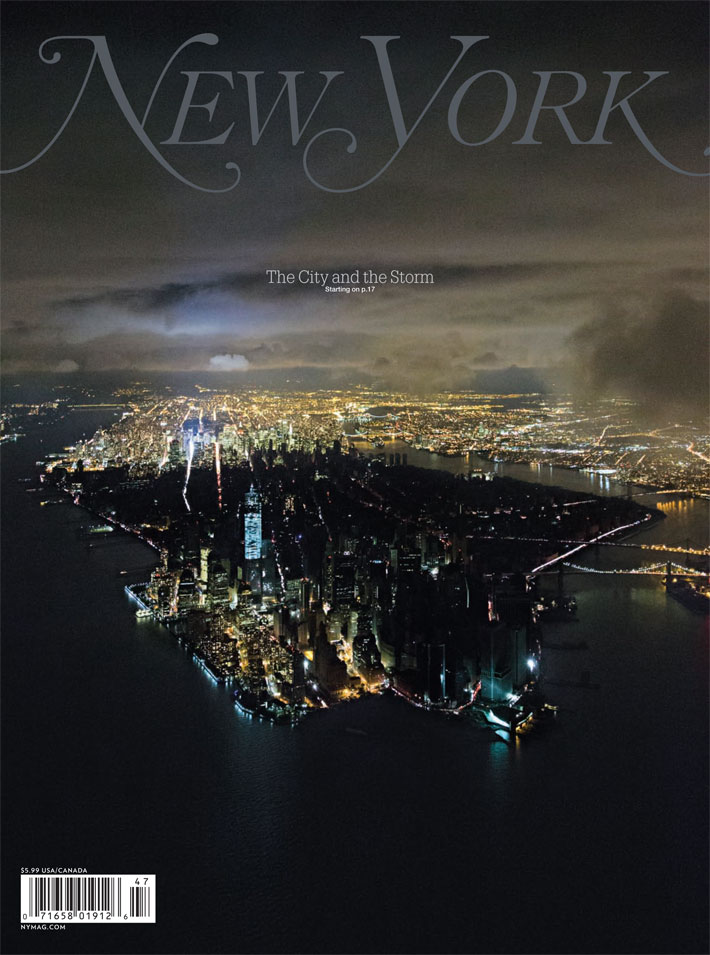
Lets see the Nikon crap capture this image at ISO 25K from a helicopter.

nymagcvr121105_710.jpg


Sounds to me most of the better shooter just happened to be using Nikon

I'm pretty sure a D4 would have no trouble with taking a shot like that
in fact I'm pretty certain Joe Mcnally has published similar aerial shots taken from helicopters using D3s

Technically speaking, the D4 literally could NOT take a photo like that with that low level of noise. The NY blackout was shot at a NATIVE ISO 25600, where as the D4 tops out at a native ISO 12800. If you enabled expanded mode ISO settings, on the D4 ISO 25600 is just a 1 stop digital boost to ISO 12800. That is the same as using ISO 12800 and underexposing by 1 stop, then boosting in post. The D4 has no DR advantage at that level, as the very very vast majority of noise at ISO 12800 is photon noise, and dynamic range is limited by physics. A digital boost is going to lift all of that noise as well, so I'd be doubtful it could take a shot at ISO 25600 expanded as cleanly as the 1D X at a native ISO of 25600. The 1D X, on the other hand, will use per-pixel amplification during read (and thus before read noise is introduced) to achieve its ISO 25600. The photo will still be dominated by photon shot noise, but with the high S/N of the 1D X, it should always produce a cleaner photo at ISO settings above 12800 than the D4. Additionally, the 1D X, since it has native ISO settings up to 51200, can use third-stop ISO settings between ISO 25600 and 51200, where as the D4 is limited to full-stop digital boost settings between ISO 25600 and 51200 (as well as 102400 and 204800, same as the 1D X).

I'd call the 1D X the definite winner in the high ISO game here...cleaner readout (no digital boost) with finer-grained third-stop ISO settings up through ISO 51200.
 
Upvote 0
jrista said:
Technically speaking, the D4 literally could NOT take a photo like that with that low level of noise. The NY blackout was shot at a NATIVE ISO 25600, where as the D4 tops out at a native ISO 12800. If you enabled expanded mode ISO settings, on the D4 ISO 25600 is just a 1 stop digital boost to ISO 12800. That is the same as using ISO 12800 and underexposing by 1 stop, then boosting in post. The D4 has no DR advantage at that level, as the very very vast majority of noise at ISO 12800 is photon noise, and dynamic range is limited by physics. A digital boost is going to lift all of that noise as well, so I'd be doubtful it could take a shot at ISO 25600 expanded as cleanly as the 1D X at a native ISO of 25600. The 1D X, on the other hand, will use per-pixel amplification during read (and thus before read noise is introduced) to achieve its ISO 25600. The photo will still be dominated by photon shot noise, but with the high S/N of the 1D X, it should always produce a cleaner photo at ISO settings above 12800 than the D4. Additionally, the 1D X, since it has native ISO settings up to 51200, can use third-stop ISO settings between ISO 25600 and 51200, where as the D4 is limited to full-stop digital boost settings between ISO 25600 and 51200 (as well as 102400 and 204800, same as the 1D X).

I'd call the 1D X the definite winner in the high ISO game here...cleaner readout (no digital boost) with finer-grained third-stop ISO settings up through ISO 51200.

Actually nearly ever modern camera uses digital amplification at ISOs below its max "native" speed, sometimes at ISOs significantly below the max native speed, depending on where the noise gains from analog amplification stop.
 
Upvote 0
jrista said:
wickidwombat said:
Maui5150 said:
el bouv said:
Between the wife and myself we have 5 Canon bodies and 18 lenses of which only the 15mm fish eye and an old 100 macro are not L glass, with 7 series 2 lenses, so there is a sizable investment in Canon kit.
...

Lets see the Nikon crap capture this image at ISO 25K from a helicopter.

nymagcvr121105_710.jpg


Sounds to me most of the better shooter just happened to be using Nikon

I'm pretty sure a D4 would have no trouble with taking a shot like that
in fact I'm pretty certain Joe Mcnally has published similar aerial shots taken from helicopters using D3s

Technically speaking, the D4 literally could NOT take a photo like that with that low level of noise. The NY blackout was shot at a NATIVE ISO 25600, where as the D4 tops out at a native ISO 12800. If you enabled expanded mode ISO settings, on the D4 ISO 25600 is just a 1 stop digital boost to ISO 12800. That is the same as using ISO 12800 and underexposing by 1 stop, then boosting in post. The D4 has no DR advantage at that level, as the very very vast majority of noise at ISO 12800 is photon noise, and dynamic range is limited by physics. A digital boost is going to lift all of that noise as well, so I'd be doubtful it could take a shot at ISO 25600 expanded as cleanly as the 1D X at a native ISO of 25600. The 1D X, on the other hand, will use per-pixel amplification during read (and thus before read noise is introduced) to achieve its ISO 25600. The photo will still be dominated by photon shot noise, but with the high S/N of the 1D X, it should always produce a cleaner photo at ISO settings above 12800 than the D4. Additionally, the 1D X, since it has native ISO settings up to 51200, can use third-stop ISO settings between ISO 25600 and 51200, where as the D4 is limited to full-stop digital boost settings between ISO 25600 and 51200 (as well as 102400 and 204800, same as the 1D X).

I'd call the 1D X the definite winner in the high ISO game here...cleaner readout (no digital boost) with finer-grained third-stop ISO settings up through ISO 51200.

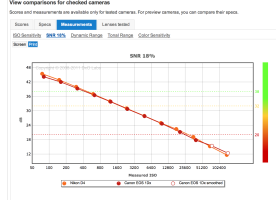
if I am not colorblind the measurements tells a different story
 

Attachments

  • Skärmavbild 2012-11-19 kl. 02.24.09.png
    Skärmavbild 2012-11-19 kl. 02.24.09.png
    190.1 KB · Views: 1,295
Upvote 0
pdirestajr said:
What "innovations" has Nikon brought to the table recently? Technology is pretty good these days. If people switch systems every time the competition has a marginally better spec'd product on paper... you'll be spending a LOT of time and money switching back and forth rather than taking photos.


well said.

as much as I love canon, Nikon has their great products as well. I honestly have no hate, and both excel in their tasks. Some nikons may be better and some canon may be better, but if you seem that invested and with such great gear, not unless you are pouring cash out of your nose, then i dunno. Seems like such a waste of money. maybe if this was the case if you had a rebel or a D40, then switching to either company may be easier... or maybe have both? I dunno.

what I do agree with though are the prices canon sometimes have for their products, despite that they may be great products, sometimes overpriced and canon (this goes for you as well nikon) go hand in hand.

great opinion, but I feel that there seems to be too much negativity in your thinking. and with all the gear you have, producing great work isnt all in the camera itself.
 
Upvote 0
Duprant said:
jrista said:
Technically speaking, the D4 literally could NOT take a photo like that with that low level of noise. The NY blackout was shot at a NATIVE ISO 25600, where as the D4 tops out at a native ISO 12800. If you enabled expanded mode ISO settings, on the D4 ISO 25600 is just a 1 stop digital boost to ISO 12800. That is the same as using ISO 12800 and underexposing by 1 stop, then boosting in post. The D4 has no DR advantage at that level, as the very very vast majority of noise at ISO 12800 is photon noise, and dynamic range is limited by physics. A digital boost is going to lift all of that noise as well, so I'd be doubtful it could take a shot at ISO 25600 expanded as cleanly as the 1D X at a native ISO of 25600. The 1D X, on the other hand, will use per-pixel amplification during read (and thus before read noise is introduced) to achieve its ISO 25600. The photo will still be dominated by photon shot noise, but with the high S/N of the 1D X, it should always produce a cleaner photo at ISO settings above 12800 than the D4. Additionally, the 1D X, since it has native ISO settings up to 51200, can use third-stop ISO settings between ISO 25600 and 51200, where as the D4 is limited to full-stop digital boost settings between ISO 25600 and 51200 (as well as 102400 and 204800, same as the 1D X).

I'd call the 1D X the definite winner in the high ISO game here...cleaner readout (no digital boost) with finer-grained third-stop ISO settings up through ISO 51200.

Actually nearly ever modern camera uses digital amplification at ISOs below its max "native" speed, sometimes at ISOs significantly below the max native speed, depending on where the noise gains from analog amplification stop.

Canon used to use a secondary ANALOG amplifier for ISO's above 1600 or 3200 in the past, after read but before the ADC. It was not as good as per-pixel read amplification, but it was still better than digital boost. The only time digital boost was applied was for ISO's above max native. Given the quality of Canon's ISO settings on the 1D X up through ISO 25600, and given that there is no other evidence to the contrary, I no longer believe that is the case. ISO 51200 appears to take a similar hit to IQ that previous Canon cameras took above ISO 1600, so it may still use that separate additional amplifier...but it is still all analog until you start using expanded settings (102400 and 204800).
 
Upvote 0
neuroanatomist said:
jukka said:
who says Canon has a problem?

You did.

jukka said:
...now my Canons LCD looks to reddish

Oh, and by the way, your comment that you get used to it (the greenish tint on the D800) is interesting - if the LCD was displaying correct colors, there'd be nothing to 'get used' to...


@NormanBates - thank you, but you fail to understand. Let me try to explain. The D800 has no problems. The problem is anyone who fails too appreciate its perfection.


<\sardonic impersonation>

the eyes (brain) adapt to the more yellow LCD after a while.
 
Upvote 0
jukka said:
the eyes (brain) adapt to the more yellow LCD after a while.

Thank you, yes, I do know a little something about neural plasticity. ::) Just because the brain can adapt to seeing the world upside down when wearing inverting prism lenses doesn't mean the world is actually upside down, nor is the world yellow-green tinted. I prefer my world right-side up and correctly tinted, thank you very much.
 
Upvote 0
Well it is final. Canon must be closing the doors. This morning they announced they were sending all of their share holders money. No doubt because things are so bad.

I guess that is why they refered to it as a dividend. They are dividing up the companies assets before bankruptcy.
 
Upvote 0
RLPhoto said:
The d800 screen looks like vomit. Very similar to what It used to look like on my 5Dc. Its terrible.

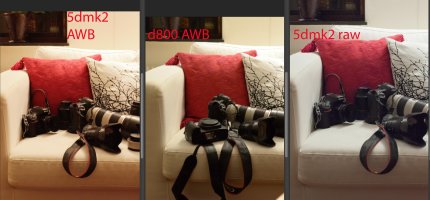
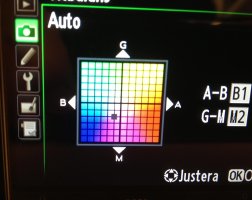
strong words, there are no problem to adjust the AWB a little bit and and then the motive looks fine at the LCD in d800.
The yellow /green tint is gone (in the LCD)
The small AWB correction does not affect the jpg image out from the camera

This is AWB from 5dmk2, d800 and raw file adjusted
None of the AWB in 5dmk2 or d800 does a proper job in 2800K
 

Attachments

  • securedownload.jpg
    securedownload.jpg
    127.8 KB · Views: 543
  • AWB.jpg
    AWB.jpg
    370.6 KB · Views: 489
Upvote 0
Status
Not open for further replies.