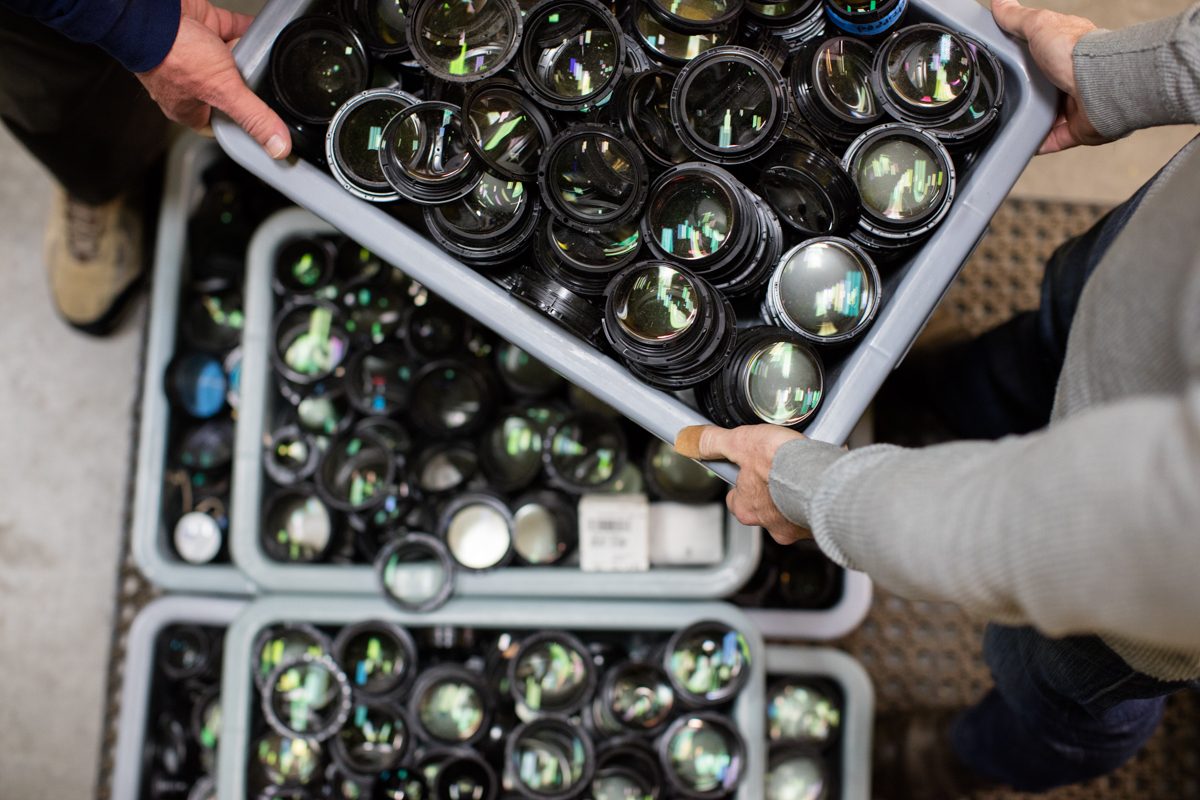
These Are Your Favorite EF Lenses

That sucks. Truly. I feel bad for you. Hopefully better days of shooting since!

It also sounds like you didn't have a protective filter in front of your lense. Yes? If so, why?

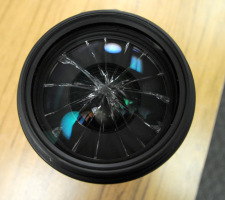
I know some people get freaked out about filters in front of their lens due to concerns about color neutrality, light transmission, etc. (This might not be you, Exploreshootshare — but for others.) It is possible to get high quality filters for non-bulbous lenses, to such a point that any effect on your image is probably no worse than your human inability to 100% dial in white points, etc. or the reality that you'll probably adjust balances, hues, and tones in post anyhow. If you're an out and about person, it's much more satisfying (and part of the adventure) to toss $50+ filters that are cracked, scratched, etc. than it is to take your lens to Canon for repair — assuming you even have that option for older or grey market lenses. Heck, glue a spider-cracked filter to a printed photo from your adventure as a conversation starter.

And yes, it's possible to have an accident that shatters your filter and scratches your lens — but seriously, your front element would probably have been junked in the crash anyhow. So you might as well protect against general scenarios. And salt spray. And dust grit. And... the chance to use your sleeve for a quick wipe.

But for the true purists with the chutzpah and grit (pun intended), your lens will get an extra .02% of light and a .01% color fidelity by going full commando with your front element. Sealed or not. ;)

Here's a fun article by Roger Cicala at Lens Rentals on the topic of filter quality. It finalized my opinion on the topic, and since then I always slap a very good filter on my lenses. When I have to toss one, I feel no worse than using up tires on my truck after a good set of adventure years.
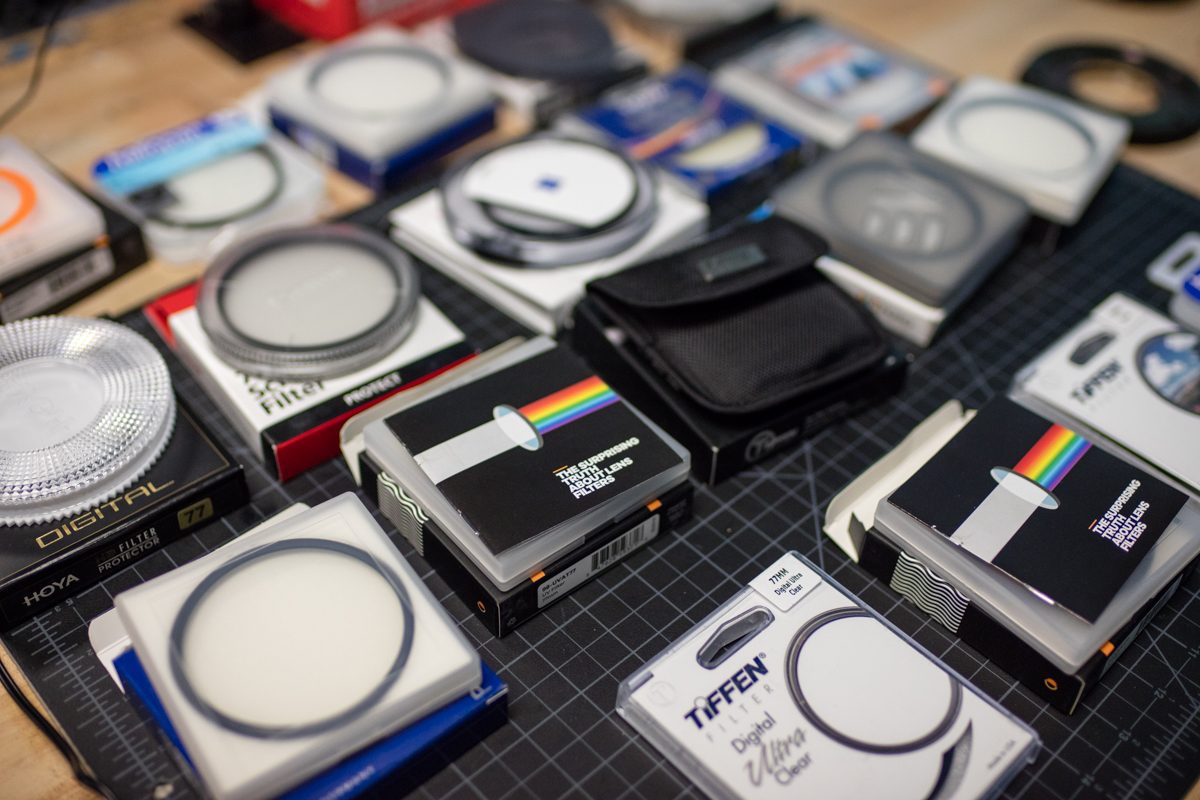
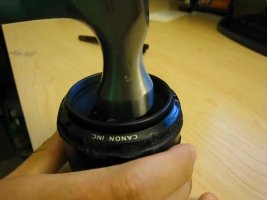
After dropping a few lens with UV Filters and struggling to get the broken ones off I just moved away from them and use the lens hood for protection or leave the filter holder adapter on the lens. Easier to clean the lens than a filter. Also getting UV filters stuck on filter holder adapters when I was too lazy to take the UV filter off made me change. It's a tricky choice
 
  • Like
Reactions: 1 user
Upvote 0
After dropping a few lens with UV Filters and struggling to get the broken ones off I just moved away from them and use the lens hood for protection or leave the filter holder adapter on the lens. Easier to clean the lens than a filter. Also getting UV filters stuck on filter holder adapters when I was too lazy to take the UV filter off made me change. It's a tricky choice
It’s a shame I can’t double emoji the like and laugh. I empathize!

Bent needle nose pliers and other tools accompany me on some trips. Because, you know: life!
 
  • Love
Reactions: 1 user
Upvote 0
It's a tricky choice
Indeed. Here’s another post from Roger Cicala on the topic:


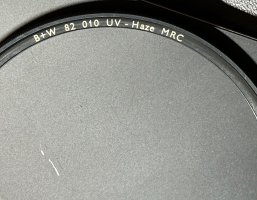
I’m firmly in the use filters camp, but I’ve always tempered that with the same approach Roger describes. For example, there’s no front filter on my RF 28/2.8. A few months ago when cleaning the filter on my RF 24-105/2.8L Z, the wisdom of my choice was reaffirmed. Replacing the front element would have been much more costly than the $100 for a new B+W 82mm clear filter to replace this one.

1773274573316.jpeg

I’ve never had a filter get stuck on a lens. I have had stacked filters get stuck together (ND and CPL), and I learned to keep a set of $8 filter wrenches in the bag when I bring filters.
 
  • Like
Reactions: 1 users
Upvote 0
Indeed. Here’s another post from Roger Cicala on the topic:


I’ve never had a filter get stuck on a lens. I have had stacked filters get stuck together (ND and CPL), and I learned to keep a set of $8 filter wrenches in the bag when I bring filters.
I like Roger's take on it. I have had trouble getting a filter off after a drop, on the other hand the lens filter threads were ok. I also tend to keep the lens cap installed when not aiming the camera. I have tripped walking backward for framing, but my backside took most of the damage. So far no scratches, but i have had some trouble with beach sand in compact zoom cameras.
 
  • Wow
Reactions: 1 user
Upvote 0
Last week I asked the Facebook world what their favorite Canon EF mount lenses were, including third-party manufacturers. I like doing this sort of thing to learn what shooters outside of my own personal bubble loved to shoot with and in a lot of cases, they still use these great EF lenses to this day. […]

See full article...
From the piece:

"The EF-S 10-22 was my first wide-angle lens for my EOS 40D. It blew me away by how wide the world could be, and the combination of the 40D and 10-22 really moved me forward as a photographer. “The Gear Doesn’t Matter” sometimes does. It doesn’t matter what gear it is, but if it’s the right combination at the right time, it sticks with you."

Starting with the M2, I can say the same thing about the EF-M 11-22mm lens...so much so that oft-times when traveling, I have the M6MkII + EF-M 11-22mm combination packed away in a just-fits-right bag connected via belt...with full-frame gear in a backpack or around my neck.

So the 11-22 lens is my "it sticks with you" lens.
 
Upvote 0
Sorry, I don't get it, what are you actually saying?
Are you trying to say, that my statement of the Sigma 135/1.8 being superior is false, and the Canon is rendering subjects sharper and has smoother foreground and background than the Sigma, despite such a destroying test result for example?

https://www.the-digital-picture.com...meraComp=979&SampleComp=0&FLIComp=0&APIComp=0

Is that what you want to say?

What I am saying is that acutance measured using a two-dimensional test chart parallel to the camera's sensor tells you nothing about bokeh. Absolutely nothing.

Words from the mouth of Roger Cicala in an article titled Why I Don't Use An MTF Bench To Test My Own Lenses:
That's because all lab tests have some major limitations. The biggest one is this: real images are 3-dimensional, they are focused at a variety of distances, and almost always contain foregrounds and backgrounds. Optical tests are two-dimensional slices taken at a fixed focusing distance with no background or foreground. The focusing distance is infinity for an optical bench. It’s a single, close distance for Imatest / DxO / and other computer image analysis methods.

So, the lab tests tell me everything I want to know about the plane of exact best focus at one focusing distance. That’s really useful information, especially if you want to find out if a lens is optically maladjusted, want to know what kind of aberrations it has, or are interested in its maximum resolution. And it gives people numbers – the ammunition of choice in many a Forum War.

Another of Roger's articles at his lensrentals blog: Everything but the Sharpness

In reality, though, we get so fixated on sharpness results from MTF charts and bench lab tests that we hardly ever talk about all the other things that can be of critical importance in a lens. Critically important, but often ignored or forgotten, partly because we get so fixated about sharpness, and partly because they’re disguised in a flurry of initials, abbreviations, and marketing hype. My point is that we fixate on absolute sharpness which is measured in a lab, on a tripod, focusing on a static target under controlled lighting, often using live-view focus bracketing to get the very best image a lens is capable of delivering. Such tests show how sharp a lens can be under ideal conditions. But there are a lot of other factors that go into determining how good the images will be under real-world shooting conditions, where subjects move, lighting changes, the shots are handheld, etc.


All lens design is compromise. The flat field correction needed to make a flat test chart look sharper on the edges very often makes out of focus objects harsher and busier than designs that are not made for potential buyers who are obsessed with how well a lens reproduces flat test charts above all else.
 
Last edited:
  • Like
Reactions: 1 users
Upvote 0
My 24-70 f/4 with its zoom barrel has survived torrential west coast rain, quantities of reindeer snot and mud, and other such nuisance. For years. I use a high quality UV filter on the front.

I think that all progress is progress, so bravo Canon by making an even more sealed lens, but with appropriate respect and post-event care a solid EF lens is more than capable in the elements.

I also have the 16-35 f/4 lens. With an appropriate front filter I don’t even blink getting it outdoors in all kinds of conditions. And hey, its barrel doesn’t move unlike my still very reliable 24-70.

And yes: the warranty doesn’t cover water. Enjoy your equipment responsibly. Or at least yell with enthusiasm as you swing your lens up in the sky while stepping over fallen Sony and Nikon photographers as you head unto the breach!

I quit using UV filters when I started shooting in stadiums with bright overhead light sources inside the frame or other similar situations. Flat filters cause ghosting under such lighting conditions. I've never had an issue with "non weather-sealed" lenses in light rain even with no filter on the lens.

The only spin-on filter I currently use very much at all is a circular polarizer. I have Cokin square GND and color correction filters (for shooting tungsten film in daylight, or vice-versa, or shooting daylight film under traditional fluorescent lights). But these days with raw digital the only color correction I do is to gel flashes to match ambient light. I do carry a spin-on UV filter that I use only if I am near salt-water spray, in a sandstorm/dust storm, or an industrial environment with hot metallic particles flying off of grinders, welders, etc.

From way back in the dark ages two decades ago:

20081201_9431.JPG
Canon Rebel XTi with kit EF-S 18-55mm f/3.5-56 II (non-IS) and UV filter.
 
Last edited:
  • Like
Reactions: 1 user
Upvote 0
Indeed. Here’s another post from Roger Cicala on the topic:


I’m firmly in the use filters camp, but I’ve always tempered that with the same approach Roger describes. For example, there’s no front filter on my RF 28/2.8. A few months ago when cleaning the filter on my RF 24-105/2.8L Z, the wisdom of my choice was reaffirmed. Replacing the front element would have been much more costly than the $100 for a new B+W 82mm clear filter to replace this one.

View attachment 228335

I’ve never had a filter get stuck on a lens. I have had stacked filters get stuck together (ND and CPL), and I learned to keep a set of $8 filter wrenches in the bag when I bring filters.

When Roger first starting writing those articles about whether or not UV/protective filters made sense for most shooting scenarios he pointed out that a front element could often be replaced cheaper than what a B+W or other high end filter cost at the time. By the time he wrote the last one several years later, that was not so much the case for many newer lenses introduced in the intervening decade or so.

Part of Roger's consideration is that even though he knows a minor scratch won't affect photos in any real way, such a scratch does affect many who would rent a lens from his business that arrives with such a scratch. It's the same thing with internal dust. He knows it doesn't really affect photos taken with the lens unless it's really full of dust, but they still clean them regularly at lensrentals because their customers won't tolerate lenses with very much dust in them.

I've had the same EF 24-105mm f/4 L IS since 2011. Sometime around 2014 it got a single tiny chip on the front surface about 1/3 of the way from the center to the edge of the front element. It's pretty easy to see when looking at the front of the lens in bright light. I've continued using it and have never seen any effect from it in any of the tens of thousands of photos I've used it to take since.

One of Roger's most well know blogs was about just how bad front element "scratches" have to be before they make any real difference in photos taken with the lens. He posted some slightly blurry photos of a dumpster behind his lensrentals warehouse and a legible but obviously blurry test chart image before revealing the lens with which he'd made the photos:

1773384886647.png
 
  • Like
Reactions: 1 user
Upvote 0
I share my love for the EF 600mm f/4 III with Neuro, plus the TC III series of extenders. My other most beloved Canon lenses still are EF lenses, too. One is my EF 85mm f/1.2 II because of its gorgeous mix of sufficient sharpness and a touch of vintage look - the RF version is much perfecter in every respect, but also more on the clinical side. And I still love my so versatile EF 100mm f/2.8 L IS USM that made hand-held macro photography suddenly so easy already with the old 7D I(Mk I), even with extension rings. I don't see any necessity to upgrade to an RF successor as long as it works.

And, yeah, my old lens love, my EF 500/4.5, built in 1995 in Utsunomiya, still rests in its box here, I can't give it away. It is connected with so many memories of trips, such as to Iceland (Latrabjarg, Myvatn....), smaller bird islands, often with special moments with animals. Here is one from South Germany, we watched these European bee eater couple a week long from our camo tent in early mornings, the female getting more and more immobile with the growing eggs in its belly, and the caring male fed her with one insect after another (image taken with a 7DII): Bienenfresser Ihringen 18_05_2015-3 Copyright.jpg
 
  • Like
Reactions: 2 users
Upvote 0
Part of Roger's consideration is that even though he knows a minor scratch won't affect photos in any real way, such a scratch does affect many who would rent a lens from his business that arrives with such a scratch. It's the same thing with internal dust. He knows it doesn't really affect photos taken with the lens unless it's really full of dust, but they still clean them regularly at lensrentals because their customers won't tolerate lenses with very much dust in them.
I read his blog, too, but just around this time some of our family members with one digit ages threw my camera with the EF 50mm 1.2 in front down from a shelve, and afterwards I was relieved to find that the shards in the floor were only from the filter I had on it - the front lens was (and is) intact and I could use it for that particular family weekend. Otherwise I really would have missed this fast lens.

Another good reason for using filters is if you want to sell your gear after a while. I just sold my old EF 300mm f/4.0 L IS USM recently for a good price, because its front lens, that was always protected by a filter, was pristine.
 
  • Like
Reactions: 1 user
Upvote 0
I’ve never had a filter get stuck on a lens. I have had stacked filters get stuck together (ND and CPL), and I learned to keep a set of $8 filter wrenches in the bag when I bring filters.
I had, on my Zeiss 3.5/18mm EF lens, in Norway, caused by temperature variations (the Zeiss has a fully metal body). Since then I have a rubber pad in my backpack, because it is a real remedy, and with it I got this filter finally off this lens (at home, when I purchased it, unfortunately).
 
  • Like
Reactions: 1 user
Upvote 0
What I am saying is that acutance measured using a two-dimensional test chart parallel to the camera's sensor tells you nothing about bokeh. Absolutely nothing.

Words from the mouth of Roger Cicala in an article titled Why I Don't Use An MTF Bench To Test My Own Lenses:


Another of Roger's articles at his lensrentals blog: Everything but the Sharpness


All lens design is compromise. The flat field correction needed to make a flat test chart look sharper on the edges very often makes out of focus objects harsher and busier than designs that are not made for potential buyers who are obsessed with how well a lens reproduces flat test charts above all else.
My offer was accepted, BTW. I think it was a really good deal, the lens (135mm F2 L) is supposed to be in great condition. I'll hopefully find out tomorrow because that's when it's supposed to arrive. I'm excited to give it a shot! I feel like I had or have a cheap Samyang 135mm full manual somewhere but I can't say I was fond of it or used it at all really.

I just think this Canon 135mm will be great for the style portraits I love taking....of my kitties mainly but probably people too. I did buy the new Canon RF 85mm VCM (I think it's the only RF mount lens I have) not long ago, which will be great too but I want a little more distance, especially with the kitties. I swear, when the camera gear comes out, they intentionally try (and often succeed) to sabotage my photos. Lol
 
  • Like
Reactions: 1 user
Upvote 0
The EF 135 f/2L is the lens I miss from my Canon days. I know there are newer 135mm which are better technically, but I still think the EF 135L takes fantastic images, and it's relatively small and light to boot.
 
  • Love
Reactions: 1 user
Upvote 0
What I am saying is that acutance measured using a two-dimensional test chart parallel to the camera's sensor tells you nothing about bokeh. Absolutely nothing.

All lens design is compromise. The flat field correction needed to make a flat test chart look sharper on the edges very often makes out of focus objects harsher and busier than designs that are not made for potential buyers who are obsessed with how well a lens reproduces flat test charts above all else.
I'm sorry I still do not get it. This is general knowledge. How is this an answer to my statement?
I'm saying for the third time, the Sigma 135/1.8 is superior to the Canon 135//2 in basically every way.

There could be hundreds of valid answers, like
- You prefer the Canon because it weighs less and the way you shoot it's more important than other aspects.
- You love how it fits to your other 72mm filter lenses and you are using many filters and the Sigma's 82mm would have been a pain.
You could even have a ton of arguments which are BS but still valid as reply like
- You think the Canon is actually sharper.
- You think the Canon has nicer bokeh.
- You think Canon has faster AF

But the thing is you are not saying anything. You are pretending to lecture, while implying that my opinion is invalid due to my lack of knowledge. But you don't have the balls to actually say the Canon is sharper or faster or whatever, because it's BS.

You are also implying that my opinion is based on test charts and the fact that test charts are not telling you the 100% truth about IQ somehow invalidates my whole statement. Both are BS.
The two lenses are so much worlds apart (not surprisingly as they have 20y! difference), you don't need test charts to know.
Sigma performing way better on a test chart is like 10% of the story.

Btw regarding test charts, you are all over the place.
First of all, test charts and bokeh? What? Of course they don't tell you anything about bokeh. Since when was the purpose of charts about bokeh? It's about sharpness, contrast, resolution, color rendering.
Do test charts tell you 100% everything about a lens? No.
Are they still useful and give you a lot of info? Yes.
Does this have anything to do with the original topic? No.

Please say you had both lenses and for this and this reason you prefer the Canon. Or say that you never touched/shot the Sigma but you just love the Canon for whatever reason. Or have the balls and say the Canon is sharper than the Sigma, I don't care how much it's a bs.
Just say something that that actually reflects on the topic or my post.
 
  • Wow
  • Haha
Reactions: 1 users
Upvote 0
I read his blog, too, but just around this time some of our family members with one digit ages threw my camera with the EF 50mm 1.2 in front down from a shelve, and afterwards I was relieved to find that the shards in the floor were only from the filter I had on it - the front lens was (and is) intact and I could use it for that particular family weekend. Otherwise I really would have missed this fast lens.

Another good reason for using filters is if you want to sell your gear after a while. I just sold my old EF 300mm f/4.0 L IS USM recently for a good price, because its front lens, that was always protected by a filter, was pristine.

Maybe the filter "saved" the front element, maybe not. Just because a thin, flat filter with open air behind it breaks does not mean a much thicker lens element made of much harder and denser glass and shaped differently would have broken. Sometimes you have to try really hard to scratch the front of a lens.

20260316ss1.jpg

Of greater concern when a lens takes a dive is the alignment of the elements in the lens. Some lenses have a reputation for tolerating abuse fairly well, such as the Canon EF 24-105mm f/4 L IS. Others, like the Canon EF 24-70mm f/2.8 L, have a reputation for getting out of alignment at the slightest bump. Often this is due to the way a lens is designed. In such a case the filter makes little difference. The ring will receive the lion's share of the force and transfer it to the front of the the lens housing that it is screwed onto.
 
  • Like
Reactions: 1 user
Upvote 0
Another good reason for using filters is if you want to sell your gear after a while. I just sold my old EF 300mm f/4.0 L IS USM recently for a good price, because its front lens, that was always protected by a filter, was pristine.

I've owned my EF 70-200mm f/2.8 L IS II since 2010 and used it to shoot countless fields sports under all kinds of conditions, parades in all kinds of weather, on dusty trails in the desert southwest of the United States. There are scratches and rub marks all over the outside of the hood. It has taken many hard knocks such as collisions on the sidelines to my clumsiness tripping on concrete and asphalt. A few of those knocks were so hard that it made a trip to CPS to be lined back up optically. It's never had a protective filter of any kind on it. What it HAS had every single time I've ever shot with it, is the lens hood properly mounted in place. It's also had a lens cap on it whenever it has been stored in a case or on a shelf. The lens cap goes on immediately before the hood comes off to be reversed.

It also has a pristine front element.
 
Last edited:
  • Like
Reactions: 1 users
Upvote 0
My offer was accepted, BTW. I think it was a really good deal, the lens (135mm F2 L) is supposed to be in great condition. I'll hopefully find out tomorrow because that's when it's supposed to arrive. I'm excited to give it a shot! I feel like I had or have a cheap Samyang 135mm full manual somewhere but I can't say I was fond of it or used it at all really.

I just think this Canon 135mm will be great for the style portraits I love taking....of my kitties mainly but probably people too. I did buy the new Canon RF 85mm VCM (I think it's the only RF mount lens I have) not long ago, which will be great too but I want a little more distance, especially with the kitties. I swear, when the camera gear comes out, they intentionally try (and often succeed) to sabotage my photos. Lol

I hope the lens arrives in excellent condition and that you get many great photos with it! I sure enjoy mine.
 
  • Love
Reactions: 1 user
Upvote 0
I'm sorry I still do not get it.

You are correct. You're the one who just doesn't get it.

Technical performance is not all there is when an artist chooses one lens over another. It's what the final results look like in relation to the vision the artist had when they created the photo which ultimately matters.

Now please, show me the numerical results of any empirical test which proves the Sigma 135/1.8 has "better" bokeh than the Canon EF 135mm f/2 L IS. I'll wait. That's like claiming there's an empirical test which can somehow "prove" Michelangelo's David is a better work of art than Da Vinci's Mona Lisa, or Beethoven's 9th Symphony.

You have no actual argument about which lens gives me the look I prefer. It's not up to you. So you keep putting words in my mouth that I have not said. I acknowledged long ago in this discussion that the Sigma is "sharper" at reproducing flat test charts from close distances. I also have already said I prefer the look I get using the EF 135mm f/2 L to the look that the Sigma lens gives.

Oh, and just for the record: I've never owned a 72mm filter of any kind. To the best of my knowledge I've never owned another lens with 72mm filter threads. Most of the few spin on filters I have are 77mm, which is the size of the threads on all 4 of my other L lenses. But other than circular polarizers the vast majority of the filters I own are square/rectangular.

If you think more clinical looks better, then have at it. On the other hand, if you have an obsessive need to prove to every other person in the world that the lens which you consider the "best" is superior in every single possible way to any other lens: Good luck with that. No such lens exists which is "best" at everything for everyone.
 
Last edited:
Upvote 0