AlanF said:
Jon
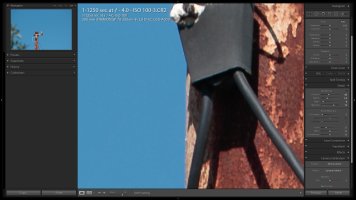
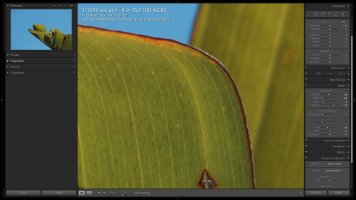
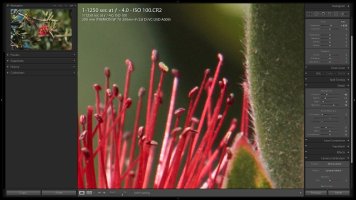
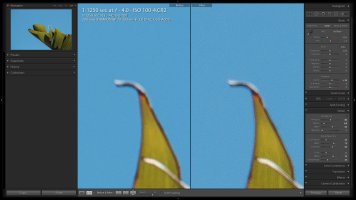
It is easy to argue and does appear to be logical that downsampling to the same megapixel size will give the same resolution, noise etc as on the less dense sensor. But, in practice, it does not appear to be as straightforward as that. I have done lots of comparisons of different lenses on a 5DS R, 5DIV, 5DIII and 7DII (plus some on 80D an 7D), and can write from experience.
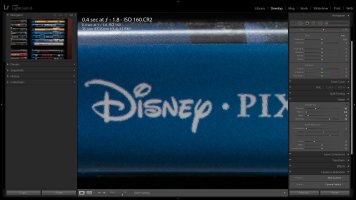
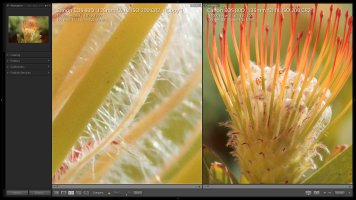
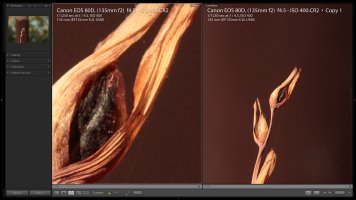
1. Transitions on a 50 MP sensor are smoother, and when downsampled have a different quality from those taken directly on a 20 or 30 mp sensor, may be not as crisp. The downsampling algorithms do not give the same results as direct measurements.
2. The 50 MP sensor is more sensitive to diffraction effects and lens defects. For example, my 300/2.8 II + 2xTC and 400mm DO II f/4 + 2xTC do not perform that well on the 5DS R but give very crisp images on 5DIV and 5DIII. The 5DIV gives much better results than a downsampled 5DS R image.
#1 Seems highly subjective. Depends a lot on the algorithm used. There are lots of algorithms. Use one that preserves as much of the information as possible, such as Lanczos, and you should find the 50mp trounces pretty much everything, possible exception being the 43mp Sony sensor (as it lacks a low pass filter entirely rather than using a blur reversal approach, although Sony employs some spatial filtering in their BionzX chip that could hurt their sensor's performance.)
#2 is absolutely false. Diffraction is an optical effect, it is what it is regardless of what the sensor pixel size is. Smaller pixels are not more sensitive nor succeptible to diffraction...they are simply capable of resolving a diffraction spot better than larger pixels. This is a common misconception about diffraction, one that endlessly circles around and around the internet despite the fact that it is just totally wrong. Diffraction cannot ever make smaller pixels perform worse than lager pixels. Physical impossibility.
This is actually a key factor in astrophotography resolution...we generally prefer to be
oversampled, because objective measurements indicate that smaller pixels almost always produce higher resolution (measured as smaller stars, or to be more specific, smaller FWHM.) Ideal oversampling is when the pixels of the sensor are ~3.3x smaller than the best resolved spot that the optical system (which in astrophotography also includes the atmosphere) can deliver. Under ideal band limited conditions, we want to sample by 2x, which allows us to optimally reconstruct the original information perfectly with proper processing.
By terrestrial photographer standards, 2-3x oversampling to you guys would, based on the comments here, appear "very soft and blurry"...when in reality, under
measurement, such data is actually better and resolving more detail. You guys just aren't familiar with the best techniques to make the most of oversampled data. Such as deconvolution...true deconvolution (NOT sharpening, sharpening is a totally different concept that is actually destructive in nature, whereas deconvolution is reconstructive in nature), using a PSF to reverse blurring caused by the lens...which can recover a significant amount of detail, and functions best when your data is
oversampled (i.e. 50mp, 80mp, 100mp sensor), and worst when your data is undersampled (i.e. 21mp sensor).
This is true for DSLRs, CCDs and CMOS cameas. Even with a low pass filter, one would have to be ludicrously strong on a small-pixel sensor to actually result in such significantly worse resolution that it was not as good as a sensor with larger pixels.



 :
: