Samyang to announce a 14mm f/2.8 RF and 85mm f/1.4 RF soon

- By JoFT
- Third Party Manufacturers
- 26 Replies
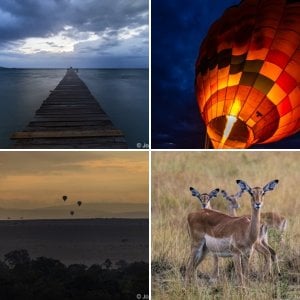
One photo illustrates where this lens stand for...
Attachments

Upvote
0
Me too. This might push me to upgrade my 6D to the R. I'd love to shave some size/weight off my regular walk around gear. For me it's mostly the wide and normal end. I don't use the tele end as much (and I don't expect much in size or weight savings there), so I would probably stick with an adapted 70-300L for a while at least. As an aside, I picked that one up used last year and loved having it on a family trip to Alaska. An R version of that would eventually end up in my kit, but I have to prioritize my gear budget since this is just a hobby for me.Me too!

Minor point, but at max shift the TS-E 17 gives a FoV that is pretty much identical to 11mm. Still, with either you definitely need to pay attention to your tripod legs and sometimes even your own feet!But it's easy to get the legs of the tripod in a shot with the shift function (wider than the 11-24L). With my fish eye lens, the 8-15L there is very little point in using a tripod...it's SO wide and it's hard to keep the legs out of the shot.
Makes sense. At least on Canon DSLRs, the only way to get a lens to keep the aperture closed is to set a narrow aperture, then press the DoF preview button and simultaneously detach the lens.I wonder if perhaps Canon's official specs for EF lenses dictate that the aperture should stay open when the camera is powered down. But, since the Sony adapters are obviously not official Canon devices, they may bend the rules a bit and close the aperture anyway. It might be a case of the lens being physically capable of doing it, but Canon's own rules and specifications for EF lenses don't allow for it.

Nobody is telling you to do what you don’t want to. I said something. You said something. You don’t have to get defensive about it.I disagree. Do what YOU wish. I'll do what I wish. Like I said, "To each his own." I prefer not to live in the world of low expectations based on age at either end of the age scale 0-110. 3- 8 year olds are fully capable of learning a whole lot. A $50-$100 camera is perfect for what I plan. A phone absolutely is not. I was building Heathkit electronic projects when I was 6, soldering and all.
This. Canon are desperately trying to keep their own users from switching brands, and that's what the RP is poised to do. But it's hardly a competitive body in 2019, and sales won't be exciting - Sony will keep their majority share of the 35mm market this year as well, with the way things are going. The RP will hit $999 by Black Friday, at the very least, without the adapter.
I went from 6D to 5D4. If you got a 5d4, it would give you wider dynamic range which might help with the weddings, white dresses and all. (also 2 card slots). I shot a lot of performance with a 6D. With good lenses it makes good files. Don't think any of those cameras would make much difference. (and a 5d4 wouldn't do much for you except improved AF and DR and 2 cards for weddings)Hello, I'm looking to upgrade my camera and the only feature I really am after is IMAGE QUALITY. No 100 fps or iso 1mil..
I only ever have used a 5D classic and a 6D, the 6D does produce nice files but I also have never used a +30mp camera. I shoot landscape and I do portraits and a few weddings a year.
With that said, would the 6D2, 5D3 give better images?
I know glass plays a big part and i shoot A LOT with the 135 f2 and love it. Do I just have gas or what's up?

I believe some lenses were recalled due to improper coatings a few years back, the runner was oxidizing to white. It was blamed on a subcontractor who mixed the formulation improperly. Those were the bands. I have lots of old Minolta cameras and lenses that long ago turned white. I used a toothbrush and elbow grease to get the oxidation off. I think its stayed off.

Same with me: no viewfinder, no deal!If it had an optical viewfinder I would be interested. But it does not, so I will stick with my plan to get a Fuji X100F. This will be the point and shoot to replace my Canon M that I got dirt cheap but dropped and broke in Europe last week.


Adorama has launched its annual lighting week sale, with lots of great deals from some great brands.
Some of the brands included in the deals:
Westcott
Profoto
Arri
Sekonic
Flashpoint
Litepanels
and more…
Check out all the lighting deals at Adorama
 www.lenstip.com


I am very happy with my EOS R. The images are phenomenal and I have all the glass I need (some being replaced with RF glass).Did you end up getting the GFX and adapter along with those lenses? If so, what are your thoughts?
Lensrentals.com is having a 15% off sale sitewide for the month of March. Simply use the coupon code SPRING19 during check out.
The Canon EOS RP is available for rental as are the brand new EF 400mm f/2.8L IS III USM and EF 600mm f/4L IS III USM.

Thank you very much. Cameraworld UK still showing February 2019 expected date.As you can see, Calumet (Germany) expects them on 14th of March.
 www.canonrumors.com