Canon EOS R Firmware 1.4.0

The firmware is now posted on the Canon USA site...but if you try to download it, you get a 404 error. Date shown is 9/26, which we can assume will be the release date.

Firmware changes:
Firmware Version 1.4.0 incorporates the following enhancement:
1. Enhances eye detection Auto Focus (AF) for improved face and eye recognition at greater distances.
2. Improved Auto Focus (AF) performance helps the camera to focus on and track smaller subjects.
3. Reduces lag time between the actual Auto Focus (AF) and the AF frame display for images in the viewfinder or on the LCD.
4. Fixes a phenomenon in which the AF frame size cannot be changed in the Servo AF setting.
5. Fixes PTP communication vulnerability.

Attachments

  • Annotation 2019-09-12 121516.png
    Annotation 2019-09-12 121516.png
    67.9 KB · Views: 164
  • Like
Reactions: 1 user

My eyes usually glaze over...

...when CR posters comment on the state of the camera industry.

Perhaps those reading this post have seen the graphic in this link before...but what it conveys is, at least to me, striking (even though the general point has been made over in over in this very forum).

Patent: Multiple small RF prime lens optical formulas

Canon News has uncovered a patent that shows Canon is working on small RF prime lenses, like non-L.
Japan patent 2019-152683 does include the RF 35mm f/1.8 IS STM Macro in one of the embodiments, but keep in mind that lens design can sometimes build off of existing lenses.
RF prime lens optical formulas in this patent:

Canon RF 20mm f/2 (Lens length of 70mm)
Canon RF 35mm f/2.8 (Lens length of 40mm)
Canon RF 45mm f/2.8 (Lens length of 43mm)
Canon RF 35mm f/2 (Lens length of 30mm)

Beyond the prime lenses, there is also a wide-angle f/4 zoom included.

Canon RF 16-35mm f/4 (Lens length 90mm – 97mm)

Looking at all the embodiments, I think only the RF 16-35mm f/4 could realistically be coming.

Continue reading...
  • Like
Reactions: 1 user

Canon Market Research Survey

Many times I read in the threads that Canon "never asked me" about their products, and it kind of smacks of people saying, "No political pollster ever called me." The implication being that there isn't any real polling or research going on. I am 100% sure I was randomly chosen, but I just got a very detailed research survey from Canon concerning the R and what I like, don't like, what could be improved, what I use it for, etc. etc. etc. Including fields for me to expand upon my answers.

Like I said, I am sure I am a randomly chosen customer. There is nothing special about me. I just want to confirm that Canon does take the pulse of their customer base.

BTW: I told Canon that everyone I know is switching to Sony. Just kidding! :ROFLMAO:
  • Like
Reactions: 1 users

An RF mount L macro lens will be announced alongside the high-megapixel EOS R camera

We’re told that Canon will announce a new and “unique” RF mount L macro lens alongside the high-megapixel EOS R camera sometime in early 2020.
The source wasn’t sure what will make the new macro lens “unique”, but did say they were told that it would be faster than f/2.8.
In the past, we have heard that Canon is working on some kind of zoom macro, but we aren’t sure if that’ll be a feature in a new standard type zoom lens, or an actual 1:1 macro lens.
Note: The image for this article is the EF 100mm f/2.8L IS

Continue reading...


SIGMA announces the FF Classic Prime Line of CINE lenses

Press Release: The SIGMA Corporation is pleased to announce the launch of “FF Classic Prime Line” as a new series in the SIGMA CINE LENS.
FF High-Speed Prime Line has been offering the highest resolving power in its class, that is compatible with 8K shooting with large format sensors while achieving an outstanding compact design. Based on this product line, the FF Classic Prime Line incorporates more non-coated optical elements to achieve unrivaled expression. It retains the high-resolution capability that SIGMA CINE LENS is well known for, and offers a unique combination of low contrast and artistic flare/ghost in the image. As with all other lenses from the FF High-Speed Prime Line, it creates beautiful bokeh effects to improve creativity.

FF Classic Prime Line has implemented newly developed coatings on the glass elements and offers consistent T value across the lineup (14mm and 135mm at T3.2 and the rest of the lenses at T2.5). This will greatly contribute to the...

Continue reading...


What's a good lens to shoot 360 images with on FF Canon? Fisheye recommendations?

Hi all,
Been looking at a new thing to play with....doing high quality 360 stills with my old trusty 5D3.

I have the 11-24 L lens....but I'm guessing maybe that isn't fisheye enough.....since it is still rectilinear?

What would recommendations for a good quality fish eye for the camera can you give me?

Not sure how much I'd use the lens other than playing with 360....although like with most things I get for shooting, I end up finding fun other ways to create and play with them other than intended use.

But if a lower cost alternative, say like a Rokinon would be good, I'd try that. I found their old 14mm manual lens a long time ago was actually a decent bang for the buck.

But I'd also consider dropping a little coin on a Canon fisheye.....

So, looking for recommendations for fish eye lenses....brand, focal length.....etc

Again, looking to start with doing some 360 images, but also exploring other things with it.


Thank you in advance,

cayenne

Review: New Canon EOS R firmware

During last month’s announcement of the Canon EOS 90D, Canon EOS M6 Mark II, Canon RF 15-35mm f/2.8L IS USM and Canon RF 24-70mm f/2.8L IS USM, Canon also announced a new firmware update coming for the Canon EOS R coming sometime this month.
ThePhoblographer had a chance to review the beta version of the new firmware and came away quite impressed claiming that the autofocus improvements make the EOS R focus comparable to Sony.
From the review:
Further, we were...

Continue reading...

More about the upcoming high-megapixel EOS R system camera [CR2]

Back in July, we reported that Canon was working on a high-megapixel EOS R camera body and that two different sensors were being tested, one around 70mp and another over 80mp.
Yesterday we reported on a patent that shows an 83mp full-frame image sensor from Canon, which seems to give some credibility to the original report on the possible sensor resolution for the camera.


(deployads = window.deployads || []).push({});

Over the last 24 hours, we have received a mini-flood of information about the coming camera that we dub the EOS RS (Canon may call it something different) and it’s likely going to replace the EOS 5DS and EOS 5DS R DSLRs.
The information below is based on a prototype the source claims to have had their hands on.
Rumored information about the EOS RS:

A slightly larger body and...

Continue reading...
  • Like
Reactions: 1 user

Auto Focus Problem with EF 100-400mm f/4.5-5.6L IS II USM with EF-EOS R Adapter

I just returned from a two week African safari and loved the EOS R performance. One issue I had repeatedly was an inability for the camera to focus my EF 100-400II lens once the camera had shut down to save the battery. I would half depress the shutter button to bring the camera to life, but often needed to manually focus the lens near proper focus before auto focus would kick in. I called Canon, and they set up an EOS R with the EF 100-400 lens and they had the same issues in the lab. They said they'll report the issue up the line, but didn't give me resolution. Has anyone else had this issue?

Cable Release Drives me Nuts.

I shoot a 5D IV and 7D II right now, but have owned 10 or so other canon bodies. I have a Canon RS-80N3 cable release. When the cable release is plugged into either body, many of the cameras buttons go dead. The play button for example. Take a 30 second exposure, let me see if it looks right, press play, press, press,press! Damn it! Disconnect, view plug it back in, expose press play damn it!
Why? I don't use the cable release very often, maybe once every 2-3 months, so I forget. I don't see any positive aspect to this.

Enuff!

A lot of professional photographers included me feel enuff from Canon that they stubborn focused on junk mirrorless and overpriced RF lenses. We need upgrades 5D series included 5DS R Mark II. Where is overdue for EF 24-70mm f/2.8 IS USM L series lens? Also EF 200-600mm L series lens? The problem with Canon focuses on R bodies and RF lenses that gave out a lot of trouble-prone to customers. Unfortunately, they designed not for professional photographers. Kudos to Nikon for next-generation D6 DSLR camera. According to people opinion about R bodies and RF, lenses were very low but gave the highest-ranking to DSLR. Canon, it is time to give up stubborn and restore DSLR and EF immediately.

Patent: 83mp full-frame image sensor from Canon

Canon News has uncovered a patent that shows an 83mp full-frame image sensor from Canon. If you scale up the new 32.5mp APS-C sensor to full-frame from the EOS 90D and EOS M6 Mark II, 83mp is what you’ll get.
Japan Patent: 2019-149607

20.75 MP sensor of 5575 x 3725 pixels in size
83.06MP sensor of 11150 x 7450 pixels in size

A large number of pixels of 4 columns × 4 rows (8 columns × 8 rows of focus detection pixels) shown in FIG . 2 are arranged on the surface to enable acquisition of a captured image (focus detection signal). In the first embodiment, the period P is 4 [mu] m, the number of pixels N in the lateral 5575 columns × vertical 3725 lines of pixels = about 20.75 million pixels, the column period P of the focus detection...

Continue reading...

My Experience: From Canon 5D4 to Nikon D850

INTRODUCTION
(Note – I am posting this both on NikonRumors and CanonRumors). Two months ago I switched to Nikon after two decades with Canon. This is my experience going from Canon 5D4 (and 5D3, 5D2) to Nikon D850. This review relates to these models only.

RESOLUTION
With Nikon you get massive megapixels and speed in one camera. With Canon you have to give in to less megapixels for the speed (of a 5D4) or more megapixels but less speed (of a 5Dsr). The Nikon D850 is both models in one. WINNER: Nikon.

FOCUS ASSIST LIGHT
Canon was always better here and Nikon finally caught up. With the D850 Nikon has gotten rid of the obnoxious bright white focus assist light from previous models and put in an invisible infra-red focus assist light, just like Canon has always done and Nikon should have always done. WINNER: (tie).

BACKLIT BUTTONS
The buttons on the back of the Nikon D850 light up along with the top screen when you hit the light button. Canon does not. I do a lot of night photography and find this feature invaluable. The way to turn on the light is also easier on the Nikon (flick the spring-loaded lever on the front of the shutter instead of finding a separate button on top for the Canon). WINNER: Nikon.

MIRROR LOCKUP
I do a fair amount of landscape and architecture photography where I need mirror lockup for the sharpest image. With Canon you have to find it in the menu and set it and go back in the menu to turn it off. It's a pain. With Nikon it is right on the top dial along with the other shutter settings (single frame burst, low speed continuous, high speed continuous). This is sooooo convenient it is almost worth switching just for this feature. WINNER: Nikon.

MODE LABELING
Nikon and every other brand except Canon use a simple single letter designation: S for Shutter Priority, A for Aperture Priority, M for Manual, P for Program. Canon uses this bizarre labeling system of TV for Shutter Priority, AV for Aperture Priority, etc (I had a student in a class think TV mode was for plugging the camera into their television). WINNER: Nikon.

FOCUS PERFORMANCE
There has been a lot of debate over this, especially since Art Morris switched from Canon to Nikon. The claim is that the focus tracking mode on Nikon is superior to Canon. After only two months with limited use I can say confidently this is true. I do a lot of zoo photography and even a big cat walking (not running) towards me only a couple out of the series would be in focus with 5D4. Most of them the head is blurry and the focus is on the shoulders. With Nikon every single frame is in focus. On a recent trip I even saw a leopard running and I quickly grabbed one shot before it was out of frame. I know my 5D4 would never react that quickly so I thought it would be blurry. Nope – the Nikon nailed it, with the focus right on the head. WINNER: Nikon.

LENS LINEUP
It depends what you use. If you like tilt-shift lenses then Canon has a better selection. Nikon (in their effort to keep the manual F-mount) has had a bizarre progression so that only certain lenses work with certain cameras (and some with physical aperture rings need to be set a certain way). So for long-time Nikon users it has been a complicated road whereas Canon kept things simple (by changing to an autofocus mount). Since I just jumped into Nikon and only use the latest E series lenses, it's a non-issue.

A common standard lens for serious shooters is the 24-70 f/2.8 and it is mind-boggling that Canon's still does not have image stabilization. Nikon does (as do Tamron and Sigma) so IMO that is a good reason to go with Nikon. Another standard pro lens – 70-200 f/2.8 – is essentially a tie, though the Nikon focuses a few inches closer which I find useful. The Nikon 70-200 (and other telephotos) wins for me because it is black and not white. I hate white lenses for some reason.

There is one lens that Nikon has that no one else has and it is so useful that it is a primary reason I switched. That is the 500mm f/5.6 PF. Though not cheap, it's still about half the price of a 500 f/4. But the size and weight make it a must have in my book (assuming you need a long telephoto). PF is Nikon's equivalent of Canon's DO and it shocks me Canon hasn't done more with this. For the record, I ordered mine from a local dealer (Tucson Camera Repair) and it only took three weeks to get (not the months that it takes at big dealers). It is tack sharp, even with a 1.4iii teleconverter. But for lens lineup overall I will say: WINNER: (depends on your needs).

CONCLUSION
I have been interested in D850 since it came out and I knew I would like it. But I am shocked at how much more I like it than my 5D4. Combined with the stellar (and oh-so-portable) 500 PF lens, the difference is astounding. I feel like I have traded in a Ford Fiesta for a Lexus RS. (Disclaimer: this does not mean Canon is no good or that everyone else should switch. I am just sharing how the D850 meets my needs better).

Cassi, from today's shoot

EOS R, RF 85mm f/1.2L, 6 stop ND filter, 38" glow para pop with a focusing rod and Flashpoint AD200 Pro. I'm still trying to learn to match colors throughout the shoot sequence (is that called grading?), so sorry for all the variance. The light constantly changing didn't help. I still have a whole lot to learn, but that's what makes it fun. This style is something new I am trying.

Attachments

  • _E5A1907 web.jpg
    _E5A1907 web.jpg
    764.8 KB · Views: 248
  • _E5A1929 web.jpg
    _E5A1929 web.jpg
    780.3 KB · Views: 252
  • _E5A1947 web.jpg
    _E5A1947 web.jpg
    970.4 KB · Views: 254
  • _E5A1950 web.jpg
    _E5A1950 web.jpg
    973.8 KB · Views: 302
  • _E5A1961 web.jpg
    _E5A1961 web.jpg
    910.6 KB · Views: 254
  • Like
Reactions: 7 users

Why Waiting for The Next Rf Body Is So Frustrating

Please note that a few of these points I've made in replies in other threads, but I've add a few and boiled down what disappoints me as a loyal Canon customer. If you love your EOS R, that's great! Keep shooting!

I've admitted I haven't tried the EOS R, as a disclaimer. I've never tried to mislead anybody about this fact.

But thanks to all the resources on the web, we can view dozens of videos, read scores of reviews, and wade through and get entangled in pages and pages of forum discussions. We can look at the buttons layout ourselves, and we can read the user manual, all 600+ pages of it.

For me, this is more than enough information to decide that the EOS R is not the camera for me. Besides being awkward to use, it is not a pro level body. And that's fine--not everybody needs a pro level body.

But to see that Canon has released what are clearly lenses designed for the most demanding photographers, be they pros or enthusiastic amateurs, lenses that cannot be used on EF bodies, is very frustrating. They offer the great lenses, but there is a catch: We are supposed to buy a body we don't think is up to our standards. And Canon doesn't follow up, nearly a year after the release of the R and rf lenses, with any type of clear release schedule for a pro body.

Here's the key reason it's frustrating. My 5D's AF significantly outperforms my 5D III's AF. I could just buy a second 5D IV and sell the 5D III. Yet now those RF lenses are hanging out there; however, to use them, I'd have to take a step down from the performance, handling, and reliability of the 5D IV.

More than likely Canon and its customers will get though this transition period. But seeing the industry earthquakes of late, and Canon's lack of clear guidance, personally, I'm not as confident as in years past that Canon can and will follow through. Sure, it's extreme extrapolation to imagine Canon might just throw in the towel and sell off the EOS line and leave customers without the current wonderful support, but when a company just shrugs off the importance of a road map for its better customers, I wonder what the heck is going on.
  • Like
Reactions: 1 user

The impact of Large Sensor Super-Smartphones on Low-end to Mid-range Photography

Within the past two years, I have espoused a new breed of photographic systems that stand poised to nearly take over the entire low-end to medium range photography "business". There actually IS a magical "Island of Stability" for sensor sizes that both fit the width and height dimensions AND the focal plane allowances (i.e. thickness) for most of today's larger smartphones.

These three sensor sizes are the 2/3rds inch, Micro-Four Thirds, and the APS-C sensor sizes which WILL FIT with a bit of extra phone thickness into the common 5.5 inch to 6.5 inch display-sizes of many modern smartphone configurations. By FIT, I mean that the final smartphone will be around 9mm up to 15 mm in thickness which is more than acceptable for many users IF there is an added benefit of extra long-life batteries being put in as a side-benefit of that larger phone size.

---

Why is a larger sensor size even needed?

On MANY people's mind, having a SINGLE DEVICE that does everything from making phone calls, to surfing the web, to storing their downloaded video and music AND taking high quality stills and video of their family members, friends and vacation spots is something that is TRULY DESIRABLE! In my opinion, carrying around a Canon M6 or Powershot G7 AND a Samsung S10 is just too much, when for the mere additional cost of an extra 2 to 5 mm of phone thickness, I CAN have everything I ever wanted in a portable computing and imaging device.

Computational Photography is the NEXT killer app for all-in-one devices!

The Google Pixel-3 phone is arguably the BEST image taking phone out today! Why? Because Google is able to spend hundreds of MILLIONS of dollars to create autonomous A.I.-like software that can run on almost ANY of the CPU chips that are embedded into modern smartphones. Google has been been able to wring-out every last bit of imaging data from sensors that have photo sites as small as 1-to-2 microns in size. That is an an absolutely OUTSTANDING software achievement and Google SHOULD be commended for their efforts since they non-restrictively licence this technology to everyone who asks!

What is really missing from a modern smartphone?

A BIG SENSOR! And by big, I mean at least a 2/3rds inch up to as large as an APS-C imager which are PHYSICALLY capable of being installed in such devices. Once that occurs, ALL major camera manufacturers SHOULD be quaking in their boots when Google's A.I.-based computational photography software meets up with a big smartphone image sensor.

What is Happening Now?

Recently, I have been able to obtain access to systems that illustrate the capabilities of EXACTLY such big-image-sensor super-smartphone devices. And I should note that MORE THAN ONE MANUFACTURER has these prototypes in field testing right this moment in fall-2019. While NDA's (Non-Disclosure Agreements) preclude me from discussing too much more, I should let it be known that 2020 will be the year for BOTH announcements and actual device introductions. And the major reason for this, is that sensor costs have now been driven down for highly light-sensitive 24 megapixel (6000 by 4000 pixel) 2/3rds Inch to APS-C sizes such that their RAW BULK image sensor chip sales costs are now down to between $50 to $150 which is low enough for profitable inclusion into smartphone technology. Soon after introduction, 32 megapixel, 41 megapixel and 50+ megapixel sensors at those larger sizes will be brought down enough that within three years of introduction, larger sensors will become the default on almost ALL smartphones!

Are smartphones today really that bad?

NO! Thanks to companies like Google, Sony, Huawei, Samsung and Apple, computational photography software has done a pretty good job of washing over the limitations of a sensor that has 1 to 2 micron photosite sizes. THE NEXT LEVEL HOWEVER, is large sensor super-smartphones which are mated to just such computational photography software which will let even the most mediocre photographer take photos worth writing home about!

Is there a DOWNSIDE to bigger sensors?

There are TWO! And that is Battery Power and Phone Thickness! We just NOT going to have a full APS-C sensor on a 9mm thick smartphone and have it be able to run your phone all day like we do now. Because of the increased focal plane distance required for large image sensors, manufacturers can compensate by adding large and thicker batteries into parts of the thicker phone that are not being used by the sensor apparatus itself! This means your super-smartphone with its bigger image sensor will be between 9mm to as much as 15mm thick depending upon the sensor size included. This is caused by physics-based sensor focal plane issues that are not easily bypassed by technology!

Based upon my conversations with some premiere electronics design firms, I have found there is a sweet spot of 5200 mAh as the starting battery-size for a 2/3rds inch super-smartphone that runs all day. An APS-C goes as high as 7200 mAh and if you are taking 60 fps 4K 10-bit video that of course goes even higher in terms of milliamp-hours required of a battery!

What changes will we see to this next generation of super-smartphone?

Because of the thicker phone housing required to allow the requisite focal plane distance needed by larger sensors, we will see more powerful CPU's (i.e. Qualcomm Snapdragon 855 and better!) because there's more room for them now, a more industrial/ruggedized look to these new phones (at least initially!) and the inclusion of IP-67/IP-68 waterproofing/dust ingress standards so as to better protect the delicate innards of the larger image sensors. I expect that the modern Apple iPhone or Samsung S-10 "Fashion Phone Look" will only come later as new lens technology allows for 9mm and thinner phones to be made with the larger sensors.

Looks-wise, these will be more commercial/industrial looking phones more designed for the business person and photographic enthusiast. Price-wise we are looking at as little as $800 US for a 2/3rds inch sensor smartphone to as much as $1600 US for an APS-C sized sensor smartphone. Because these phones will TEND to have more powerful CPU's, better displays (i.e. full 4K resolution), be more rugged and of course have a large image sensor, those stated prices will not come down anytime soon!

Does it make sense for YOU, the Canon Rumors reader to buy one of these?

If you are THINKING about spending more than $400 US on ANY camera AND are thinking about getting a new phone then this is a no-brainer! Forget about that Canon Powershot G7 or M50 --- It's more cost effective to get the $800 to $1100 2/3rds inch super-smartphone and TAKE ADVANTAGE of the super-smart computational photography software that will be included. That combination WILL ALLOW YOU to take great photos AND still make phone calls and surf the internet! If you are thinking of that new D90 or used 7D2/5DMk4 then fuggediboutit! That APS-C will be so much better simply because of the high-end computational photography software mated to the large APS-C sensor! You would be getting equivalent-to or even BETTER than Full-Frame performance!

Lenses! What happens with those?

That is the giant elephant that is hanging about in the dining room! Super-smartphones WON'T YET HAVE DIRECTLY interchangeable lenses like a DSLR or Mirrorless ILC !!! What many super-smartphone models WILL HAVE though, is the ability to add an accessory cage to the phone which cradles it allowing for extra batteries, more SSD or SD-card-based storage, a full-size handgrip and a mount holder for attaching a separate lens. The phones will have built-in software settings to allow nearly automatic switching between their internal lens configurations and the external lens attachment.

For a direct EF or R-Mount permanently embedded on the phone, users would have to be comfortable with buying a super-smartphone that could be as thick as 20mm (for 2/3rds inch) to 45mm (for EF and R mount) which in most cases would be unacceptable to general consumers.

Professionals and super-enthusiasts might not care, but Ma, Pa and Grandma/Grandpa definitely WOULD! Current manufacturer research has found that 15mm seems to be the maximum acceptable smartphone thickness limit for the general consumer! The current limitation is focal plane distance related BUT I should also note that there is upcoming aspherical photosite microlens technology which MAY ALLOW for phones that have full EF/R mounts to be embedded on a phone as thin as 9mm! THAT would be the final death knell for almost ALL low-to-mid-range DSLR/MILC systems!

.

Again, what is happening today with large sensor super-smartphone technology?

IP-67/IP-68 ruggedized super-smartphones with 2/3rds inch and APS-C image sensors and larger all-day batteries ARE NOW IN FIELD TESTING modes. I would look for mid-2020 probably just after the Tokyo Olympics to see the first few announcements coming out!

.

AND to show you that smartphones have actually come a decently long way, below are some MACRO photos I recently took (September 2019) with a 2013-era Nokia 1520 smartphone which had that nice Zeiss lens in it! Now IMAGINE if I had a 2/3rds inch or APS-C image sensor and Google's computational photography software on that phone? Image HOW MUCH BETTER and MORE DETAILED those photos would be?

.

Please do comment on WHAT YOU THINK should happen for the NEXT generation of large sensor super-smartphone!

.
  • Wow
  • Like
Reactions: 1 users

R and RP with m42 lenses (hit the shutter?)

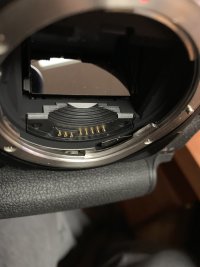
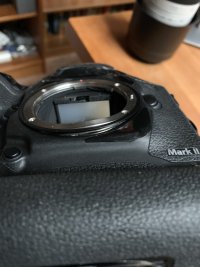
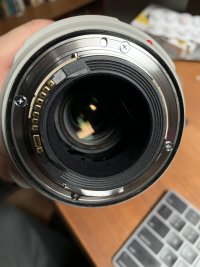
Contemplating getting an RP next week. I currently shoot with a 5D classic. One of my favorite m42 lenses hits the mirror at infinity focus on that body. Are the R and RP shutters closer or further from the rear element on a lens than is a mirror in a DSLR body like mine? In essence, is there a good chance that a lens that strikes the mirror on a DSLR will hit the shutter on an R or RP?

Edit: when using the EF adapter into an m42 adapter into the lens.

These are the official ship dates for the recently announced Canon cameras and lenses

Canon has finalized the release date for all of the recently announced EOS camera gear.
Canon EOS 90D – Shipping September 12, 2019

Canon EOS 90D Body $1199
Canon EOS 90D w/18-55mm IS STM $1349
Canon EOS 90D w/18-135mm IS STM $1599

Canon EOS M6 Mark II Shipping September 26, 2019

Canon EOS M6 Mark II Body $849
Canon EOS M6 Mark II w/15-45mm IS STM & EVF-DC2 $1099
Canon EOS M6 Mark II w/18-150mm f3.5-6.3 IS STM & EVF-DC2 $1349

Canon RF 15-35mm f/2.8L IS Shipping September 26, 2019

Canon RF 15-35mm f/2.8L IS $2299

Canon RF 24-70mm f/2.8L IS Shipping September 26, 2019

Canon RF 24-70mm f/2.8L IS $2299

Continue reading...

Canon to announce EOS-1D X equivalent EOS R system camera in 2021?

According to a report in the Nikkan Kogyo Shimbun, one of Japan’s primary newspapers, Canon will introduce a truly professional EOS R system camera in 2021.
In the report, they also state that early prototypes have already been manufactured and are in testing.
The article also suggests that it’s going to take Canon another 3 years to get the RF lens lineup to match up with the breadth and depth of the EF lineup. This seems quite likely, lenses are not easy to engineer and manufacture.
Canon also mentions that they’re working on a converter/adapter to turn a mirrorless camera into a DSLR.
We are also developing a converter that can join a mirrorless camera to an interchangeable lens for a single-lens reflex camera.
We’re not sure how that’s going to work...

Continue reading...
  • Like
Reactions: 1 user

Canon announces an upcoming firmware update for the PowerShot G7 X Mark III

Canon has announced a firmware upgrade for the Canon PowerShot G7 X Mark III after concerns from owners over autofocus performance.
From Canon:
In response to feedback from customers about the recently launched PowerShot G7 X Mark III, Canon U.S.A. plans to issue a firmware update that can help improve video autofocus speed, accuracy and subject detection performance.
This update will be free for all customers to download from the Canon U.S.A. website at the end of October 2019.
Canon PowerShot G7 X Mark III at Adorama

Continue reading...


Filter

Forum statistics

Threads
37,434
Messages
973,316
Members
24,792
Latest member
Rigel1959

Gallery statistics

Categories
1
Albums
29
Uploaded media
372
Embedded media
1
Comments
25
Disk usage
1 GB