• The Canon Rumors Forum has officially been shut down as of July 10, 2026.

    All data will be deleted on September 16, 2026.

    the ad free experience will return by July 17, 2026.

The Canon RF 135mm f/1.8L IS will be available globally on January 26, 2023

One of the most anticipated lenses for the Canon RF mount is the soon-to-be-shipping Canon RF 135mm f/1.8L IS USM. Initial stock levels we are told will be pretty good, but all preorders likely won’t be met from the big retailers. Canon RF 135mm f/1.8L IS USM Canon RF 135mm f/1.8L IS USM $2099

See full article...

Video is challenging - how to get started

I suspect CR is filled with video experts and perhaps that makes it hard to understand my dilemma. I'm finding it very hard to wrap my head around the myriad of basic concepts in video. I know how to use my R5 to capture simple clips but I'd really like to learn how to edit and every thing else that leads to enjoyable video clips to share. I have Vegas Pro 18 but I need some really basic guidance - YouTube, books or whatever anyone can suggest.

In particular, I have an African Grey who is pretty talented and among the things he does is bob up and down and say, Go Go Oilers (any NHL fans out there) and I suspect that people would enjoy some of his activities if I could only learn how to edit. I'm retired and have some time but find most of what I encounter to be simply too advanced for a beginner. Help, please - suggestions??

Jack
  • Like
Reactions: 1 user

R3 in Cold Weather

I am comparing the specs on Canon R3 and Nikon Z9 on B&H. Under temperature performance (in Farenheit), the Nikon is rated down to 14 degrees but the Canon is only rated to 32 degrees (freezing). Surely this can't be right, that a gripped pro body will not work below freezing? Has anyone used an R3 in low temperatures and able to give a report?

Canon RF 100-500 or Tamron SP 150-600?

I'm new here and I did some research before I opened this new thread. I didn't find a topic related to the question I have, hence this new topic.

Last year I upgraded to the RF Holy Trinity of Canon at f/2.8. I traded in my equivalent Tamron f/2.8 G2 lenses. I was happy to see that I got very good trading in deals from my local photo shop, although I still had to cough up a lot of money. But the RF's are brilliant!

Now I'm in doubt whether to trade in my (fourth and last) Tamron, the SP 150-600mm Di VC USD Canon for the Canon RF 100-500mm f/4.5-7.1 IS USM or not.

The Tamron has 100mm more focal length and at 600mm it still has f/6.3 whereas the Canon has "only" f/7.1 at 500mm. It would feel like it would be a downgrade. But is it a downgrade, apart from the 100mm less foacal length?

Maybe it's a stupid question but before coughing up another substantial amount of money, I would like to be well-informed. Thanks so much in advance!

Godox X-ProII

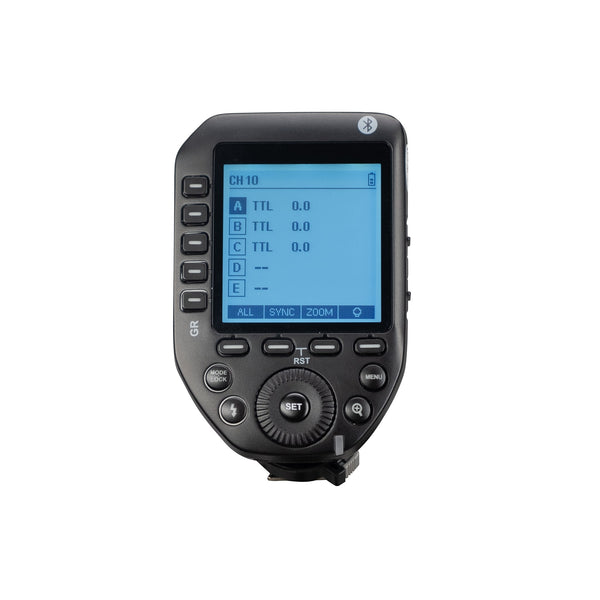
Godox seems to have updated their X-Pro radio trigger and now available for Canon TTL system(though still on old hotshoe).
Hands on:
Shopping link(Canada only it seems like at this time):
Product page(Leica version so far and not even updated):

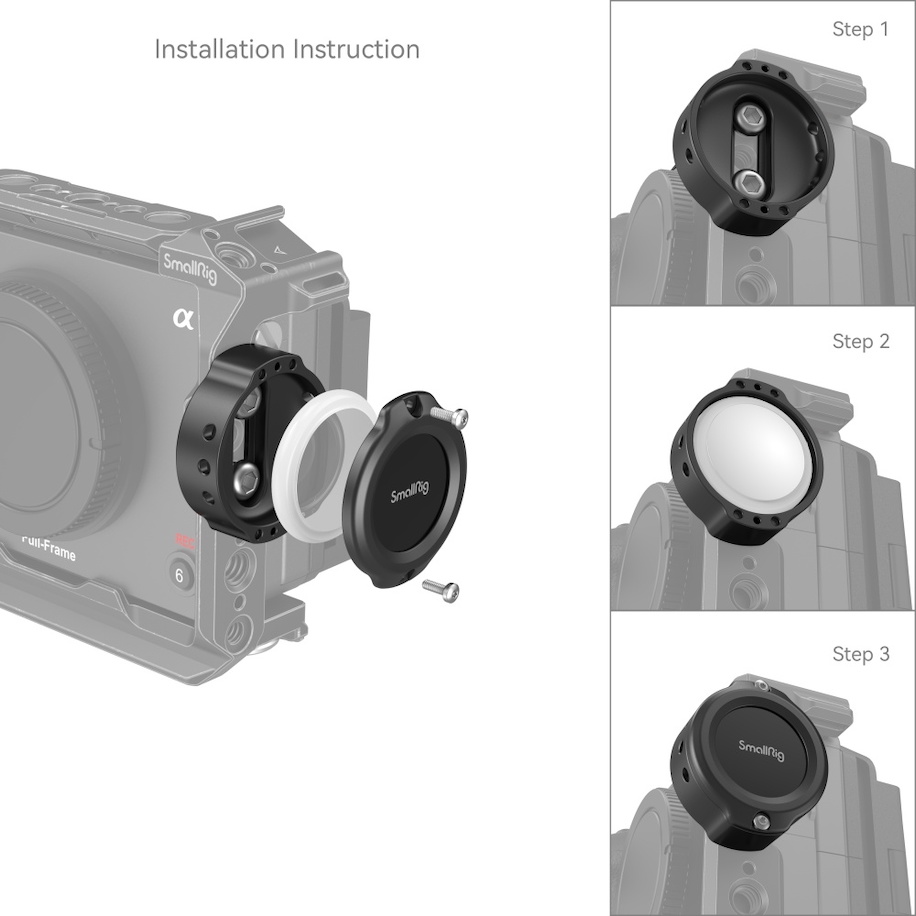
SmallRig Camera accessories with Airtag compatibility.

SmallRig has announced new camera plates and other accessories with AirTag cavities. While mainstream camera makers are dragging their feet with security features 3rd part manufacturers are adding new accessories make tracking stolen/lost cameras easier.

R5 Question about Eye Focus and Exposure

Hi - This maybe a RTFM question but I can't spot it.
When I'm using the R5 I'm using single point spot metering mode for exposure. So when I'm eye tracking exposure is taken from the centre of the image.
What I'd like to be able to do if for it to take the exposure from the point its tracking (generally for the face).
This is for theatre work (just amateur dramatics - photography is just a hobby). The R5 is great for tracking eyes but if the actor moves it tracks the face but exposure if from the centre which maybe the dark background. I have to try to keep the camera moving with the face to get good exposure.
I know I can do centre weighted or average metering but I find spot metering works best.

EF 100/2.8L IS Macro or Sigma AF 105/2.8 DG OS EX HSM Macro

I wonder if someone can give advice on a lens decision. I'm looking for a Macro Lens to use on my R5.
I would use it mainly in my garden (or around) just for Macro and maybe some portraits.
I can get the Sigma 105 for half the money of the EF 100.
Does anyone have experience or even a side by side comparison?
Are there any downsides? OS? AF? Firmware updates?
Thanks for your advice!

coverage of EF lenses

This is the first Christmas for my GFX 100S, so time to get it a present. Santa (OK, FedEx) delivered a Fringer EF adaptor for the 100S this morning. Naturally, I wanted to try it out. It was a little difficult to get it to mount on the camera, hard to turn all the way. It had been sitting on the porch in 24º weather, so maybe some metal contraction.
I first mounted the 10mm f/2.8 macro. I switched the camera out of 35mm mode, and still saw no obvious vignetting. Autofocus was not good, so I shot manual, which is what I would do with this lens most of the time anyway. At 1:1 I couldn't hold it steady enough for the IBIS to do enough, but I could tell that this combination will be fine on a tripod for macro work.

Next I tried the EF 16–35 L f/4. Rather that going out into the cold, I went into the guest room at the front of the house where I have my Christmas tree. Zoomed into 35mm there was very little vignetting. But I mostly wanted to try 16mm, more or less equivalent to 13mm. As you can see, the coverage is less, but there is still a lot of image. You see my feet and the tip of the light fixture on the 10-foot ceiling. Other than the JPEG conversion, I did very little to the picture, so the vignette is as you see it. Autofocus and exposure seemed to work great. The GF 20–35mm is on order, so I shouldn't need to adapt this lens very often in a month or so. I am guessing that the EF 100–400mm L could be useful on this camera, especially since I have no immediate plans to buy any Fuji lenses longer than the 35–70mm I have.

FUJI0895.jpg
  • Like
Reactions: 1 user

Is canon supertelephoto image stabilization supposed to auto turn off during filming?

Thanks for any help anyone can provide on what I know is a fairly obscure question. Canon USA support has been unable to provide guidance.

The Canon EF 500mm IS L II appears to have a feature in its image stabilization algorithm that detects when the lens is mounted to a tripod or otherwise very stable and thus turns itself off to prevent the subtle movements that result from IS. From what I understand this behavior is also present on other Gen II supertelephotos, and I've also seen a post describing this in the newer RF 100-500. This behavior is independent of the IS "mode switch" setting.

unfortunately the IS can be slow to kick back in when it is needed (start panning, wind gust etc), and this results in shaky footage when using the lens in video applications. The correct approach for filming with this lens (and other long lenses for wildlife) would be to turn IS off entirely, secure the lens to a robust rail system, and then put that on a 40-50 lb fluid head + tripod. That's a lot of camera support to hike into remote places with however, and right now I use a Sachtler Ace XL w/ CF legs and mid-level spreader (~8 lbs).

I'm almost certain this behavior is a feature and not a bug, I have seen it in a couple different copies of the 500 II. There are some mentions around the web of this as well, but unfortunately nothing in Canon's official documentation and so canon support refuses to acknowledge it.

Can anyone provide guidance on how they have used the canon supertelephotos to produce stabilized footage? Thanks!

The importance of clean lens contacts in the R environment

Hi folks, this topic might be related to another thread in regard to R cameras freezing up.

I have quiet a large lens collection, only two of them are RF Lenses all others are EF lenses.

A big part of my collection are lenses 10 to 30 years old and I happily torture my new R7 with them to find out how they behave.

As some might know I use not only the Canon EF to R adapter but also a Viltrox Speed booster. The phenomenon I report happens on both but here I talk only about the Canon adapter.

With some lenses my camera locks up or after a few minutes of perfect behavior the AF start to stutter. Drove me mad so I started to investigate.

Factors I excluded first:

  • The Canon adapter (the Vilcrox also) is sound engineered, no wobbling, so the connection between the contacts should not be an issue.
  • I skipped lenses with dodgy protocol implementation like Tamron 35-105 2.8 (1994) or several Sigma fisheyes (1992-1998)
  • I skipped lenses with enormous energy consumption which already have proven to lock up my EOS 5dMK3 and EOS 1dxMK2 (Sigma Lenses again)
All issues with AF stutter or camera freezing up or the “some error occurred, restart your camera” disappeared once I cleaned the lens contacts.

So I excluded Lenses which work so far flawless but which have wear and tear on the contacts because of being mounted 1000 of times in 30 years (Tokina ATX 28-70 2.8, Canon 20-200 2.8 L, Canon 400 2.8 L and Canon 85 1.2 L)

Again: all errors done after swiping the contacts

Now that sounds like a pretty simple explanation…. But it isn’t.

I clean my front and back elements and sensors whenever they are dirty. I also clean the lens contacts when I buy a used lens. But cleaning the contacts is usually not necessary. I have frequently used and changed lenses that I have never cleaned or not cleaned for maybe 15 years. Those lenses worked on the analog EOS 10, on the EOS 30d, on the EOS M and now on the R they show issues. So if a dirty contact seems to be the issue, previous EOS models could not be bothered to fail.

So my question is how many factors have changed in the evolution of the Canon bayonet?

Of course there are more contacts now, but the lenses in question don’t have them.

Is an R camera relying on contacts in existence since the first EOS but which never have been critical before? Do they read a contact which before just transferred juice? Did they change protocol, voltage or frequency?

I do not know enough to make a guess, but for my issues cleaning helps and that means from now on my after use lens care routine gets enriched by a swipe of the contacts.

Still I would like to know whats the driver behind. Maybe the more technical people here can make an educated guess or shed some light?

  • Like
Reactions: 1 user

Venus Optics adds RF mounts to some of their current Laowa lenses

Anhui China, December 13, 2022 – Venus Optics, a pioneer in producing unique photo and cine lenses, announced today the addition of new mounts for the Magic Shift Converter (MSC), transforming the normal lenses into a professional shift lens with ±10mm shift capability. On top of the existing Canon EF, Nikon F and Nikon G

See full article...

Filter

Forum statistics

Threads
37,480
Messages
975,426
Members
24,816
Latest member
GLBDD

Gallery statistics

Categories
1
Albums
29
Uploaded media
372
Embedded media
1
Comments
25
Disk usage
1 GB