5DS-R DR test on DPReview

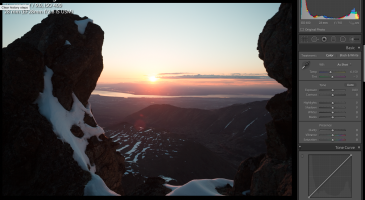
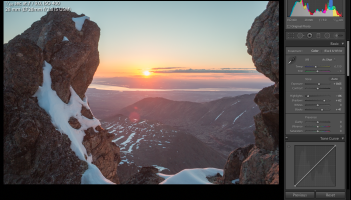
Here's another:


Before:


After edits:


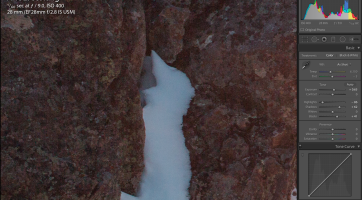
100% view, rainbow rocks!


I could literally post these all day long. Again, the photo was moderately pushed. I didn't even push 1 stop and already got banding and noise.
 

Attachments

  • Screen Shot 2015-05-19 at 9.43.41 PM.png
    Screen Shot 2015-05-19 at 9.43.41 PM.png
    1.3 MB · Views: 120
  • Screen Shot 2015-05-19 at 9.44.05 PM.png
    Screen Shot 2015-05-19 at 9.44.05 PM.png
    1.6 MB · Views: 117
  • Screen Shot 2015-05-19 at 9.44.26 PM.png
    Screen Shot 2015-05-19 at 9.44.26 PM.png
    1.8 MB · Views: 116
Upvote 0
sanj said:
Elder.
Am not arguing or fighting. Am not questioning your skills. God Forbid! I am on your side. Read my earlier posts. But you must figure out what is wrong with the duck photo. It looks just too contrasty. Perhaps an issue with your camera sensor?
Could you post a drop box link to the RAW, I want to check it on my computer? Or else you may send the camera to Canon for a check up.

And YES even 2 stop more DR can be a life saver in MANY situations. I am sure I have lots of examples in my files. Too lazy to dig them. And YES 'system' does matter as well.

There is nothing wrong with his camera. This is actually a common scenario with bird photography. I have this exact problem with the exact same kind of duck, and a variety of other ducks and waterfowl that have strong contrast between their lightest and darkest feathers (or bright white feathers and a dark bill or legs...such as a Snowy Egret, or Black-Crowned Night Heron). Buffleheads, for example, are a notoriously difficult bird to photograph at higher ISO, because they have very dark feathers in small areas with a bright white body. It can be difficult to get the beautiful iridescence of their mating plumage without blowing out their white feathers in what is generally considered good lighting. Dimmer, more heavily diffused light is better, but it can still be difficult to fit the entire contrast range of the duck into the dynamic range of most cameras at higher ISO.

This is one of the reasons I would love to have another two stops of DR at high ISO, or to have a sensor that is effectively ISO-less at lower ISO. The A7s delivers 9.9 stops at ISO 6400, and over ten at all other ISO settings. The 5D III doesn't top 10 stops until ISO 1600, where the A7s has over a stop more. I am really hoping the 5D IV delivers more DR in general, at low and high ISO, because I could most definitely use it.

This is also one of the areas where the whole "ISO-less" nature of Exmor sensors can be really useful to nature photographers, and one of the prime examples where it can be useful to a field of photography other than landscapes, architecture, or studio. Exmors are essentially ISO-less from ISO 100 through 1600, meaning that I could lift the shadows of an ISO 100 shot by four stops, and they would look just as good as a shot done at ISO 1600. The difference, however, is that at ISO 100, you have the full 14 stops of dynamic range, so you can fit a high contrast bird, like a Bufflehead, into it without clipping the highlights or losing the iridescent detail in their dark feathers. After such a shadow lift, you can then use a tone curve to restore contrast to the adjusted tones, and get a nice, beautiful, appropriately contrasty image that uses data well outside the range of almost any other camera (of any brand) shot at ISO 1600 itself.
 
Upvote 0
LOALTD said:
Here's a self-portrait taken at ISO 400 and then pushed +0.65 EV and only +40 shadows.


My hat is flat-black, it doesn't have rainbow colors on it. That's just Classic Canon banding! (and lots of weird noise in general)


Taken on a 5D Mk III.


This is what I keep trying to say. You don't even have to push it 6 stops to see the noise.

I see "rainbow colors" in the shadows of the hat. I usually call that color blotch, but I see both blotch and banding there. My 5D III performs about the same.

It should be noted that the 5D III is not indicative of current Canon sensor IQ. While you have the same random noise, and don't gain much in DR, banding is lower and color noise has been improved a good deal on the 7D II and 5Ds. Both deliver more aesthetically pleasing shadow noise than the 5D III, for sure.
 
Upvote 0
LOALTD said:
Here's a self-portrait taken at ISO 400 and then pushed +0.65 EV and only +40 shadows.
My hat is flat-black, it doesn't have rainbow colors on it. That's just Classic Canon banding! (and lots of weird noise in general)
Taken on a 5D Mk III.
This is what I keep trying to say. You don't even have to push it 6 stops to see the noise.

Yup, that's "the-Canon-look" I moved to ABC to get away from.
other than midtone blue-sky banding on my old 5d2, a +1EV push would show up noise like that even in levels that were just 2 EV below metered 0.
While the banding's pretty much gone on 70D and 7D2, the blotchy noise is still there, tho perhaps a little finer grained. I think the 5Ds series may be similarly improved and, as someone stated earlier, the 6D wasn't much of an improvement and I concur. It tested the 6D and didn't like the results enough to buy it.
 
Upvote 0
Eldar said:
This was the fastest growing thread on CR, until I posted that picture ... What happened to the discussion??

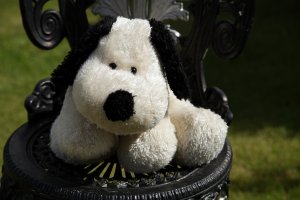
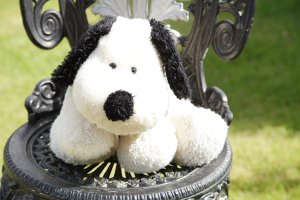
I don't have any pictures of black and white ducks taken in bright sunlight, but I do have a black and white acrylic teddy, which is highly reflective.

The first image is a straight conversion with nothing added ( including sharpening Eldar !). There are some tiny specs that are blown among the 'fur', but they are just tiny specs, and it is bright white acrylic in direct noon sun.

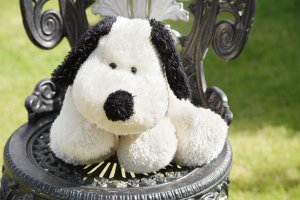
The second is a two stop lift prior to conversion.

The third is a quick blend of the two. There is zero noise reduction applied. I just don't see a problem. Obviously the the jet black is still black, but that is as I would want it.
 

Attachments

  • Teddy.JPG
    Teddy.JPG
    744.3 KB · Views: 107
  • Two stop lift.JPG
    Two stop lift.JPG
    149.8 KB · Views: 111
  • Teddy Blend.jpg
    Teddy Blend.jpg
    980.7 KB · Views: 125
Upvote 0
Sporgon said:
The third is a quick blend of the two. There is zero noise reduction applied. I just don't see a problem. Obviously the the jet black is still black, but that is as I would want it.

You don't see a problem because your stuffed puppy is inanimate. A duck moves. It moves far too much in the fraction of a second it might take to get a second frame to do any kind of multi-exposure blending of any kind. I rarely use less than 1/800th second shutter for birds, usually I'm over 1/1000th to 1/2500th, and when there is brighter light, I can easily be at 1/4000th or more.

There is no such thing as multi-exposure blending with mobile creatures, even ones that may seem as "slow" as a duck floating through water. Micro-movements eliminate any possibility of blending in all but the most still of birds (say a Night Heron, which can stand pretty motionless for relatively long periods of time.)
 
Upvote 0
jrista said:
Sporgon said:
The third is a quick blend of the two. There is zero noise reduction applied. I just don't see a problem. Obviously the the jet black is still black, but that is as I would want it.

You don't see a problem because your stuffed puppy is inanimate. A duck moves. It moves far too much in the fraction of a second it might take to get a second frame to do any kind of multi-exposure blending of any kind. I rarely use less than 1/800th second shutter for birds, usually I'm over 1/1000th to 1/2500th, and when there is brighter light, I can easily be at 1/4000th or more.

There is no such thing as multi-exposure blending with mobile creatures, even ones that may seem as "slow" as a duck floating through water. Micro-movements eliminate any possibility of blending in all but the most still of birds (say a Night Heron, which can stand pretty motionless for relatively long periods of time.)

;D ;D ;D
 
Upvote 0
Sporgon said:
jrista said:
Sporgon said:
The third is a quick blend of the two. There is zero noise reduction applied. I just don't see a problem. Obviously the the jet black is still black, but that is as I would want it.

You don't see a problem because your stuffed puppy is inanimate. A duck moves. It moves far too much in the fraction of a second it might take to get a second frame to do any kind of multi-exposure blending of any kind. I rarely use less than 1/800th second shutter for birds, usually I'm over 1/1000th to 1/2500th, and when there is brighter light, I can easily be at 1/4000th or more.

There is no such thing as multi-exposure blending with mobile creatures, even ones that may seem as "slow" as a duck floating through water. Micro-movements eliminate any possibility of blending in all but the most still of birds (say a Night Heron, which can stand pretty motionless for relatively long periods of time.)

;D ;D ;D

I'm not sure what your smiling about... ??? Here is an example of a Bufflehead I shot on a day with bright, direct sunlight (it was actually constantly changing light, patchy clouds, so getting a decent exposure was a PITA):

YQjbn32.jpg


Real-world example, ISO 800, 5D III. This was actually shot at quite a distance with a 1200mm f/11 lens, (600+2x, stopped town a bit to sharpen things up and eliminate some CA from the 2x), so the bird was smaller in the frame. As "strait out of camera" as I can get from Lightroom...no edits, "Camera Neutral" profile. The blacks are barely above the read noise floor, the whites are obviously clipped. This is pretty common with birds like this in unobscured sunlight.

This shot is from a few minutes later, when a cloud started to pass in front of the sun:

nQsMngX.jpg


And here is the same shot recovered and enhanced a little with some clarity (other than that, no NR or other processing):

wvTAa2c.jpg


The highlights were right up against the clipping point. Agian, the blacks were just above the read noise floor. Most of the highlights were recoverable, but when you push the highlights so high up in a Canon DSLR, you get funky recovery artifacts, like the band along the edge of the white on the back of it's head where it blends into the iridescent mating plumage, where the white of it's body blends into the mating plumage and where the white of it's body blends into it's wing feathers:

CFcefSf.jpg


That double-edged pattern is not what the bird actually looks like...it's a consequence of trying to use as much dynamic range as possible by pushing the whites into the short non-linear area of the signal. The alternative is to push more of the darker tones into the read noise, which results in them having more chroma noise, possibly banding (just about guaranteed at ISO 800 and under), etc. This is something you run into a fair amount of the time with bird photography, especially on days with bright sunlight or patchy clouds, and clipping the highlights is easy when the light is constantly changing due to patchy clouds.

If I had 14 stops at ISO 100, I'd be using it in these situations, underexposing to get the shutter speed, but without fear that I would clip the highlights. With an ISO-less camera, ISO 100-1600, maybe even 3200, are effectively the same...so it's an ideal solution. It would be really awesome if Canon offered a sensor like this in the 5D IV. I'd take that in a heartbeat, given my investment in the 600mm f/4 lens. I'd pre-order one the day they went on sale.

 
Upvote 0
jrista said:
Sporgon said:
jrista said:
Sporgon said:
The third is a quick blend of the two. There is zero noise reduction applied. I just don't see a problem. Obviously the the jet black is still black, but that is as I would want it.

You don't see a problem because your stuffed puppy is inanimate. A duck moves. It moves far too much in the fraction of a second it might take to get a second frame to do any kind of multi-exposure blending of any kind. I rarely use less than 1/800th second shutter for birds, usually I'm over 1/1000th to 1/2500th, and when there is brighter light, I can easily be at 1/4000th or more.

There is no such thing as multi-exposure blending with mobile creatures, even ones that may seem as "slow" as a duck floating through water. Micro-movements eliminate any possibility of blending in all but the most still of birds (say a Night Heron, which can stand pretty motionless for relatively long periods of time.)

;D ;D ;D

I'm not sure what your smiling about... ??? Here is an example of a Bufflehead I shot on a day with bright, direct sunlight (it was actually constantly changing light, patchy clouds, so getting a decent exposure was a PITA):

YQjbn32.jpg


Real-world example, ISO 800, 5D III. This was actually shot at quite a distance with a 1200mm f/11 lens, (600+2x, stopped town a bit to sharpen things up and eliminate some CA from the 2x), so the bird was smaller in the frame. As "strait out of camera" as I can get from Lightroom...no edits, "Camera Neutral" profile. The blacks are barely above the read noise floor, the whites are obviously clipped. This is pretty common with birds like this in unobscured sunlight.

This shot is from a few minutes later, when a cloud started to pass in front of the sun:

nQsMngX.jpg


And here is the same shot recovered and enhanced a little with some clarity (other than that, no NR or other processing):

wvTAa2c.jpg


The highlights were right up against the clipping point. Agian, the blacks were just above the read noise floor. Most of the highlights were recoverable, but when you push the highlights so high up in a Canon DSLR, you get funky recovery artifacts, like the band along the edge of the white on the back of it's head where it blends into the iridescent mating plumage, where the white of it's body blends into the mating plumage and where the white of it's body blends into it's wing feathers:

CFcefSf.jpg


That double-edged pattern is not what the bird actually looks like...it's a consequence of trying to use as much dynamic range as possible by pushing the whites into the short non-linear area of the signal. The alternative is to push more of the darker tones into the read noise, which results in them having more chroma noise, possibly banding (just about guaranteed at ISO 800 and under), etc. This is something you run into a fair amount of the time with bird photography, especially on days with bright sunlight or patchy clouds, and clipping the highlights is easy when the light is constantly changing due to patchy clouds.

If I had 14 stops at ISO 100, I'd be using it in these situations, underexposing to get the shutter speed, but without fear that I would clip the highlights. With an ISO-less camera, ISO 100-1600, maybe even 3200, are effectively the same...so it's an ideal solution. It would be really awesome if Canon offered a sensor like this in the 5D IV. I'd take that in a heartbeat, given my investment in the 600mm f/4 lens. I'd pre-order one the day they went on sale.

I am sorry so that last one has shadows lifted or?
 
Upvote 0
LOALTD said:
Here's another:


Before:


After edits:


100% view, rainbow rocks!


I could literally post these all day long. Again, the photo was moderately pushed. I didn't even push 1 stop and already got banding and noise.

I see the issue, but you don't need to push shadows that much, they are shadows, so they should be dimmer then than area in the background
 
Upvote 0
jrista said:
I'm not sure what your smiling about... ???

You must have some amazing ducks in Colorado if they move faster than 1/2000 of a second ;)

Of course I should be pleased that you thought my two stop lift in raw of the same file was a separate, longer exposure, but isn't it the middle of the night where you are ? You must be half asleep.
 
Upvote 0
Sporgon said:
jrista said:
I'm not sure what your smiling about... ???

You must have some amazing ducks in Colorado if they move faster than 1/2000 of a second ;)

Of course I should be pleased that you thought my two stop lift in raw of the same file was a separate, longer exposure, but isn't it the middle of the night where you are ? You must be half asleep.

Oh, sorry. I originally read your post as though you had taken two different exposures. Reading it again, I guess it was just one.

Yes, it is the middle of the night here. I have severe insomnia...at this point, I haven't slept in several days... :\

At 1200mm, very small movements become pretty meaningful. ;) It is mostly the micro-movements...beads of water cascading off the duck or something like that, changes in the ripples in the water surface, small movements in their feathers as they swim, etc. Not to mention inter-frame lag time. They result in enough of a change frame to frame, at least at the 6fps frame rate of the 5D III, that I could never do any kind of exposure blending. Maybe if I had 10-11fps, and I could frame, track, and nail two different exposures in a small fraction of a second, exposure blending might be an option...but it still wouldn't be easy.
 
Upvote 0
meywd said:
I am sorry so that last one has shadows lifted or?

Actually, the shadows were not lifted in these. They were shot "for" the shadows. Having worked with my 5D III for astro, I generally know where the read noise ends and the image data begins when looking at my histograms. I try to expose such that the darkest tones are separated from the left-hand edge of the histgram by a couple columns. It's kind of a twist on ETTR...basically applying an astrophotography technique of "swamping the read noise" with photon shot noise. To do that, you need the darkest tones in the image to be about 3x brighter than the read noise.

IF (and I stress IF) I can do that, and it's not all that often I can in the daylight, then I don't need to lift the shadows at all...the are already G2G. I just need to recover the highlights, or, I reduce exposure by a stop or two, then recover shadows a bit, recover highlights a bit, and tweak the tone curve to restore contrast. If I can do this, I prefer to, as it effectively eliminates color noise, color blotch and banding in the shadows, right down to the darkest ones. It makes it very difficult to capture the highlights, though. I've learned the 5D III starts to act poorly in the highlights when they approach the clipping point. Color balance in the highlights can get wonkey, they start to burn out, and other odd things can occur when you get right up to the clipping point.

It also seems as though the 5D III has a strange reaction when you actually hit the clipping point...instead of simply clipping, it actually seems to "bounce" back, and fully clipped whites actually darken a bit. I first noticed this with M106 galaxy subs I gathered a few months ago...the brightest stars ended up clipping, however the centers of the stars were just a few tones dimmer than the first part of the halos, which were pure white. Some CCD sensors respond the same way, they will hit the clipping point, then they will actually rebound just a bit, and the fully-clipped tone is actually a few notches below pure white. That is usually because anti-blooming gates kick in, so there is a well-understood reason it occurs in a CCD. I'm not sure why the 5D III behaves that way, and unlike a mono CCD, it seems to behave slightly differently in each color channel, so that actually costs you a little bit more dynamic range, a you can't use all of the highlights. It's better to keep the highlights no brighter than about 250-252 (8-bit), leaving some headroom.

So, anyway. The last one had the highlights recovered. However, since the highlights were so close to the clipping point, their recovery is not "clean"...Lightroom leaves an unnatural harsh edge where the nearly-clipped white feathers border the darker feathers of the birds head. The white feathers should transition abruptly but smoothly into the darker feathers, without that harsh edge. Just one of the consequences of trying to get the darkest tones above the read noise so you don't have to worry about banding or blotch. The alternative is simply to sacrifice some of the darker tones...which is what I usually end up doing with the buffleheads. (Bummer, too...love those birds. They are so much easier to photograph when the sky is lightly overcast...not patchy, fully covered, just lighter, so sunlight shines through...then you can get some amazing shots of the buffleheads.)
 
Upvote 0
jrista said:
meywd said:
I am sorry so that last one has shadows lifted or?

Actually, the shadows were not lifted in these. They were shot "for" the shadows. Having worked with my 5D III for astro, I generally know where the read noise ends and the image data begins when looking at my histograms. I try to expose such that the darkest tones are separated from the left-hand edge of the histgram by a couple columns. It's kind of a twist on ETTR...basically applying an astrophotography technique of "swamping the read noise" with photon shot noise. To do that, you need the darkest tones in the image to be about 3x brighter than the read noise.

IF (and I stress IF) I can do that, and it's not all that often I can in the daylight, then I don't need to lift the shadows at all...the are already G2G. I just need to recover the highlights, or, I reduce exposure by a stop or two, then recover shadows a bit, recover highlights a bit, and tweak the tone curve to restore contrast. If I can do this, I prefer to, as it effectively eliminates color noise, color blotch and banding in the shadows, right down to the darkest ones. It makes it very difficult to capture the highlights, though. I've learned the 5D III starts to act poorly in the highlights when they approach the clipping point. Color balance in the highlights can get wonkey, they start to burn out, and other odd things can occur when you get right up to the clipping point.

It also seems as though the 5D III has a strange reaction when you actually hit the clipping point...instead of simply clipping, it actually seems to "bounce" back, and fully clipped whites actually darken a bit. I first noticed this with M106 galaxy subs I gathered a few months ago...the brightest stars ended up clipping, however the centers of the stars were just a few tones dimmer than the first part of the halos, which were pure white. Some CCD sensors respond the same way, they will hit the clipping point, then they will actually rebound just a bit, and the fully-clipped tone is actually a few notches below pure white. That is usually because anti-blooming gates kick in, so there is a well-understood reason it occurs in a CCD. I'm not sure why the 5D III behaves that way, and unlike a mono CCD, it seems to behave slightly differently in each color channel, so that actually costs you a little bit more dynamic range, a you can't use all of the highlights. It's better to keep the highlights no brighter than about 250-252 (8-bit), leaving some headroom.

So, anyway. The last one had the highlights recovered. However, since the highlights were so close to the clipping point, their recovery is not "clean"...Lightroom leaves an unnatural harsh edge where the nearly-clipped white feathers border the darker feathers of the birds head. The white feathers should transition abruptly but smoothly into the darker feathers, without that harsh edge. Just one of the consequences of trying to get the darkest tones above the read noise so you don't have to worry about banding or blotch. The alternative is simply to sacrifice some of the darker tones...which is what I usually end up doing with the buffleheads. (Bummer, too...love those birds. They are so much easier to photograph when the sky is lightly overcast...not patchy, fully covered, just lighter, so sunlight shines through...then you can get some amazing shots of the buffleheads.)

I understand, but the noise seems high even in the background, that's why I asked, I get the highlight part, when the highlights are clipped I keep it or increase it so it won't be odd, in the picture below you can see that the clouds in the right corner are clipped and have darker edges.


Tree by Mahmoud Darwish, on 500px
 
Upvote 0
jrista said:
Sporgon said:
jrista said:
I'm not sure what your smiling about... ???

You must have some amazing ducks in Colorado if they move faster than 1/2000 of a second ;)

Of course I should be pleased that you thought my two stop lift in raw of the same file was a separate, longer exposure, but isn't it the middle of the night where you are ? You must be half asleep.

Oh, sorry. I originally read your post as though you had taken two different exposures. Reading it again, I guess it was just one.

Yes, it is the middle of the night here. I have severe insomnia...at this point, I haven't slept in several days... :\

At 1200mm, very small movements become pretty meaningful. ;) It is mostly the micro-movements...beads of water cascading off the duck or something like that, changes in the ripples in the water surface, small movements in their feathers as they swim, etc. Not to mention inter-frame lag time. They result in enough of a change frame to frame, at least at the 6fps frame rate of the 5D III, that I could never do any kind of exposure blending. Maybe if I had 10-11fps, and I could frame, track, and nail two different exposures in a small fraction of a second, exposure blending might be an option...but it still wouldn't be easy.
Have you tried the DUAL ISO feature at your 5DIII? There is an option for alternating shots (one normal and one dual iso) in case something goes wrong with ML. Ok at ISO 800 you would have to use a setting like 800/6400 but even so you would gain a little more DR... Or you could possibly do with 400/3200 option...
 
Upvote 0
Sporgon said:
I don't have any pictures of black and white ducks taken in bright sunlight, but I do have a black and white acrylic teddy, which is highly reflective.

This scene isn't "high dr", esp if you don't want to recover details in the deep shadows but are happy with some mid-tone shadow and highlight recovery.

Magic Lantern lets you see how much dynamic range the scene actually has, or you have to measure it for yourself with spot metering or a light meter. Just because there's sun, black and white doesn't mean it exceeds Canon's default 11.5ev at low iso.

jrista said:
If I had 14 stops at ISO 100, I'd be using it in these situations, underexposing to get the shutter speed, but without fear that I would clip the highlights.

Hint: you have 14.5+ ev at iso 100, it's called dual_iso. I keep being stunned how many people ignore it, even though it's obviously just what would fix their problem w/o buying a Sonikon or waiting for a new Canon sensor.
 
Upvote 0
Marsu42 said:
Sporgon said:
I don't have any pictures of black and white ducks taken in bright sunlight, but I do have a black and white acrylic teddy, which is highly reflective.

This scene isn't "high dr", esp if you don't want to recover details in the deep shadows but are happy with some mid-tone shadow and highlight recovery.

Yes it is high DR because of the intense white highlights created by the acrylic fur reflecting the sun. Because of this the EV range is actually over 12 stops. Without those intense highlights you are right; the range is actually very low, but the whole point was to expose in order to hold the very intense highlights.

Incidentally beware of trying to judge DR in a scene with any form of reflective light meter, whether spot or not.
 
Upvote 0
Sporgon said:
[...]The third one is how I would present this as a picture in terms of exposure balance. There is no noise etc etc. I post this to show how much a two stop lift is in reality.

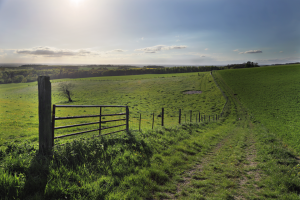
Sorry for digging up this old post, but there is something that bothers me since you provided this example shot, Sporgon. As you write, this third image (seen below) is the picture as you would represent it with an balanced exposure.

It is just me, or doesn't this look completely off in the foreground? It has this weird "HDR look", where something just doesn't seem right.

As I often visit your website just to gaze in awe at your work, I wonder, if you really would post-process that picture this way, if it was intended to be sold (of course, as this is a pure example shot about exposure, I explicitely do not consider composition). Is this the adjustment at which the picture looks best in terms of exposure in your opinion? If not, what would it look like then?
(I think, my confusion might result from misunderstanding what "balanced exposure" actually means...)
 

Attachments

  • Track real.png
    Track real.png
    2.2 MB · Views: 133
Upvote 0