Sporgon said:
jrista said:
Sporgon said:
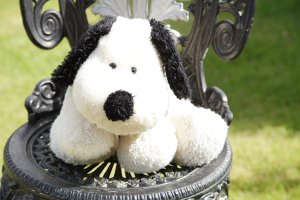
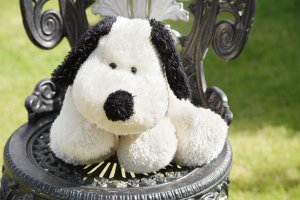
The third is a quick blend of the two. There is zero noise reduction applied. I just don't see a problem. Obviously the the jet black is still black, but that is as I would want it.
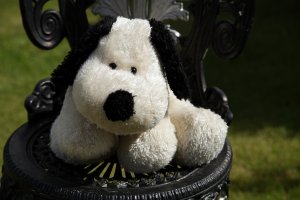
You don't see a problem because your stuffed puppy is inanimate. A duck moves. It moves far too much in the fraction of a second it might take to get a second frame to do any kind of multi-exposure blending of any kind. I rarely use less than 1/800th second shutter for birds, usually I'm over 1/1000th to 1/2500th, and when there is brighter light, I can easily be at 1/4000th or more.
There is no such thing as multi-exposure blending with mobile creatures, even ones that may seem as "slow" as a duck floating through water. Micro-movements eliminate any possibility of blending in all but the most still of birds (say a Night Heron, which can stand pretty motionless for relatively long periods of time.)
;D ;D ;D
I'm not sure what your smiling about... ??? Here is an example of a Bufflehead I shot on a day with bright, direct sunlight (it was actually constantly changing light, patchy clouds, so getting a decent exposure was a PITA):
Real-world example, ISO 800, 5D III. This was actually shot at quite a distance with a 1200mm f/11 lens, (600+2x, stopped town a bit to sharpen things up and eliminate some CA from the 2x), so the bird was smaller in the frame. As "strait out of camera" as I can get from Lightroom...no edits, "Camera Neutral" profile. The blacks are barely above the read noise floor, the whites are obviously clipped. This is pretty common with birds like this in unobscured sunlight.
This shot is from a few minutes later, when a cloud started to pass in front of the sun:
And here is the same shot recovered and enhanced a little with some clarity (other than that, no NR or other processing):
The highlights were right up against the clipping point. Agian, the blacks were just above the read noise floor. Most of the highlights were recoverable, but when you push the highlights so high up in a Canon DSLR, you get funky recovery artifacts, like the band along the edge of the white on the back of it's head where it blends into the iridescent mating plumage, where the white of it's body blends into the mating plumage and where the white of it's body blends into it's wing feathers:

That double-edged pattern is not what the bird actually looks like...it's a consequence of trying to use as much dynamic range as possible by pushing the whites into the short non-linear area of the signal. The alternative is to push more of the darker tones into the read noise, which results in them having more chroma noise, possibly banding (just about guaranteed at ISO 800 and under), etc. This is something you run into a fair amount of the time with bird photography, especially on days with bright sunlight or patchy clouds, and clipping the highlights is easy when the light is constantly changing due to patchy clouds.
If I had 14 stops at ISO 100, I'd be using it in these situations, underexposing to get the shutter speed, but without fear that I would clip the highlights. With an ISO-less camera, ISO 100-1600, maybe even 3200, are effectively the same...so it's an ideal solution. It would be really awesome if Canon offered a sensor like this in the 5D IV. I'd take that in a heartbeat, given my investment in the 600mm f/4 lens. I'd pre-order one the day they went on sale.