Do you need a really high ISO?

Diko

30 fps...
Canon Rumors Premium
Apr 27, 2011
514
31
7,878
Sofia, Bulgaria
Since the rumors of the 100 - 12 800 (native) ISO in 7D m2 I wonder why they don't pay enough attention?

I begin asking myself: Am I the only one that looks for an affordable body for low-light shooting?
I know Lenses should be faster. But lense is not everything. I say 3/4 the glass needs another quarter push from the body.

So if you remember: the fireflies perhaps about exactly a year ago there was this small discussion. And now have the things changed?
Aside from my unchanged disappointment I ask you about it.

That way I might be able to reset my expectations...
 
One thing that hasn't changed is that size matters. The low-light CMOS sensor you linked is FF...the 7DII/X won't be.

The 'affordable body for low-light shooting' is called the 6D – you can buy one today at retailers everywhere!
 
Upvote 0
neuroanatomist said:
One thing that hasn't changed is that size matters. The low-light CMOS sensor you linked is FF...the 7DII/X won't be.

The affordable body for low-light shooting is called the 6D – you can buy one today at retailers everywhere!

Quite a good point:
Canon 6D vs Canon 70D: Noise Comparison (Low Light, High ISO) Video

The quite new 70D is an enormous step for CANON... is not that much for me.

Neuro, your comment is a strong point. We all know the well size DOES matter. However I started this topic with another intention. As I see my start wasn't that clear.

Need for ISO not as a general. Of course FF is better - MF the best. What I mean as next iteration of a model.
Let me rephrase: Will 7Dm2 finally jump over current CANON CMOS performance?

So far what we see recently is everything else but a good update over the under 50% QE. So far the statistics show that QE of about 55% a steady increase to be expected. Meanwhile some rivalry cameras can show off with QE of 67%.

I at least hope that the there will be some improvement over the older 7D as there is between the 6D and 7S.

I know there are from different vendors, but I hope you get my point. ;-)
 
Upvote 0
Diko said:
Since the rumors of the 100 - 12 800 (native) ISO in 7D m2 I wonder why they don't pay enough attention?

I begin asking myself: Am I the only one that looks for an affordable body for low-light shooting?

I am a long standing night time shooter (hence my nickname ;) ), in the nineties the Kodak TMZ 3200 was my favorite film (ISO 3200 was enormous at this time). Currently I am using my 5D3 up to 12800 ISO, above this the noise is to strong IMHO (and I had no objections towards grain when I still shot film so I am also somewhat tolerable towards some noise). I'd really like to have much higher usable ISO since I mostly shoot handheld, sometimes with a monopod and rarely with a tripod. So let's see what's in the cards for the 5D4.

Btw. here are two test shots I took at ISO 102400 (H2) with the 5D3, developed from RAW in DxO Optics Pro with the normal noise reduction:

https://www.flickr.com/photos/lo_lite/14862757116/in/set-72157645945822928/
https://www.flickr.com/photos/lo_lite/14699123138/in/set-72157645945822928/

The PRIME noise reduction feature would reduce the noise somewhat more but then those images really start to look unrealistic. Another thing you don't see that much in those pictures is a purple spot in the lower right corner of the images and that famous banding jrista is always talking about. Those are sensor quirks which are much more visible in the JPEGs, DxO did a pretty good job here.

cheers from Hamburg!
 
Upvote 0
Canon rating of ISO is for jpeg images in camera with NR applied.

When you try to get the real high ISO of a camera sensor, you must use RAW. The dual processors in a 7D MK II may be able to apply some decent noise reduction due to computing power. This will mislead people who just read the hype. The better camera hardware/software might bump the High ISO rating by 2 stops over a old camera model with little or no change in the sensor.

Improvement of real ISO from one generation to the next is usually a fraction of a stop, 1/8 to 1/2. 1/2 a stop is a huge improvement and not often seen. We are approaching the theoretical limits for sensors, so making them better is extremely difficult. A different approach is needed to break thru the current barriers. Reducing sensor noise helps, but its not a break thru.
 
Upvote 0
Q: Do you need a really high ISO?
A: Day to day? Hardly ever.
A: Occasionally and perhaps unexpectedly? Yes! I love the fact that with my 5D3 and to a lesser extent the 1D4 I can ramp up the iso to 6400 and occasionally beyond. If 25,600 was viable I'd use it. I use 1600 & 3200 at evening or indoor events all the time. I light subjects with a touch of fill flash (bounced preferably) and still hold enough background for good effect. For someone who once regarded to then amazing Fuji 800 neg film as a gift from the gods, the option to push out another 3-4 stops opens previously undreamed of creative options.

Hell, I used to think Kodak Tri-X was fast (industry standard 400 iso B&W neg film for those born recently).

-pw
 
Upvote 0
I use it all the time, gives one a lot of freedom! I shoot a lot of interiors using small portable speed lights, they are relatively weak so higher iso helps if you want to shoot at f11/16. Also I have had superb results shooting at iso25000 doing school plays etc. high iso quality depends very much on available lighting, lots of dark backgrounds with bright highlights work well, whereas flat scenes with lots of grays give poorer results. The 6D of course, imo, is much better at high iso than the 7d/70d and if you want the best high iso quality, imo, I would seriously consider FF...

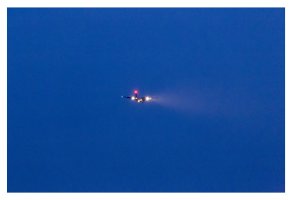
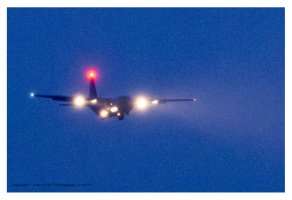
Pic of airplane below, and 100% crop, at at25000, no way else to shoot it!

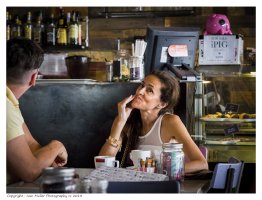
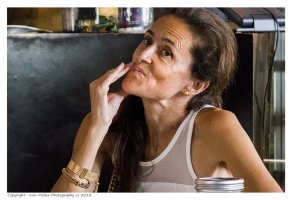
Pic in restaurant and 100crop, also at 10000iso

In all the above, I needed the high iso to keep shutterspeeds high enough to avoid camera shake.

more high iso pics here: http://thelazytravelphotographer.blogspot.com/2014/03/eos-6d-review-part-3-homage-to-tri-x.html
 

Attachments

  • 25000-iso-2615-2-A.jpg
    25000-iso-2615-2-A.jpg
    603 KB · Views: 194
  • 25000-iso-2615-2-crop.jpg
    25000-iso-2615-2-crop.jpg
    761.3 KB · Views: 256
  • _MG_1709-10000-iso-f5-6-250sec-Topaz-NR-+-micro-contrast-increase.jpg
    _MG_1709-10000-iso-f5-6-250sec-Topaz-NR-+-micro-contrast-increase.jpg
    496.1 KB · Views: 268
  • _MG_1709-10000-iso-f5-6-250sec-Topaz-NR-+-micro-contrast-increase-100%-crop.jpg
    _MG_1709-10000-iso-f5-6-250sec-Topaz-NR-+-micro-contrast-increase-100%-crop.jpg
    610.7 KB · Views: 198
Upvote 0
Diko said:
Aside from my unchanged disappointment I ask you about it.

Higher iso is great for raising shutter speed, resulting in more keepers on scenes with movement. The limiting factor is the drop in dynamic range, and we don't know how the 7d2 or upcoming cameras will do. You can apply good noise reduction nowadays, but blown highlights keep that way not matter the export size.
 
Upvote 0
lo lite said:
The PRIME noise reduction feature would reduce the noise somewhat more but then those images really start to look unrealistic. Another thing you don't see that much in those pictures is a purple spot in the lower right corner of the images and that famous banding jrista is always talking about. Those are sensor quirks which are much more visible in the JPEGs, DxO did a pretty good job here.

cheers from Hamburg!
I have had similar experiences, but if you use the Advanced (or whatever they're called) sliders under the PRIME adjustment, you can bring it back to more a more natural looking image.

I have found that the results from the 1D X are considerably better than the 5DIII once you go over ISO 6400 especially in terms of color retention and less patterned noise. If Canon can come close to matching the 5DIII or 6D with the 7DII up to about ISO 3200, I think that would be a big improvement.
 
Upvote 0
mackguyver said:
lo lite said:
The PRIME noise reduction feature would reduce the noise somewhat more but then those images really start to look unrealistic. Another thing you don't see that much in those pictures is a purple spot in the lower right corner of the images and that famous banding jrista is always talking about. Those are sensor quirks which are much more visible in the JPEGs, DxO did a pretty good job here.

cheers from Hamburg!
I have had similar experiences, but if you use the Advanced (or whatever they're called) sliders under the PRIME adjustment, you can bring it back to more a more natural looking image.

I have found that the results from the 1D X are considerably better than the 5DIII once you go over ISO 6400 especially in terms of color retention and less patterned noise. If Canon can come close to matching the 5DIII or 6D with the 7DII up to about ISO 3200, I think that would be a big improvement.

Sadly the 1D series is out of my financial reach. I waited several month after the release of the 5DIII for the prices to come down (I got it for € 2650 including VAT in october last year).

Is the 1D X that much better? How does it compare to the 6D in high ISO?
 
Upvote 0
lo lite said:
mackguyver said:
lo lite said:
The PRIME noise reduction feature would reduce the noise somewhat more but then those images really start to look unrealistic. Another thing you don't see that much in those pictures is a purple spot in the lower right corner of the images and that famous banding jrista is always talking about. Those are sensor quirks which are much more visible in the JPEGs, DxO did a pretty good job here.

cheers from Hamburg!
I have had similar experiences, but if you use the Advanced (or whatever they're called) sliders under the PRIME adjustment, you can bring it back to more a more natural looking image.

I have found that the results from the 1D X are considerably better than the 5DIII once you go over ISO 6400 especially in terms of color retention and less patterned noise. If Canon can come close to matching the 5DIII or 6D with the 7DII up to about ISO 3200, I think that would be a big improvement.

Sadly the 1D series is out of my financial reach. I waited several month after the release of the 5DIII for the prices to come down (I got it for € 2650 including VAT in october last year).

Is the 1D X that much better? How does it compare to the 6D in high ISO?
It took me a long time to buy the 1D as well so I completely understand. I don't know about the 6D, but comparing real-world results (not DxOMark measurements and such), I'm pretty happy with the 5DIII results (with DxO PRIME) up to about ISO 6400 where it's pretty similar to the 1 DX. With the 1D X, however, I've been getting very good results at 12,800-25,600 which is where the 5DIII seems to fall apart in terms of color loss and pattern noise. This assumes a sharp and good exposure (or ETTR) exposure. All photos above ISO 6400 are still somewhat softer but I have printed them up to 12x18" without problems. It's not miraculous but for a lot of subjects the quality is plenty good - and it blows away the ISO 400 shots on some of my earlier digital cameras!
 
Upvote 0
I've gotten a real lesson in high ISO needs. I just received the Tamron 150-600 f/5-6.3 lens and have been testing it on my 7D and 6D. f/5 and 6.3 are really slow! I can add 3 stops of light on the 6D (ISO 6400 vs, 800 on the 7D) which makes the lens a lot more usable. That won't help on BIF, so I'll be stuck shooting in good light on the 7D (really would like to have a 5D!!
 
Upvote 0
mackguyver said:
With the 1D X, however, I've been getting very good results at 12,800-25,600 which is where the 5DIII seems to fall apart in terms of color loss and pattern noise. This assumes a sharp and good exposure (or ETTR) exposure. All photos above ISO 6400 are still somewhat softer but I have printed them up to 12x18" without problems. It's not miraculous but for a lot of subjects the quality is plenty good - and it blows away the ISO 400 shots on some of my earlier digital cameras!
+1
I shoot ISO 6400+ 75% of the time. I had 5d MK III and kept on disappointing my clients/friends. That changed when upgraded to 1DX. I shoot at f2.0
 
Upvote 0
mackguyver said:
lo lite said:
mackguyver said:
lo lite said:
The PRIME noise reduction feature would reduce the noise somewhat more but then those images really start to look unrealistic. Another thing you don't see that much in those pictures is a purple spot in the lower right corner of the images and that famous banding jrista is always talking about. Those are sensor quirks which are much more visible in the JPEGs, DxO did a pretty good job here.

cheers from Hamburg!
I have had similar experiences, but if you use the Advanced (or whatever they're called) sliders under the PRIME adjustment, you can bring it back to more a more natural looking image.

I have found that the results from the 1D X are considerably better than the 5DIII once you go over ISO 6400 especially in terms of color retention and less patterned noise. If Canon can come close to matching the 5DIII or 6D with the 7DII up to about ISO 3200, I think that would be a big improvement.

Sadly the 1D series is out of my financial reach. I waited several month after the release of the 5DIII for the prices to come down (I got it for € 2650 including VAT in october last year).

Is the 1D X that much better? How does it compare to the 6D in high ISO?
It took me a long time to buy the 1D as well so I completely understand. I don't know about the 6D, but comparing real-world results (not DxOMark measurements and such), I'm pretty happy with the 5DIII results (with DxO PRIME) up to about ISO 6400 where it's pretty similar to the 1 DX. With the 1D X, however, I've been getting very good results at 12,800-25,600 which is where the 5DIII seems to fall apart in terms of color loss and pattern noise. This assumes a sharp and good exposure (or ETTR) exposure. All photos above ISO 6400 are still somewhat softer but I have printed them up to 12x18" without problems. It's not miraculous but for a lot of subjects the quality is plenty good - and it blows away the ISO 400 shots on some of my earlier digital cameras!

Today I took some time to fiddle around with PRIME. I set the luminance (the only control there) to a very low value of 10 (out of 100) and I am still getting splotchy results that look somewhat like a water color painting. I guess PRIME is not for me or not for totally noisy images (like the ones you get at 102400 ISO on the 5DIII). Hence I decided to go no higher than 12800 ISO (except for the exceptions ;) ).
 
Upvote 0
CTJohn said:
I've gotten a real lesson in high ISO needs. I just received the Tamron 150-600 f/5-6.3 lens and have been testing it on my 7D and 6D. f/5 and 6.3 are really slow! I can add 3 stops of light on the 6D (ISO 6400 vs, 800 on the 7D) which makes the lens a lot more usable. That won't help on BIF, so I'll be stuck shooting in good light on the 7D (really would like to have a 5D!!

I've heard the 6D is even better than the 5DIII in low light. But I did not test this since I never used a 6D.
 
Upvote 0
lo lite said:
mackguyver said:
lo lite said:
mackguyver said:
lo lite said:
The PRIME noise reduction feature would reduce the noise somewhat more but then those images really start to look unrealistic. Another thing you don't see that much in those pictures is a purple spot in the lower right corner of the images and that famous banding jrista is always talking about. Those are sensor quirks which are much more visible in the JPEGs, DxO did a pretty good job here.

cheers from Hamburg!
I have had similar experiences, but if you use the Advanced (or whatever they're called) sliders under the PRIME adjustment, you can bring it back to more a more natural looking image.

I have found that the results from the 1D X are considerably better than the 5DIII once you go over ISO 6400 especially in terms of color retention and less patterned noise. If Canon can come close to matching the 5DIII or 6D with the 7DII up to about ISO 3200, I think that would be a big improvement.

Sadly the 1D series is out of my financial reach. I waited several month after the release of the 5DIII for the prices to come down (I got it for € 2650 including VAT in october last year).

Is the 1D X that much better? How does it compare to the 6D in high ISO?
It took me a long time to buy the 1D as well so I completely understand. I don't know about the 6D, but comparing real-world results (not DxOMark measurements and such), I'm pretty happy with the 5DIII results (with DxO PRIME) up to about ISO 6400 where it's pretty similar to the 1 DX. With the 1D X, however, I've been getting very good results at 12,800-25,600 which is where the 5DIII seems to fall apart in terms of color loss and pattern noise. This assumes a sharp and good exposure (or ETTR) exposure. All photos above ISO 6400 are still somewhat softer but I have printed them up to 12x18" without problems. It's not miraculous but for a lot of subjects the quality is plenty good - and it blows away the ISO 400 shots on some of my earlier digital cameras!

Today I took some time to fiddle around with PRIME. I set the luminance (the only control there) to a very low value of 10 (out of 100) and I am still getting splotchy results that look somewhat like a water color painting. I guess PRIME is not for me or not for totally noisy images (like the ones you get at 102400 ISO on the 5DIII). Hence I decided to go no higher than 12800 ISO (except for the exceptions ;) ).
I don't think any camera (other than maybe the new Sony) is going to look very good at 102,400, PRIME or not.
 
Upvote 0
Besisika said:
mackguyver said:
With the 1D X, however, I've been getting very good results at 12,800-25,600 which is where the 5DIII seems to fall apart in terms of color loss and pattern noise. This assumes a sharp and good exposure (or ETTR) exposure. All photos above ISO 6400 are still somewhat softer but I have printed them up to 12x18" without problems. It's not miraculous but for a lot of subjects the quality is plenty good - and it blows away the ISO 400 shots on some of my earlier digital cameras!
+1
I shoot ISO 6400+ 75% of the time. I had 5d MK III and kept on disappointing my clients/friends. That changed when upgraded to 1DX. I shoot at f2.0

Can you post some high ISO examples of the 1D, preferably higher than ISO 12800? And I assume you're shooting with prime lenses when you say you shoot at f/2.0, right?
 
Upvote 0