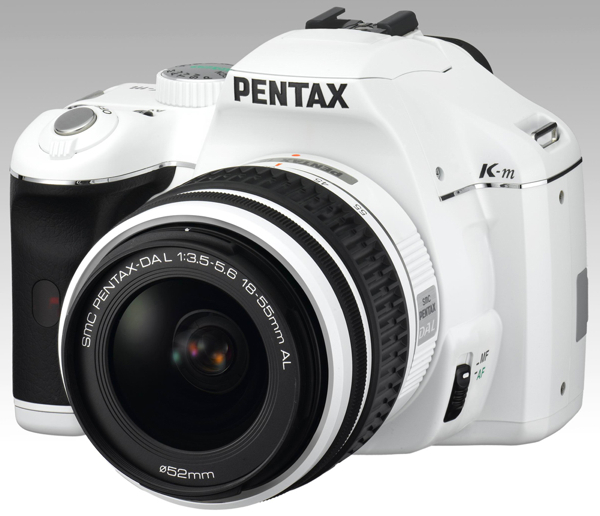
Do you wish your 70-200L were black?

Status
Not open for further replies.
If you shoot football for hours, you may get heatingproblems in the full sun. Maybe. I think normal usage of lenses won't cause you troubles with black lenses. I like the smaller attention with a black lense, even if it's more prone to heating.

I guess Nikon has a lot of professional lenses, too, without painting them white. So... if I'd had the choice I would always buy black ones. Maybe we can meet us at 18% grey. So we can even adjust the whitebalance at any time on it? ;D ;D ;D
 
Upvote 0
Sure you get looks holding a white telephoto lens but think of the alternative. If you were holding a large black lens such as the sigma 800mm, would it not look like some type of weapon from a distance?

And of course if you use it like the guy below then people are sure to run. :o

kneeling.jpg
 
Upvote 0
AlanF said:
The relationship between colour and temperature of bodies receiving radiation is not as straightforward as 99% of postings on the net say. Although black absorbs heat better than white, it correspondingly radiates heat better. The inescapable consequence is that black and white bodies reach the same temperature when they are in sunlight but black gets there faster. Conversely, the black body will cool down faster when taken out of sunlight. So, the Nikon lens heats up faster than the Canon L, but both eventually reach the same temperature and the Nikon cools down faster.


Not true at all. The equilibrium temperature will vary with the 1/4th power of the emmissivity.
 
Upvote 0
Renegade Runner said:
Sure you get looks holding a white telephoto lens but think of the alternative. If you were holding a large black lens such as the sigma 800mm, would it not look like some type of weapon from a distance?

And of course if you use it like the guy below then people are sure to run. :o

kneeling.jpg


The word "shooting" takes all its sens here. ;D
 
Upvote 0
raptor3x said:
Not true at all. The equilibrium temperature will vary with the 1/4th power of the emmissivity.

You are ignoring the other ways heat dissipates. Also, once sunlight has heated the object, the radiated heat is at much lower frequencies and the emissivity is more or less the same then (this is somewhere on Wikipedia).

It is a fact that brighter surfaces reach lower eq. temp., not just because the day is too short for them to reach it.
 
Upvote 0
vscd said:
I guess Nikon has a lot of professional lenses, too, without painting them white. So... if I'd had the choice I would always buy black ones. Maybe we can meet us at 18% grey. So we can even adjust the whitebalance at any time on it? ;D ;D ;D
Nikon does not use Fluorite in their lenses. That is why they are longer and often have more CA's than Canon lenses, and often do not focus as closely. Fluorite allows better correction of CA's which allows a shorter lens.

Maybe black paint is more expensive?? That Nikon 800mm sells for $18,000 ;)
 
Upvote 0
Mt Spokane Photography said:
Nikon does not use Fluorite in their lenses. That is why they are longer and often have more CA's than Canon lenses, and often do not focus as closely. Fluorite allows better correction of CA's which allows a shorter lens.

Maybe black paint is more expensive?? That Nikon 800mm sells for $18,000 ;)

The new Nikon 800mm does use fluorite: http://www.nikon.com/news/2013/0129_lens_06.htm

Edit: Despite the negative comments about it here: http://imaging.nikon.com/lineup/lens/glossary.htm#ed

"However, fluorite easily cracks and is sensitive to temperature changes that can adversely affect focusing by altering the lens' refractive index. So Nikon designers and engineers put their heads together and came up with ED glass, which offers all the benefits, yet none of the drawbacks of calcium fluorite-based glass"
 
Upvote 0
Mt Spokane Photography said:
Nikon does not use Fluorite in their lenses. That is why they are longer and often have more CA's than Canon lenses, and often do not focus as closely. Fluorite allows better correction of CA's which allows a shorter lens.

Maybe black paint is more expensive?? That Nikon 800mm sells for $18,000 ;)

Actually, Nikon's new 800/5.6 does use fluorite elements - two of them. This, despite previous Nikon marketing blurbs that fluorite was used long ago, but they made ED glass so they could avoid using temperature-sensitive, fragile lens elements (e.g., this link).

I wonder how the fluorite will do in a black barrel? If it has thermal issues, Nikon will be blasted. If not, it supports the idea that Canon's white paint is purely a marketing ploy (already supported by the white lenses with no fluorite, like the 300/4L IS). Either way, I see egg on the face of one or maybe both...
 
Upvote 0
neuroanatomist said:
Mt Spokane Photography said:
Nikon does not use Fluorite in their lenses. That is why they are longer and often have more CA's than Canon lenses, and often do not focus as closely. Fluorite allows better correction of CA's which allows a shorter lens.

Maybe black paint is more expensive?? That Nikon 800mm sells for $18,000 ;)

Actually, Nikon's new 800/5.6 does use fluorite elements - two of them. This, despite previous Nikon marketing blurbs that fluorite was used long ago, but they made ED glass so they could avoid using temperature-sensitive, fragile lens elements (e.g., this link).

I wonder how the fluorite will do in a black barrel? If it has thermal issues, Nikon will be blasted. If not, it supports the idea that Canon's white paint is purely a marketing ploy (already supported by the white lenses with no fluorite, like the 300/4L IS). Either way, I see egg on the face of one or maybe both...

Nikon uses Fluorite in their high end Microscopes, so they are familiar with it. Polishing Fluorite Crystals is said to take 4X as long, and that adds to the cost.

I'd think that its possible to design a lens to allow for the expansion and contraction of the Fluorite. I'm thinking that's its a differential expansion issue that causes the elements to crack.

Canon uses Fluorite is those expensive black telephoto cinema zooms, so I'd tend to agree that what was once a reason for white paint is now marketing and that construction techniques alleviate the thermal expansion / contraction issues.
 
Upvote 0
No. I don't mind the attention, I don't think that black is all that nice. I really like the style and design of Canon L telephoto lenses. I also enjoy seeing them at basketball games and football games. It makes me think that my gear is good enough if pro's use it.
 
Upvote 0
The fact it's white has never bothered me at all. I work mainly in PR/sports photography and the white lenses are very common.

I think the Canon white has always been a very iconic sight and sometimes it's nice to have people think "oh, he's a professional, we better not get in his way".

I've never had to shoot in extreme candid situations so it's never gotten in my way. And the weather here in Ireland is never hot enough for the white to make a difference.
 
Upvote 0
neuroanatomist said:
Actually, Nikon's new 800/5.6 does use fluorite elements - two of them. This, despite previous Nikon marketing blurbs that fluorite was used long ago, but they made ED glass so they could avoid using temperature-sensitive, fragile lens elements (e.g., this link).

I wonder how the fluorite will do in a black barrel? If it has thermal issues, Nikon will be blasted. If not, it supports the idea that Canon's white paint is purely a marketing ploy (already supported by the white lenses with no fluorite, like the 300/4L IS). Either way, I see egg on the face of one or maybe both...

I was under the impression that the white telephotos were white to keep a lens' autofocus system from overheating, not the fluorite elements - going back to the early days of AF where Nikon was using focus motors in their bodies.

At any rate, I don't mind the white 70-200. In some situations where I shoot, it adds an air of legitimacy to the fact that I'm standing around with a camera taking photos. I walked around a large city in China and never hesitated to pull it out. Of course the fact that I'm white was probably a bigger deal most of the time.
 
Upvote 0
You can spot a Canon shooter instantly? Are not Sony telephotos also white? I would prefer my 70-200 to be black. I had the original 80-200 2.8L that was black and liked the color better. But it does not take tele extenders and it was too much carrying that plus the 300 4L to cover the range (in addition to standard lens), so I sold them for the 70-200 2.8L plus 1.4X extender. (Actually in between I used a Sigma 100-300 4 which was all black and sharp and great, but it stopped autofocusing and Sigma said repair parts were no longer available).

I kind of think the silver Pentax telephotos are cool. Alternatively, I really like the white bodies like the Pentax shown above and wish Canon made one because it would look great with their white lenses. If I was rich I would probably just have all my bodies and lenses done in a matching original paint scheme from Pimp Your Camera in Germany http://www.pimpyourcam.com/
 
Upvote 0
Pi said:
You are ignoring the other ways heat dissipates.

Okay, sure, convective heat transfer could definitely overpower solar radiative heat transfer but you'd need a fairly strong wind to get to the point where a white and black object will have essentially the same equilibrium temperature. And I doubt conduction has any significant effect in this situation.

Pi said:
Also, once sunlight has heated the object, the radiated heat is at much lower frequencies and the emissivity is more or less the same then (this is somewhere on Wikipedia).

Actually it's quite the opposite, as the object's temperature rises the frequency distribution of the blackbody radiation shifts toward higher frequencies. This shift toward higher frequencies is what causes the increase of heat transfer out of the body via blackbody radiation. If it were the opposite, and the frequency distribution moved to lower frequencies as the temperature increased you might have bodies near absolute zero giving off high energy radiation. It's true that emmissivity will change as a function of temperature and for most materials the emmissivity will tend to increase with increasing temperature, but you're not going to see a white and black object achieve the same emmissivity just by exposing them to 0.1 kW/m^2.

Pi said:
It is a fact that brighter surfaces reach lower eq. temp., not just because the day is too short for them to reach it.

I'm a bit confused here, maybe I'm misreading your statements and if so, I apologize, but you seem to be contradicting yourself.
 
Upvote 0
Status
Not open for further replies.