
You are using an out of date browser. It may not display this or other websites correctly.
You should upgrade or use an alternative browser.
You should upgrade or use an alternative browser.
New Unique Macro Coming? [CR1]
- Thread starter Canon Rumors
- Start date

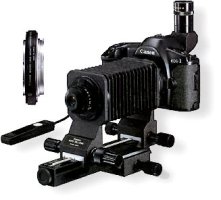
PhilA said:I'm amazed no has mentioned bellows! A macro lens combined with a bellows would certainly be unique and very applicable to macro work.
That would mean that we had to be firmly rooted in some kind of reality. *rolls eyes and drools*
On a more serious side: Yeah, that would be unique and make sense!
Upvote
0

VeijoM said:A zoom macro (1:1). Wasn't such rumored from Canon at some point, or have I been dreaming.
Yes, there was a patent for this. Indeed, it seems perhaps the most likely lens to be coming - maybe to replace
the 180mm macro.
Nikon had a 70-180 macro, so a zoom macro is not exactly new. But the nikon could only do 1:3 at 70mm.
So, a zoom with IS that goes to 1:1 all the way, would be novel.
people questioned the use of a macro zoom, but for long lenses, a zoom is really useful, because adjusting the frame would mean moving forward or backward over seizable distances, more than a focus rail usually can do.
Upvote
0
mrsfotografie said:scyrene said:epsiloneri said:Yes, but can you get 1:1 magnification?Hjalmarg1 said:My 15mm f2.8 fisheye with MFD of 15cm can focus as close as a macro.
Not sure how serious you are, but isn't a fisheye macro oxymoronic? 'True' macro implies 1:1 magnification of the subject at the sensor, but a fisheye has the widest field of view of any lens type. How could you have both simultaneously? My gut feeling is it's physically impossible, but I'm not an engineer.
The lens would have to be practically on the subject itself I imagine, it does seem oxymoronic I agree which is why I mentioned the idea in the first place
Well, I think those lenses are essentially endoscopes, so not really novel either.
Upvote
0

Canon Rumors said:... coming from Canon some time in the next year ...
Admin, is it really next year (2016) or already this year ?
Upvote
0
Sabaki said:For the engineers and technicians amongst you: Is it at all physically possible to gain greater depth of field by changing the lens design or perhaps the distance to/from the sensor or is this relationship set in stone?
NancyP said:sabaki, the only things affecting depth of field are focal length and aperture - no free lunch in macro world.
Actually this is not strictly true - the depth of field is also affected by how asymmetrical the optical design is.
The simple depth of field calculation assumes a symmetrical lens design like the 50/1.8, but lenses are typically not symmetrical (in the sense of the pupil magnification being 1.0, see http://en.wikipedia.org/wiki/Pupil_magnification). The MP-E 65 has a pupil magnification of about 0.5 (*very* rough estimate by inspection) and this does visibly increase the depth of field. I calculated one example:
Focal length 65 mm, f/5.6
Subject distance 250 mm (needed by the calculation; this is towards the minimum for the MP-E 65)
CoC 0.03 mm which is considered standard for full frame. Any figure would do for the comparison.
Pupil magnification of 1.0 gives a DoF of 3.68 mm
Pupil magnification of 0.5 gives a DoF of 4.63 mm
Granted that's only a mm different but it's over 25%.
Upvote
0
PhilA said:I'm amazed no has mentioned bellows! A macro lens combined with a bellows would certainly be unique and very applicable to macro work.
Because such a lens already exists. It is called the MP-E 65.
Upvote
0

Perhaps a combination Macro with builtin step motor to allow focus stacking. Hard to imagine how they would do this in the lens alone but perhaps Canon is referring to some sort of accessory along with the lens?
Upvote
0
"Well, I think those lenses are essentially endoscopes, so not really novel either." Good one, Photonius!
Steve, thanks for information.
The old macro set-ups were true bellows, a few of which also had T/S capacity. Old lenses were reversed double Gauss normal lenses (50-60mm) or enlarger lenses (symmetrical designs mostly). For greater than 1:1 there were specialized bellows lenses or long-working-distance microscope objectives. The MP-E 65 is far better in the field than a delicate bellows.
Steve, thanks for information.
The old macro set-ups were true bellows, a few of which also had T/S capacity. Old lenses were reversed double Gauss normal lenses (50-60mm) or enlarger lenses (symmetrical designs mostly). For greater than 1:1 there were specialized bellows lenses or long-working-distance microscope objectives. The MP-E 65 is far better in the field than a delicate bellows.
Upvote
0
RGF said:Perhaps a combination Macro with builtin step motor to allow focus stacking. Hard to imagine how they would do this in the lens alone but perhaps Canon is referring to some sort of accessory along with the lens?
Could this be more easily implemented in software in camera as opposed to in the lens?
That would be a cool capability if Canon could have automated focus stacking as an option with all their lenses.
I wonder how difficult it would be to program?
Upvote
0
Re: New Unique Macro Coming? [CR1]
Some time ago Canon filed a patent (courtesy of Canonrumors!) for a 135mm tilt-shift MACRO to replace their 90mm tilt-shift. That would fit the bill as a unique and amazing creative tool.
I know nothing about tilt-shift principles, but I recall seeing an article* saying that the closer the subject, the greater the tilt required, so this would mean to be useful as a macro, it would require a significant tilt range.
* (http://www.luminous-landscape.com/tutorials/focusing-ts.shtml).
Some time ago Canon filed a patent (courtesy of Canonrumors!) for a 135mm tilt-shift MACRO to replace their 90mm tilt-shift. That would fit the bill as a unique and amazing creative tool.
I know nothing about tilt-shift principles, but I recall seeing an article* saying that the closer the subject, the greater the tilt required, so this would mean to be useful as a macro, it would require a significant tilt range.
* (http://www.luminous-landscape.com/tutorials/focusing-ts.shtml).
Upvote
0

Re: New Unique Macro Coming? [CR1]
Yes, and that is the intrinsic issue with cameras with deep mirror boxes, you can't use extreme tilts because of shadowing, further, the longer the focal length the more tilt you need, both of which are why field cameras range to 40º and more whereas the Canon T/S lenses have a very modest 8º.
Although it isn't the proximity to the subject that causes the issue, it is the very short J point distance, the line around which the plane of focus rotates, needed to get a wide range of plane of focus control.
Pixelzoomer said:Some time ago Canon filed a patent (courtesy of Canonrumors!) for a 135mm tilt-shift MACRO to replace their 90mm tilt-shift. That would fit the bill as a unique and amazing creative tool.
I know nothing about tilt-shift principles, but I recall seeing an article* saying that the closer the subject, the greater the tilt required, so this would mean to be useful as a macro, it would require a significant tilt range.
* (http://www.luminous-landscape.com/tutorials/focusing-ts.shtml).
Yes, and that is the intrinsic issue with cameras with deep mirror boxes, you can't use extreme tilts because of shadowing, further, the longer the focal length the more tilt you need, both of which are why field cameras range to 40º and more whereas the Canon T/S lenses have a very modest 8º.
Although it isn't the proximity to the subject that causes the issue, it is the very short J point distance, the line around which the plane of focus rotates, needed to get a wide range of plane of focus control.
Upvote
0

I'm more than satisfied with my MP-E 65.
Think I'd rather Canon looked at a mark II of the MT-24EX.
Think I'd rather Canon looked at a mark II of the MT-24EX.
Upvote
0

I think Daniel has the answer..... A White macro lens .....Daniel Flather said:How's aboot a 200mm f4 IS 2.5:1 L in white.
Upvote
0
AcutancePhotography said:RGF said:Perhaps a combination Macro with builtin step motor to allow focus stacking. Hard to imagine how they would do this in the lens alone but perhaps Canon is referring to some sort of accessory along with the lens?
Could this be more easily implemented in software in camera as opposed to in the lens?
That would be a cool capability if Canon could have automated focus stacking as an option with all their lenses.
I wonder how difficult it would be to program?
Automated focus stacking already exists. There is a device called StackShot (I own one) that makes this easy. For all practical purposes you can't do this in the lens because any extension of the lens changes the magnification. You need to move the entire camera - which is what StackShot does.
Upvote
0
Love to see a 200mm+ TS-E macro with the same TS function and min. focus distance as 24mm L TS-E II and.... AUTO FOCUS!!?.... First in the World it would be!!
Upvote
0

Similar threads

- Replies
- 60
- Views
- 10K

- Replies
- 127
- Views
- 10K

- Replies
- 51
- Views
- 5K
- Replies
- 170
- Views
- 26K
- Replies
- 94
- Views
- 18K