These Are Your Favorite EF Lenses

For me, the things that I love the most about the EF lenses I have kept are:
  • The mechanical linking of the focus ring that works even without power.
  • The large glass and relatively pleasant images even without digital aids turned on (older photos in my library especially).
  • The general design language.
  • Compatibility across EOS cameras.
  • Robustness.
[...]
I own only 2 RF lenses and what I hate most is the design of the back caps which has only one possible attachment angle - EF with 3 possible positions made it much easier in the field by rotating the back cap with a 120° turn.
Maybe I will add another R6 ii on sale below 1500€ - just to avoid fiddling with RF back caps ... maybe that was Canons intention ;-)
 
  • Like
Reactions: 4 users
Upvote 0
EF 16-35 F4
This has been one of my favorite lenses for a long time. As a landscape lens, I appreciated the internal zoom in poor weather conditions. I recently switched to the 14-35. The advantages of being small and not needing an adapter are positive. A downside of the 14-35 is that I have to rewind the lens between 20mm and 24mm every time I put it away. Incidentally, if you use close-up filters (such as LEE), it feels slightly different because the lens zooms out slightly compared to the internal zoom (16-35).
 
  • Like
Reactions: 2 users
Upvote 0
OMG, such a comment-bait post, can't resist ;)

The 50/1.2 was my biggest disappointment in the whole EF L lineup.
And the 135/2 is a very old and outdated piece, the Sigma 135/1.8 is far superior in every regard.

The 35/2 IS should not be left out.

If your thing is reproducing the corners of flat test charts almost as well as the center of flat test charts, then the EF 135mm f/2 L is not your lens.

If, on the other hand, your intent is to create photos of a three dimensional world that has sharp rendering of your subjects and smooth rendering of the foreground and background with color and contrast that are sublime, then there's still no lens that can touch the EF 135mm f/2 L.
 
  • Like
Reactions: 1 users
Upvote 0
P.S - I just got done reading the comments and I believe Riker said the Sigma 135mm 1.8 is better in every way. Do others believe that or disagree?

The Sigma is better in every way when it comes to measurable results from imaging flat test charts. But it's a bit clinical when making real images.

The EF 135mm f/2 L is better at making real images that make everything look sharp and yet smooth at the same time if that's the look you want.

Edit: To be clear, I've never used the EF 135mm f/2 L at macro distances. Nor have I ever used the EF 185mm Macro. I'm talking above strictly regarding the EF 135mm f/2 L versus the Sigma 135mm f/1.8 DG HSM ART at distances of, say, fifteen feet or more. There's also a newer Sigma 135mm f/1.4 ART, but it is not offered in the EF mount.
 
Last edited:
  • Love
  • Like
Reactions: 1 users
Upvote 0
This has been one of my favorite lenses for a long time. As a landscape lens, I appreciated the internal zoom in poor weather conditions. … the internal zoom (16-35).
The EF 16-35/4 isn’t a true internal zoom lens. Technically, it’s an external zoom where the zoom mechanism moves entirely behind the front filter threads. The zoom mechanism is not weather sealed, and a front filter on the lens is required for water/dust resistance.

The RF 14-35/4 has a weather sealed zoom mechanism, and does not require a front filter for water/dust resistance.
 
  • Like
Reactions: 2 users
Upvote 0
I really enjoy using the EF100mm f/2. It might not have top-notch image quality, but it performs well and is small and light. I also can't part with the EF70-200 f/4 IS II. It has good image quality, internal zoom, and is easy to handle with the tripod collar. A lens I will definitely continue using is the EF100-400 II. It has excellent image quality. Another lens I won't part with is the TSE-24 II (with the ROGETI TSE Frame III). It has very good image quality and is easy to use. My other lenses are RF lenses: RF10-20, RF14-35, RF24-105, and the 16, 28, and 50 f/1.8.
EF 2.0 100: Good one. With f/2 it delivers well on FF @ 24 MPix and opens up new possibilities in low light. In my experience it is very sharp & contrasty from 2.8 on and stellar from f/4. And it is so sweet and unobtrusive ...
EF 100-400 ii is a dream lens where you do not need to avoid some settings. It is always a miracle to my how such a lens can be designed and produced. Deep respect for those who created and produced it!

I tried the EF 100mm f/2.

I'd been trying for a while to find a good deal on the EF 135mm f/2 L but every time one popped up on the Canon USA Refurb Store it was gone before I could snatch it up. Ditto on the reputable used dealers in the U.S. My first EF 85mm f/1.8, bought used from an individual who was an acquaintance of an acquaintance, was acting up at times when I didn't need it to but I could never get it to reproduce the problem when I was trying to diagnose the issue.

The EF 100mm f/2 was one that was also rarely available at the Canon Refurb Store. One day I happened to see one and managed to get it into my shopping cart before it was bought by someone else. I figured it might could satisfy my desire for a 135mm prime with a faster max aperture than the EF 70-200mm f/2.8 L IS II I've had since shortly after it was released in 2010 as well as cover what I was doing with the unreliable EF 85mm f/1.8.

Nope. I found it was too long to use in place of the 85/1.8. But it wasn't long enough to make me take the 70-200/2.8 off my camera and put the 100/2 on it. It wasn't nearly as good optically as I had expected, demonstrating more CA than I wanted to deal with in post and just generally not as sharp as my other lower tier Canon primes. If I adjusted AFMA for shorter distances it would front focus at medium distances and beyond. Setting AFMA for medium distances made it back focus at shorter distances. This was the case on three different camera bodies. I used it reluctantly and got a few good results with it in very low light environments at times, but I wasn't really happy with it.

Other than the one stop faster aperture, there was nothing else it could do as well as my EF 70-200mm f/2.8 L IS II. It wasn't any sharper, even stopped down to f/2.8. The bokeh wasn't any better, even wide open at f/2. I liked the look of photos I got at 100mm and f/2.8 with my 70-200/2.8 than those I got with the 100/2.

Less than a year after I'd bought the 100/2 I managed to snag an EF 135mm f/2 L from the Canon USA Refurb Store just as they had refreshed their list and started a nice sale on pretty much everything. I only paid a little over $700 plus tax. It arrived in mint condition. I don't think I ever took another photo with the EF 100mm f/2. I bought a replacement EF 85mm f/1.8 not too much later. I held on to the EF 100mm f/2 for a few years, then sold it to KEH in person when driving through Atlanta on a road trip.

The EF 135mm f/2 L is not my most used lens. The type of shooting I do often requires zooms when there are limits on where I can place myself relative to the subject(s). But when I know I can get away with using a telephoto prime, it's the one on my camera. And while it does pretty good on a 7D Mark II crop body, where it really shines is on my full frame bodies.
 
Last edited:
Upvote 0
The EF 16-35/4 isn’t a true internal zoom lens. Technically, it’s an external zoom where the zoom mechanism moves entirely behind the front filter threads. The zoom mechanism is not weather sealed, and a front filter on the lens is required for water/dust resistance.

The RF 14-35/4 has a weather sealed zoom mechanism, and does not require a front filter for water/dust resistance.

Meh. People sometimes act like they think anything not 'fully weather sealed' is an open truss design.

20+f3.3+Cherry+Walnut+Sandwich+UTA+3.jpg


Every EF lens I've ever seen has weather and dust resistance to one degree or another. Unless you can immerse it in water for more than a few seconds without worry, it's not truly "weather sealed". It's just slightly more weather resistant than without the filter. Even without a filter on the front, there's still a good bit of resistance to dust and water getting in through those very narrow clearances between the inner and outer barrels. And as Roger Cicala has said many times: "Weather sealing still means, 'the warranty doesn’t cover water damage.'" That's why he prefers calling most cameras and lenses "weather resistant" rather than "weather sealed".

I've occasionally used an EF 17-40mm f/4 L in rainy conditions shooting field sports without a filter on the front without ever having any issue with water getting in. And it's the one lens I use without a hood, because the hood is so comically wide as to be practically useless. If it rains more than a drizzle I do put plastic OP/TECH covers over cameras and lenses. But they're not "weather sealed" either, and nothing is covering the front of the lens.
 
Upvote 0
The Sigma is better in every way when it comes to measurable results from imaging flat test charts. But it's a bit clinical when making real images.

The EF 135mm f/2 L is better at making real images that make everything look sharp and yet smooth at the same time if that's the look you want.
The Canon sounds better honestly. It sounds like the Sigma is the type of lens that shows all the pores on somebody, which isn't a great look, while the Canon is very sharp but doesn't. Sound correct? If so, I'd definitely go with the Canon.

Thank you!
 
Upvote 0
On the other hand (as people are mentioning lenses they didn't love)... For me the standouts in that regard were the 200 2.8 (too much colour fringing), the 85 1.2 II (likewise, and the MFD was always frustratingly long for what I wanted), the 70-200 2.8 II (underwhelming IQ towards MFD), and the 400 5.6 (lack of IS was a challenge - sorry to the person above who loved it).
 
Upvote 0
I was pleasantly surprised to see the EF 135mm f/2 L at the top of the list. After scrolling down through numbers 10 through 2 without seeing it, I thought for sure #1 would be the EF 35mm f/1.4 L II or series.

The EF 135mm f/2 L is by far, to me, the best lens for the money I've ever bought. It's my favorite prime lens. It's my favorite telephoto lens. I like the look it gives me better than any other lens I use. The only reason it is not my most used lens is that much of what I shoot is under conditions that limit my ability to fully control my position relative to the position of my subject(s), so I tend to use zoom lenses most of the time. These are primarily a 24-70/2.8 and a 70-200/2.8. But if I have a "pry it from my cold, dead hands" lens, it's the EF 135mm f/2 L. It just lets me take photos which look great!
 
Last edited:
  • Like
Reactions: 1 user
Upvote 0
The Canon sounds better honestly. It sounds like the Sigma is the type of lens that shows all the pores on somebody, which isn't a great look, while the Canon is very sharp but doesn't. Sound correct? If so, I'd definitely go with the Canon.

Thank you!

There's some of that, but that's far from the only thing. Modern lenses are highly corrected for field curvature to render a fairly flat field. This is great for document reproduction. But it often makes the out of focus areas a bit "harsh" or "busy". With the EF 135mm f/2 L out of focus areas are smoothly blurred. It's not a blurry lens at all. It's still sharp enough to show a model's pores if you're close enough, you have good enough lighting, the camera is properly immobilized, and you're focused correctly. But they don't look "crunchy" like so many "ultra sharp" lenses make fine details look.
 
  • Like
Reactions: 1 user
Upvote 0
There's some of that, but that's far from the only thing. Modern lenses are highly corrected for field curvature to render a fairly flat field. This is great for document reproduction. But it often makes the out of focus areas a bit "harsh" or "busy". With the EF 135mm f/2 L out of focus areas are smoothly blurred. It's not a blurry lens at all. It's still sharp enough to show a model's pores if you're close enough, you have good enough lighting, the camera is properly immobilized, and you're focused correctly. But they don't look "crunchy" like so many "ultra sharp" lenses make fine details look.
Thank you, appreciate the feedback! I'm going to get one. I put an offer on one, so we'll see. Most are obviously used, I see one or two new ones for around $1k USD.
 
  • Like
Reactions: 1 user
Upvote 0
Meh. People sometimes act like they think anything not 'fully weather sealed' is an open truss design.

20+f3.3+Cherry+Walnut+Sandwich+UTA+3.jpg


Every EF lens I've ever seen has weather and dust resistance to one degree or another. Unless you can immerse it in water for more than a few seconds without worry, it's not truly "weather sealed". It's just slightly more weather resistant than without the filter. Even without a filter on the front, there's still a good bit of resistance to dust and water getting in through those very narrow clearances between the inner and outer barrels. And as Roger Cicala has said many times: "Weather sealing still means, 'the warranty doesn’t cover water damage.'" That's why he prefers calling most cameras and lenses "weather resistant" rather than "weather sealed".

I've occasionally used an EF 17-40mm f/4 L in rainy conditions shooting field sports without a filter on the front without ever having any issue with water getting in. And it's the one lens I use without a hood, because the hood is so comically wide as to be practically useless. If it rains more than a drizzle I do put plastic OP/TECH covers over cameras and lenses. But they're not "weather sealed" either, and nothing is covering the front of the lens.
My 24-70 f/4 with its zoom barrel has survived torrential west coast rain, quantities of reindeer snot and mud, and other such nuisance. For years. I use a high quality UV filter on the front.

I think that all progress is progress, so bravo Canon by making an even more sealed lens, but with appropriate respect and post-event care a solid EF lens is more than capable in the elements.

I also have the 16-35 f/4 lens. With an appropriate front filter I don’t even blink getting it outdoors in all kinds of conditions. And hey, its barrel doesn’t move unlike my still very reliable 24-70.

And yes: the warranty doesn’t cover water. Enjoy your equipment responsibly. Or at least yell with enthusiasm as you swing your lens up in the sky while stepping over fallen Sony and Nikon photographers as you head unto the breach!
 
  • Like
Reactions: 1 users
Upvote 0
If your thing is reproducing the corners of flat test charts almost as well as the center of flat test charts, then the EF 135mm f/2 L is not your lens.

If, on the other hand, your intent is to create photos of a three dimensional world that has sharp rendering of your subjects and smooth rendering of the foreground and background with color and contrast that are sublime, then there's still no lens that can touch the EF 135mm f/2 L.
Sorry, I don't get it, what are you actually saying?
Are you trying to say, that my statement of the Sigma 135/1.8 being superior is false, and the Canon is rendering subjects sharper and has smoother foreground and background than the Sigma, despite such a destroying test result for example?

https://www.the-digital-picture.com...meraComp=979&SampleComp=0&FLIComp=0&APIComp=0

Is that what you want to say?
 
  • Haha
Reactions: 1 user
Upvote 0
The EF 16-35/4 isn’t a true internal zoom lens. Technically, it’s an external zoom where the zoom mechanism moves entirely behind the front filter threads. The zoom mechanism is not weather sealed, and a front filter on the lens is required for water/dust resistance.

The RF 14-35/4 has a weather sealed zoom mechanism, and does not require a front filter for water/dust resistance.
Ooooh I can agree with that statement, the zoom mechanism of the EF 16-35mm F4 isn't sealed. Mine fell head over (the tripod fell down) into the beach sand... costly repair to get sand because through the zoom mechanism it got to "everywhere" inside the lens although it was really deep down in the sand. Just enough to reach the zoom mechanism...

Fortuneatly, it was at the very end of my trip to New Zealand (night 30 of 31). It just ruined my shots from one night :)
 
  • Sad
Reactions: 1 user
Upvote 0
Ooooh I can agree with that statement, the zoom mechanism of the EF 16-35mm F4 isn't sealed. Mine fell head over (the tripod fell down) into the beach sand... costly repair to get sand because through the zoom mechanism it got to "everywhere" inside the lens although it was really deep down in the sand. Just enough to reach the zoom mechanism...

Fortuneatly, it was at the very end of my trip to New Zealand (night 30 of 31). It just ruined my shots from one night :)
That sucks. Truly. I feel bad for you. Hopefully better days of shooting since!

It also sounds like you didn't have a protective filter in front of your lense. Yes? If so, why?

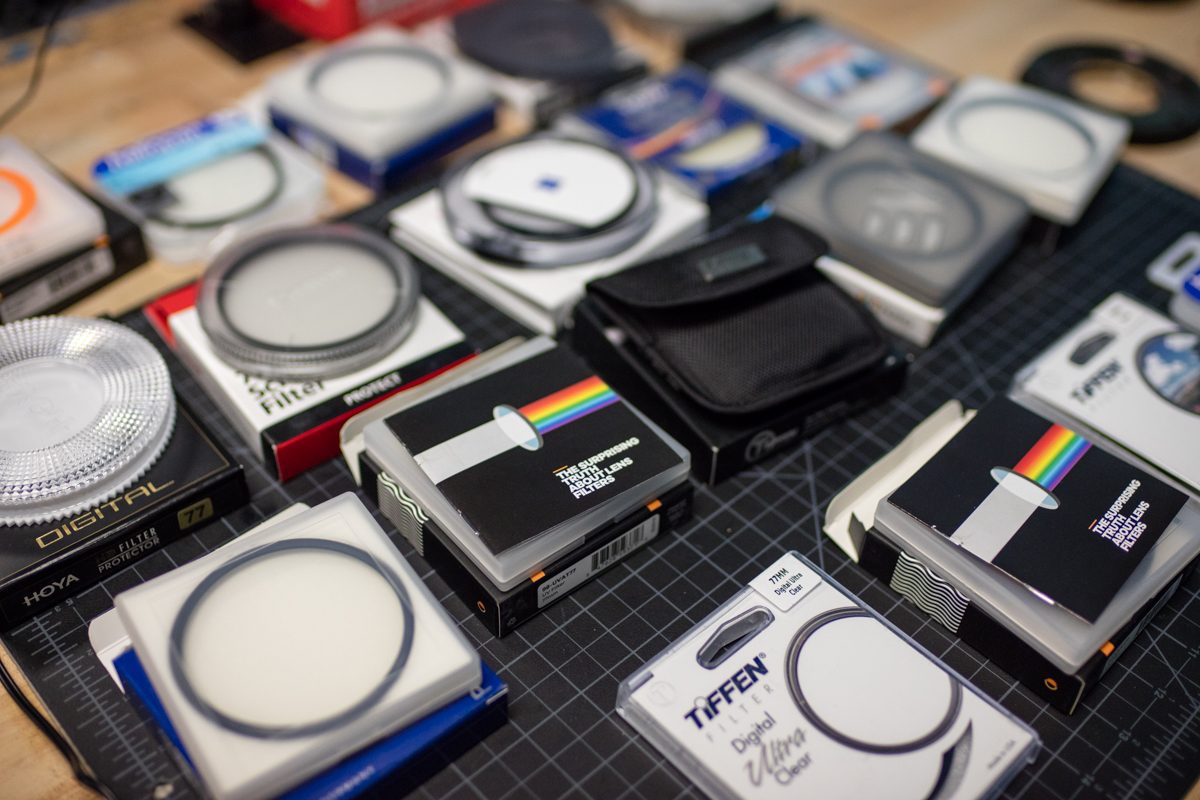
I know some people get freaked out about filters in front of their lens due to concerns about color neutrality, light transmission, etc. (This might not be you, Exploreshootshare — but for others.) It is possible to get high quality filters for non-bulbous lenses, to such a point that any effect on your image is probably no worse than your human inability to 100% dial in white points, etc. or the reality that you'll probably adjust balances, hues, and tones in post anyhow. If you're an out and about person, it's much more satisfying (and part of the adventure) to toss $50+ filters that are cracked, scratched, etc. than it is to take your lens to Canon for repair — assuming you even have that option for older or grey market lenses. Heck, glue a spider-cracked filter to a printed photo from your adventure as a conversation starter.

And yes, it's possible to have an accident that shatters your filter and scratches your lens — but seriously, your front element would probably have been junked in the crash anyhow. So you might as well protect against general scenarios. And salt spray. And dust grit. And... the chance to use your sleeve for a quick wipe.

But for the true purists with the chutzpah and grit (pun intended), your lens will get an extra .02% of light and a .01% color fidelity by going full commando with your front element. Sealed or not. ;)

Here's a fun article by Roger Cicala at Lens Rentals on the topic of filter quality. It finalized my opinion on the topic, and since then I always slap a very good filter on my lenses. When I have to toss one, I feel no worse than using up tires on my truck after a good set of adventure years.

 
  • Like
Reactions: 1 user
Upvote 0
My Personal Top 10 would be
1/ Canon 300mm F2.8 II - Just an amazing lens, creates beautiful images
2/ Canon 24mm TS-E II - Superb, great at its job
3/ Canon 70-200mm F2.8 II - Just a workhorse, sharp
4/ Canon 24-70mm F2.8 II - Just superb and reliable, sharp
5/ Canon 200mm F2 L IS - Beautiful Bokeh, unique look, heavy to use
6/ Canon 600mm F4 II - Sharp, beautiful images - just too heavy for me nowadays
7/ Canon 16-35mm F4 - Great Landscape Lens
8/ Canon 100mm F2.8 Macro - Brilliant and a lovely portrait lens
9/ Canon 11-24mm F4 - Wide - can create images nothing else can - nice to be able to use filters on an RF camera
10/ Canon 85mm 1.2 - Great when you get the image in focus, bokeh to die for

Other lens I'd look on favourably
Canon 24-105mm F4 - great all-rounder, Canon TSE 17mm - not the sharpest but can do a great job on tall buildings, Canon 50mm F1.2 - very easy to use
Canon 50mm 1.4 - soft but I loved it , Canon 100-400 II - solid , Canon 17-40mm - good Sigma 14mm f/1.8 DG HSM Art Lens - For Astro

I've enjoyed them all, all still working. 24-70mm and 24-105mm both have had the ribbon inside replaced but repaired well.
I've lost the red ring on the 100mm Macro.
600mm F4II requires so much gear to make it work - large bag, gimbal head, extender, flash extender - brilliant but debatable if its worth it.
In general very robust and reliable.
I'll be slowly switching to RF lens (RF 100-500 is highly recommended) but will be sad to give any of these up. They've served me well. Thany you Canon, you're expensive but very good at what you do.
 
  • Like
Reactions: 1 user
Upvote 0