Will Canon Answer the D4s? [CR2]

jrista said:
Orangutan said:
jrista said:
At the top of my list right now is a Celestron EdgeHD DX 1100 SCT (about $4000) and the 5D III (seems to run under $3000 now). I could get both of those for about the cost of a single 1D X...and both of those would be more useful to me in a much broader range of situations than just the 1D X.

Where do you live? Maybe we could split costs and share. :P

;D I live in Colorado. It's actually a fairly decent place for astronomy/astrophotography, as it is rather arid, so few problems with humidity screwing with a telescope. (I think on the best of days we might have 30% humidity, and on most days it is way down around 16%. There have been times when we've had less than 10% humidity.) We have mountains, too, so you can get up to 11,000 feet or more for thinner, clearer air.

Well, that won't work: I'm several states west of you. That telescope looks pretty sweet. How does it do for birds? :)
 
Upvote 0
> Will Canon Answer the D4s?

As others have pointed out there is not much need in this particular context.

However I wonder about the future strategy of Canon and other (top) camera makers.

At this point in time I think to have more quantity sold (read: maintain the same levels) more disruptive technologies are needed. A bigger, more expensive and heavier camera must make a difference, a lot of difference to catch the interest. Majority of professionals (who make living of photography) can get easily by less than the top end. Then there are wealthy amateurs. For an average consumer the camera what matters most is the camera what happens to be at hand and that is a "smart"phone. Fortunately most of us (not only having this forum in mind), it gets you there, though it's a different story for the camera makers. Without much effort, it all goes back how it happened to be - small cameras are today's phones and the rest are for a remaining small group, really interested to make the difference. But can you, in the light of the fragmentation in features (all brands included)? It is much easier to give up and just go for the less trouble.
 
Upvote 0
Orangutan said:
jrista said:
Orangutan said:
jrista said:
At the top of my list right now is a Celestron EdgeHD DX 1100 SCT (about $4000) and the 5D III (seems to run under $3000 now). I could get both of those for about the cost of a single 1D X...and both of those would be more useful to me in a much broader range of situations than just the 1D X.

Where do you live? Maybe we could split costs and share. :P

;D I live in Colorado. It's actually a fairly decent place for astronomy/astrophotography, as it is rather arid, so few problems with humidity screwing with a telescope. (I think on the best of days we might have 30% humidity, and on most days it is way down around 16%. There have been times when we've had less than 10% humidity.) We have mountains, too, so you can get up to 11,000 feet or more for thinner, clearer air.

Well, that won't work: I'm several states west of you. That telescope looks pretty sweet. How does it do for birds? :)

I have the EF 600 f/4 L IS II for birds. ;) Which, actually, doubles as a pretty decent, fast, apochromatic refracting telescope in a pinch, as well! :D This is far from the greatest photo of Orion Nebula, due to lack of a GEM that can track, but it demonstrates well enough how good the 600/4 can be for astrophotography:

orion-nebula-dark-skies.jpg


Stack of 30 1.3s ISO 3200 frames.
 
Upvote 0
jrista said:
I just don't think having that extra two stops of dynamic range is actually quite as important as may photographers thing. It improves editing latitude, that's all it really does. One way or another, the things we view our photographs on...screen and print...have considerably less dynamic range. Screens average 8 stops, print averages 6-7 stops (or even as little as 5 stops). If anyone has tried to print on a low dMax paper with a natural white L*, they would understand how difficult it can be to compress even 11 stops of dynamic range into less than half that. It is not an easy task, and one has to be careful to avoid posterization and color fidelity issues in the shadows, where the available data (even after you remove noise and recover DR in the case of Canon sensors) is "sparse" compared to the midtones and highlights.

Compressing 13 stops of native dynamic range into 8 stops of screen DR is similar. You can lift the shadows, but beyond a certain point (around 3-4 stops) you run into the same issues...information in those low signal strength areas is sparse...discrete level transitions are often harsh, and ironically, the addition of noise is often the only way to combat posterization. Don't get me wrong, having more DR is useful, but until we have more available dynamic range on screen and in print (both of which I think are coming), being able to push shadows around by 4-6 stops doesn't buy you as much as you might think.

Pushing around exposure with more dynamic range than your screen is like tonemapping a 32-bit HDR image into 16-bit. You have twice the dynamic range (really, more than that, since 32-bit is floating point...so you have MANY times the dynamic range) as your output target. If you have a lot of shadow tones bunched up at the left end of your histogram, and have done much HDR, you would know how difficult it can be to tonemap all that extra dynamic range into the mere few shadow stops you have in a 16-bit scalar image. It's DIFFICULT! The results usually end up having that "HDR Look", where you end up with funky noise issues, posterization, odd tonal gradients, poor color fidelity, and even tonal inversions in the shadows.

Let’s face it, we all want the best of everything and we complain about the things others have and we don’t have but we think we should have because we paid the same or more money.
In a decade Canon managed to gain just one stop of dynamic range over the almost 11 stops of the entry level 350D (Rebel XT) I bought in 2005. At the same time the Nikon D70s had little over 10 stops by comparison so Nikon managed to gain 4 stops in the same amount of time. To put that in perspective, if you replace dynamic range by paycheck it’s the difference between double your income (1 stop) or 16 times your income (4 stops).

I like to do night shots in cities (tripod, low iso, long exposure) so I know pretty well what a couple of stops better dynamic range would bring me. I started doing hdr with my Canon 350D back in 2005 because I didn’t want to push the dark parts of a single frame more than 1 or 2 stops.
Today with my 5D3 I usually take 7 shots with 2/3 of a stop between each shot at iso’s up to ISO 640. That gives me 4 stops on top of the native DR which is enough in most cases. An example below (7 shot hdr; 24mm; f/8; ISO 320)


These are the kinds of shots 2 or 3 stops more dynamic range would eliminate the need for hdr.
I know the average photographer doesn’t need 14 stops of DR for most shots, neither do I, but I don’t need ISO 12800 or 1/8000 second for most shots either. What I need (or want) is the range to take all the pictures I need (or want) and I do encounter scenes with 20 stops of DR, so I take every stop I can get.
 
Upvote 0
Sporgon said:
Surely that picture has been filled, either by flash or some reflector ?

I don't see how it can be an example of DR

I wouldn't call it an example of DR. It's an example of how, with the right tools, you can still pull off an insanely contrasty shot with just 12 stops of DR. I don't find it limiting at all. I understand landscape shooters don't have the same luxuries, so the landscape folks can just disregard my commentary as irrelevant :) BTW, I love your architectural shots!

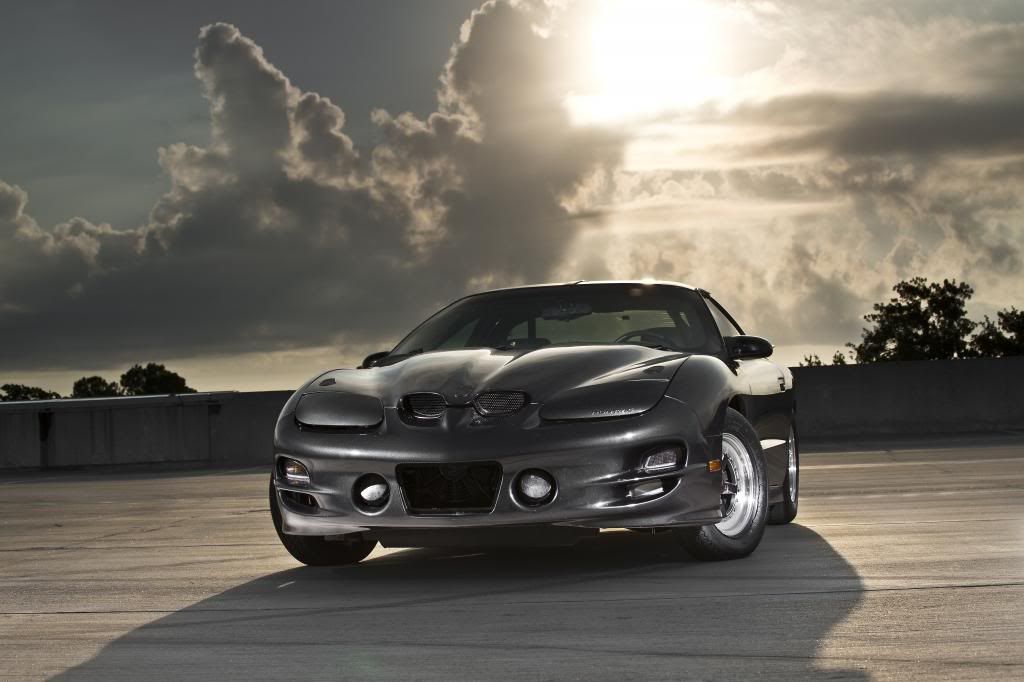
Anyhow, it's been interesting reading some of the commentary regarding the image I posted, speculation regarding which techniques were used, and suggestions on what techniques should have been used. The real story is that the image is a bit deceiving in that the car is parked on top of a five-story tall parking structure/car park. In other words, the car is 50 feet off the ground, which makes the sun appear much lower in the sky than it really is, which is another way of saying it was a $hit ton of ambient light when the shot was taken.

How bright? I used a 5-stop ND grad filter to darken the sky. There's also a circular polarizer on the lens eating up another 1 stop of light. The ambient light is underexposed an additional two stops for several reasons. First off, when balancing ambient light with flash with cars, it never quite looks right with a neutral exposure. I find that I have to underexpose the ambient by at least 1 stop to achieve a pleasing balance of ambient light vs. flash output. Secondly, I reduced the ambient by 1 stop further to create a more moody, high-contrast feel and to gain additional detail in the clouds. In total, the foreground is underexposed by two stops, which is very noticeable on the door and quarter-panel of the car, where there was no fill flash present. The same goes for the concrete, which as we all know is actually white, not gray.

In total, between the ND grad filters, polarizer, and the intentionally dark exposure, the sky has been darkened a total of 8 stops. Experimenting with darker exposures netted a big loss in could detail with minimal gain in detail around the sun. It's one bright mofo :)

The car itself is a very dark metallic gray that looks black. With black cars, you would not believe how much power it takes to defeat the ambient light of the sun during the middle of the day using monolights. They're like blackholes. Obviously, underexposing the ambient by 2 stops only compounds matters, as does shooting at f/8 to achieve the desired level of sharpness from my 70-300L. With two White Lightning 2400 monolights, which are actually 1000ws, I still had to crank up the ISO to 400 to achieve the desired flash output. The big lights also spill onto the foreground, so I took a few exposures with the lights turned off, and layered one of them into the shadow area.

I'm sure that in the next 1-2 generation of DLSR bodies, we'll have sensors that can pull out five-stops worth of shadow detail. However, I firmly maintain that in a shot like this, the final image that results from using that approach won't look nearly as good. IMHO, in this particular shot there's a big difference in quality between pulling up the shadows vs. adding fill light and highlights with some monolights. If you pulled the shadows, the light on hood, bumper, and wheels would be way too flat and lack any semblance of definition. A more contrasty light source like a monolight fixes this problem. Likewise, the metal flakes embedded into modern metallic automotive paint must be side-lit or back-lit, otherwise they will not reflect any light and therefore the paint color will look dull, muted, and subdued.

I will always welcome more DR, but even when the day comes when it's possible to lift the shadows by 5 stops, I will still take the same approach to shots like this and bust out the monolights. If I have to choose between good light and lifting shadows, I'll go with good light every single time.

On a side note, as anyone that lives in a tropical climate will attest, the clouds can roll in and out very quickly. When the clouds quickly rolled in and provided the opportunity to take this shot, I had to scramble to switch lenses, rig up the ND grads, re-position the monolights, and balance out the ambient exposure and flash output. In that sense, I suppose it would have been nice if my camera had so much DR that I didn't need to waste time attaching the ND grads. Nevertheless, I was able to fire off a few frames before the clouds disappeared as quickly as they appeared.

I'll take all the DR I can get, but in the meantime I'll manage to get by with 12 stops that I've got :)

 
Upvote 0
Orangutan said:
jrista said:
Orangutan said:
jrista said:
At the top of my list right now is a Celestron EdgeHD DX 1100 SCT (about $4000) and the 5D III (seems to run under $3000 now). I could get both of those for about the cost of a single 1D X...and both of those would be more useful to me in a much broader range of situations than just the 1D X.

Where do you live? Maybe we could split costs and share. :P

;D I live in Colorado. It's actually a fairly decent place for astronomy/astrophotography, as it is rather arid, so few problems with humidity screwing with a telescope. (I think on the best of days we might have 30% humidity, and on most days it is way down around 16%. There have been times when we've had less than 10% humidity.) We have mountains, too, so you can get up to 11,000 feet or more for thinner, clearer air.

Well, that won't work: I'm several states west of you. That telescope looks pretty sweet. How does it do for birds? :)

Carrying a telescope for bird pictures is fairly normal.... A lot of people use spotting scopes on tripods to look at birds, and with a cell phone pressed up to the eyepiece (look up digiscoping) yon can get a surprisingly good picture of a stationary bird... Of course it S***S on moving birds and the image quality just does not compare to a real camera and a "big white", but it is fun to experiment with...
 
Upvote 0
100 said:
Let’s face it, we all want the best of everything and we complain about the things others have and we don’t have but we think we should have because we paid the same or more money.

I guess that's one of the things I don't much like about other people. Personally, I have made a lot of effort in my life to be satisfied with what I have, and not complain when "the other guy" ends up with something better. That doesn't mean I don't dream about having something better, I certainly do (I've been dreaming about that Celestron 11" telescope for years! :P), but I try very much to avoid the whole "Bitch bitch bitch! You have something better than me!" or "Nah nah na nah nah! I have something better than you do! Haha!" To be quite frank, I find that to be the epitome of childishness...and the thing that really blows? It seems almost EVERYONE is like that!! I don't get it, and it constantly rubs me the wrong way. Perhaps that's why I battle against it so much.

The thing I tend to bitch about is when I feel I've hit a wall with my current technology, and no matter how much I try to work around it, I simply cannot get the results I demand from myself. I literally dropped almost eleven grand on a lens to solve a problem like that. I felt my 100-400mm lens was holding me back. I worked and worked to get better results, but I plateaued. I didn't get a 600mm lens because the other guy had it. I got a 600mm lens because I wanted to keep pushing my own personal envelope. I really could care less about what other people have...it just plain and simply doesn't matter, it's unimportant. What really ultimately matters is what's holding your own personal progress back.

In your case, based on that photo, it seems rather clear that you can indeed benefit from additional dynamic range!

100 said:
In a decade Canon managed to gain just one stop of dynamic range over the almost 11 stops of the entry level 350D (Rebel XT) I bought in 2005. At the same time the Nikon D70s had little over 10 stops by comparison so Nikon managed to gain 4 stops in the same amount of time. To put that in perspective, if you replace dynamic range by paycheck it’s the difference between double your income (1 stop) or 16 times your income (4 stops).

For the bulk of those years, Nikon went from about 10 stops to about 12 stops. It was only when they decided to stop making their own sensors and use Sony Exmor that they jumped almost another two stops (the D800 and D600 don't actually get 14+ stops of native DR...if you look at the Screen DR measures on DXO, the actual DR, the "hardware" DR before any post processing mucks up the numbers, is 13.2 stops.) Actually, I think the D3x had about 12.8 stops. Sony Exmor gave Nikon that extra 1.2-1.4 stops of DR on average over the ~12 stops they had on average before.

I'd point out that it is still just Sony Exmor that has that much of a dynamic range edge. There are few other sensors on the market that get that much dynamic range at ISO 100. The vast majority, including big name medium format sensors, are still in the 10-12 stops range. It isn't like Canon is lagging behind the whole industry. On the contrary, the whole industry is lagging behind Sony. (Just to keep things in proper perspective.)

100 said:
I like to do night shots in cities (tripod, low iso, long exposure) so I know pretty well what a couple of stops better dynamic range would bring me. I started doing hdr with my Canon 350D back in 2005 because I didn’t want to push the dark parts of a single frame more than 1 or 2 stops.
Today with my 5D3 I usually take 7 shots with 2/3 of a stop between each shot at iso’s up to ISO 640. That gives me 4 stops on top of the native DR which is enough in most cases. An example below (7 shot hdr; 24mm; f/8; ISO 320)


These are the kinds of shots 2 or 3 stops more dynamic range would eliminate the need for hdr.
I know the average photographer doesn’t need 14 stops of DR for most shots, neither do I, but I don’t need ISO 12800 or 1/8000 second for most shots either. What I need (or want) is the range to take all the pictures I need (or want) and I do encounter scenes with 20 stops of DR, so I take every stop I can get.

Amazing shot! I like it! This kind of night photography is another area where more DR is certainly an enviable trait to have. Your the type who could probably benefit from a full 16 stops of DR with a true 16-bit sensor, even.

I would offer that this kind of photography is considerably less common than landscape photography, so it isn't exactly indicative of the most common user. Canon tackles the problems the greatest majority need first. Increasing dynamic range, at least up through the 1D X/5D III, wasn't on the top of most people's lists. I guess the one good thing out of "people being people" and complaining about what they don't have and the other guy does is it might light that fire under Canon and get them to address dynamic range sooner rather than later.

BTW, one question. You mentioned you used 7 frames separated by 2/3rds of a stop for that HDR shot. I'm curious why you didn't simply use -3 stops and +3 stops around 0 EC? Would that not have effectively achieved the same thing, with less work?
 
Upvote 0
GMCPhotographics said:
It's a lovely shot and one I really like...but that sky is blown out. An ND grad would render the sky darker and probably lost detail in the darker sky areas. It would have increased contrast where it wasn't wanted. The only way to have fixed this here is to have taken a 2nd photograph but at a 2-3 stop darker exposure and then blended the highlight areas carefully in photoshop using a layer. Shadows can be pulled but clipped highlights are not recoverable. It's also important to render the sky brighter than the foreground, another error I regularly see where ND grads are employed. If an ND grad was used with the above photo, the sky would have been darker than the foreground and wouldn't look right.

It's been a while since I took the shot in question, so my memory is a bit fuzzy, but nevertheless I revisited the original CR2 file and darkened the entire exposure 1 stop in post. I don't think the tradeoff in the slight increase in detail around the sun vs. the substantial loss in detail of the clouds is worth it.

_L3C3775_zps85e5f9d7.jpg


_L3C3775b_zps041004fa.jpg


Big, puffy, tropical clouds like this are fickle and have some very fine tonal gradations. It's very difficult to layer in a darker exposure for the sun into a brighter exposure for the clouds. When I've tried it in the past, it looks like $hit. Of course, it's quite possible that my post processing skills are simply lacking.

Besides, I like the blown out sun :)
 
Upvote 0
V8Beast said:
GMCPhotographics said:
It's a lovely shot and one I really like...but that sky is blown out. An ND grad would render the sky darker and probably lost detail in the darker sky areas. It would have increased contrast where it wasn't wanted. The only way to have fixed this here is to have taken a 2nd photograph but at a 2-3 stop darker exposure and then blended the highlight areas carefully in photoshop using a layer. Shadows can be pulled but clipped highlights are not recoverable. It's also important to render the sky brighter than the foreground, another error I regularly see where ND grads are employed. If an ND grad was used with the above photo, the sky would have been darker than the foreground and wouldn't look right.

It's been a while since I took the shot in question, so my memory is a bit fuzzy, but nevertheless I revisited the original CR2 file and darkened the entire exposure 1 stop in post. I don't think the tradeoff in the slight increase in detail around the sun vs. the substantial loss in detail of the clouds is worth it.

_L3C3775_zps85e5f9d7.jpg


_L3C3775b_zps041004fa.jpg


Big, puffy, tropical clouds like this are fickle and have some very fine tonal gradations. It's very difficult to layer in a darker exposure for the sun into a brighter exposure for the clouds. When I've tried it in the past, it looks like $hit. Of course, it's quite possible that my post processing skills are simply lacking.

Besides, I like the blown out sun :)

Your PP skills aren't lacking...trust me. I think you not only have the skills, but I've always found your work to be rather artistic. I love how you enhanced the glare of the sun...not every part of a photo needs to be contrasty and highly detailed.

Some portrait and wedding photographers THRIVE on low contrast sun glare...it's what they use to give their work that artsy fartsy flair...and personally, I think it looks great. That's what I mean about DR...sometimes, I wonder if people might discover a whole new world of ART if they would look past the "Damn, I've only got 12 stops DR!" and look at the image they have in their hands...they might be amazed with it just how it is... ;)
 
Upvote 0
jrista said:
Your PP skills aren't lacking...trust me. I think you not only have the skills, but I've always found your work to be rather artistic. I love how you enhanced the glare of the sun...not every part of a photo needs to be contrasty and highly detailed.

Some portrait and wedding photographers THRIVE on low contrast sun glare...it's what they use to give their work that artsy fartsy flair...and personally, I think it looks great. That's what I mean about DR...sometimes, I wonder if people might discover a whole new world of ART if they would look past the "Damn, I've only got 12 stops DR!" and look at the image they have in their hands...they might be amazed with it just how it is... ;)

I appreciate the kind words. It's definitely not the easiest way the shoot, as you're always fighting lens flare, yet you often have to use a bunch of filters get the contrast under control, which only further increases the potential for flare and additional IQ degradation. This isn't as bad with Canon's long lenses since they have beastly hoods, but my 24-105 is a hopelessly flare-prone piece of glass.

Honestly, I think I'm using only 5-10 percent of what Photoshop has to offer. I can usually accomplish what I want to in PP, but I'm certain that there are more efficient methods of accomplishing the same thing. There are just so many freakin' tools in Photoshop that I have never even used before. My primary motivation for painstakingly trying to get things right in camera is that I don't particularly enjoy editing images. I'd rather be watching internet porn ;D
 
Upvote 0
V8Beast said:
jrista said:
Your PP skills aren't lacking...trust me. I think you not only have the skills, but I've always found your work to be rather artistic. I love how you enhanced the glare of the sun...not every part of a photo needs to be contrasty and highly detailed.

Some portrait and wedding photographers THRIVE on low contrast sun glare...it's what they use to give their work that artsy fartsy flair...and personally, I think it looks great. That's what I mean about DR...sometimes, I wonder if people might discover a whole new world of ART if they would look past the "Damn, I've only got 12 stops DR!" and look at the image they have in their hands...they might be amazed with it just how it is... ;)

I appreciate the kind words. It's definitely not the easiest way the shoot, as you're always fighting lens flare, yet you often have to use a bunch of filters get the contrast under control, which only further increases the potential for flare and additional IQ degradation. This isn't as bad with Canon's long lenses since they have beastly hoods, but my 24-105 is a hopelessly flare-prone piece of glass.

Honestly, I think I'm using only 5-10 percent of what Photoshop has to offer. I can usually accomplish what I want to in PP, but I'm certain that there are more efficient methods of accomplishing the same thing. There are just so many freakin' tools in Photoshop that I have never even used before. My primary motivation for painstakingly trying to get things right in camera is that I don't particularly enjoy editing images. I'd rather be watching internet porn ;D

For your style of shooting, I really don't think more dynamic range is really going to help much. You tend to shoot strait into the sun. Doesn't matter whether you have 14 stops or 16 stops of DR...your scene, from deepest shadows to the sun itself, is going to have well more than 20 stops of DR. For your style, lighting the scene manually is probably the best and maybe only way to do it. But, thats photography. Photo-graphy, light painting. It's ALL about the light, and you can't do any better than directly controlling as many aspects of the light that illuminates your scene yourself. I think your results speak volumes to that.

I just love digging through the portraiture groups on Flickr, 500px, and 1x...you can REALLY TELL the difference when a good portrait photographer skillfully uses light...the differences are phenomenal, and the quality is beyond stunning. Doesn't matter how much dynamic range you have, or how noisy the images are (hell, some still use film!) The difference between portrait shots that did not add and control light, or only minimally controlled it, rarely have the same impact and artistic flare as portrait shots that finely control every aspect of light and shadow in a scene. I've been digging through Flickr's portraits since the days of the 5D classic...and even that camera never seemed to have any problems producing phenomenal results, despite its DR handicap (which is at least two thirds of a stop worse than the 5D III.)
 
Upvote 0
jrista said:
I levy the question again...how many of your shots are at ISO 100, and more importantly, of those ISO 100 shots, in how many did you desperately NEED to push shadows more than two or three stops?

Privatebydesign offered part of the answer:

privatebydesign said:
That is an interesting question that illustrates why there are so many diverse opinions about th same piece of equipment, we all use them differently.

As for me I took a look, of my last 19,500 images, 9,000 were at 100iso, 7,500 at 200iso, 2,000 at 400 iso and 1,500 at 800 and other random intermediate iso stops.

I'd like higher low iso image quality. But I am not going to spit my dummy out waiting for it.

We know how many he takes at low ISO. He takes a lot, but that doesn't address my actual question, and the question that actually pertains to having more than 12 stops of DR at ISO 100: How many of those 9000 ISO 100 images needed to be pushed by four, five, or six stops? I would guess VERY FEW. Practically none, unless PBD shoots exceptionally difficult scenes with massive dynamic range on a regular basis/for a living. If that is the case, then hell, I highly recommend a D800 for him. In the grand scheme of things, though, I doubt most photographers even think about pushing shadows that much (or could even find a legitimate reason to.)

I do, and the number of images I have shot at 100 iso and had to bracket to blend is well in the hundreds, could even be in the thousands. To preempt the question of why don't I use a Nikon instead? Well two more stops would still require a blend and they don't have a TS-E 17.

I am not going to become the new Mikael here, as I already said I am happy to work with what I have even thought here are "better" alternatives available now, but I do find it rather funny that whilst you, jrista, constantly go on about how you, and you seem convinced everybody else too, will benefit from many more MP's, you seem very reluctant to accept peoples opinions when they present exactly the same argument about DR.

I, for instance, do not want many more MP, I do want increased low iso performance, a lot of my shooting requires it. I appreciate that my requirements might put me in the minority here, but I only speak for myself.
 
Upvote 0
I will always welcome more DR, but even when the day comes when it's possible to lift the shadows by 5 stops, I will still take the same approach to shots like this and bust out the monolights. If I have to choose between good light and lifting shadows, I'll go with good light every single time.

[/quote]

Shhhh. You will soon create enemies here.
 
Upvote 0
privatebydesign said:
jrista said:
I do, and the number of images I have shot at 100 iso and had to bracket to blend is well in the hundreds, could even be in the thousands. To preempt the question of why don't I use a Nikon instead? Well two more stops would still require a blend and they don't have a TS-E 17.

I'd never ask why you don't go to Nikon. ;P And the TS-E 17 is a damn good reason to pick Canon.

jrista said:
I am not going to become the new Mikael here, as I already said I am happy to work with what I have even thought here are "better" alternatives available now, but I do find it rather funny that whilst you, jrista, constantly go on about how you, and you seem convinced everybody else too, will benefit from many more MP's, you seem very reluctant to accept peoples opinions when they present exactly the same argument about DR.

I happily accept cogent arguments for more DR. My issue is that, across a multitude of forums, it seems MOST canon shooters have started complaining about DR. Ironically, it seems many of them who shoot at high ISO don't quite seem to understand that improved low ISO DR won't actually do a damn bit of good for them. Perhaps I levy my counterarguments too broadly, I don't mean to belittle anyone's legitimate need. I totally understand the desire for more DR when you have a legitimate need. (Hell, I have a legitimate need, and I've held off buying a new Canon camera because I too am interested in seeing what Canon does.)

But I do think the ratio between the volume of Canon shooters who complain about not having the same DR as "that Nikon guy over there", and the number who actually need it (or, for that matter, would understand how to use it if they had it) is far higher than it should be. Perhaps some people are just complaining to get Canon to do something about it...guess there is nothing wrong with that...but still, it feels people complain about it more because "that other guy has it, so I want it too" rather than for a truly legitimate reason. As I mentioned before (or maybe in another thread)...I kind of loath that mentality, always having to one-up the other guy, or bitching and moaning about how the other guys stuff is better than yours. It comes off as so childish. I'm certain I am not the only one who gets that feeling from the DR crowd either (I know for a fact Neuro does.)

I'll try to filter a bit more, debate the "children" when they complain just because they want to scream "me too" without actually having a need, and back up the guys who have a demonstrated need for more DR.
 
Upvote 0
100% agree.

My personal problem area for low iso DR, and one which would only be mitigated, not entirely overcome, with 14 or even 16 stops, is real estate and architecture. Yes, for part of my portfolio I shoot a niche, and I have tried just about every technique out there from tone mapping, blending, layer masks, PS 32bit, Enfuse, HDR, speedlites, studio flash etc etc and still, after all that, I haven't found one that works in every situation.

For everything else, and I am a generalist, I have very few problems with low iso DR.
 
Upvote 0
sanj said:
Shhhh. You will soon create enemies here.

I've marveled at your portfolio quite often, and considering the types of subjects that you shoot, if you stated that more DR would be beneficial for the subjects that you shoot, I would certainly wouldn't doubt it. Cars don't care if you flash 2000ws worth of monolights in their faces. I wouldn't dare do the same with zebras and rhinos who would most definitely get scared off, or lions that might get pissed off and decide to eat me :o
 
Upvote 0
privatebydesign said:
100% agree.

My personal problem area for low iso DR, and one which would only be mitigated, not entirely overcome, with 14 or even 16 stops, is real estate and architecture. Yes, for part of my portfolio I shoot a niche, and I have tried just about every technique out there from tone mapping, blending, layer masks, PS 32bit, Enfuse, HDR, speedlites, studio flash etc etc and still, after all that, I haven't found one that works in every situation.

For everything else, and I am a generalist, I have very few problems with low iso DR.

I do wonder if we will see 20-24 stops of DR in a stills camera at some point. I know that 20stop plus cinema sensors have been developed by Red. Granted, that is pretty cutting edge and extremely expensive high end 4k cinema gear. But knowing that it's been done, one can't help but wonder if that kind of dynamic range will eventually find it's way into photographer hands.
 
Upvote 0
V8Beast said:
sanj said:
I will always welcome more DR, but even when the day comes when it's possible to lift the shadows by 5 stops, I will still take the same approach to shots like this and bust out the monolights. If I have to choose between good light and lifting shadows, I'll go with good light every single time.

Shhhh. You will soon create enemies here.

I've marveled at your portfolio quite often, and considering the types of subjects that you shoot, if you stated that more DR would be beneficial for the subjects that you shoot, I would certainly wouldn't doubt it. Cars don't care if you flash 2000ws worth of monolights in their faces. I wouldn't dare do the same with zebras and rhinos who would most definitely get scared off, or lions that might get pissed off and decide to eat me :o
[/quote]

Hahahaha. :)
DR helps people when they cannot fill in with bounce boards or flash, or bracket exposures and fix in post because of handheld situations or moving subjects. I believe there will be lots of such photographers.
DR is not relevant when shooting in controlled situations. I believe there are fewer such photographers.
(But of course you know this and have stated it above).

Pls be clear: I am not complaining about current DR in Canon sensors, just saying that better DR would be nicer.
 
Upvote 0
jrista said:
For the bulk of those years, Nikon went from about 10 stops to about 12 stops. It was only when they decided to stop making their own sensors and use Sony Exmor that they jumped almost another two stops (the D800 and D600 don't actually get 14+ stops of native DR...if you look at the Screen DR measures on DXO, the actual DR, the "hardware" DR before any post processing mucks up the numbers, is 13.2 stops.) Actually, I think the D3x had about 12.8 stops. Sony Exmor gave Nikon that extra 1.2-1.4 stops of DR on average over the ~12 stops they had on average before.

The D3x has 13,65 EV of dynamic range according to DxO and that’s a 2008 camera…
The big leap was made before 2009, after that it’s “only” about 1 stop. Canon never made the big leap.

jrista said:
I'd point out that it is still just Sony Exmor that has that much of a dynamic range edge. There are few other sensors on the market that get that much dynamic range at ISO 100. The vast majority, including big name medium format sensors, are still in the 10-12 stops range. It isn't like Canon is lagging behind the whole industry. On the contrary, the whole industry is lagging behind Sony. (Just to keep things in proper perspective.)

I beg to differ. Nikon uses all kind of sensors. The D7100 has one by Toshiba (13.72 EV) for instance. It’s not only Nikon and Sony, the Pentax K3 has a 13.41 EV sensor and those aren’t even full frame pro camera’s.
Medium format is a niche market Canon doesn’t compete in, not yet anyway, so let’s leave medium format out of it for now.

jrista said:
I would offer that this kind of photography is considerably less common than landscape photography, so it isn't exactly indicative of the most common user. Canon tackles the problems the greatest majority need first. Increasing dynamic range, at least up through the 1D X/5D III, wasn't on the top of most people's lists. I guess the one good thing out of "people being people" and complaining about what they don't have and the other guy does is it might light that fire under Canon and get them to address dynamic range sooner rather than later.

I agree.

jrista said:
BTW, one question. You mentioned you used 7 frames separated by 2/3rds of a stop for that HDR shot. I'm curious why you didn't simply use -3 stops and +3 stops around 0 EC? Would that not have effectively achieved the same thing, with less work?

You get a smoother transition particularly in the highlights in night shots if you use more frames closer together. I combine the frames in photoshop to a 32 bit image and “develop” that in ACR. A 32 bit files in ACR let me play with 20 stops DR (-10 to +10). I develop the result to a 16 bit tiff file and tweak that in photoshop. It takes more time but gives me more control over the results than I get with dedicated HDR software like Photomatix Pro.
 
Upvote 0
100 said:
jrista said:
For the bulk of those years, Nikon went from about 10 stops to about 12 stops. It was only when they decided to stop making their own sensors and use Sony Exmor that they jumped almost another two stops (the D800 and D600 don't actually get 14+ stops of native DR...if you look at the Screen DR measures on DXO, the actual DR, the "hardware" DR before any post processing mucks up the numbers, is 13.2 stops.) Actually, I think the D3x had about 12.8 stops. Sony Exmor gave Nikon that extra 1.2-1.4 stops of DR on average over the ~12 stops they had on average before.

The D3x has 13,65 EV of dynamic range according to DxO and that’s a 2008 camera…
The big leap was made before 2009, after that it’s “only” about 1 stop. Canon never made the big leap.

That is after downsampling. Downsampling doesn't do you any good when you are editing RAW images. Dynamic Range improves editing latitude. Since you can only ever edit RAW images at full size, the Print DR spec from DXO is meaningless. You have to look at the Screen DR spec from DXO. Screen DR tends to be a stop or more less than the downsampled statistics.

Downsampling is only useful for comparing image results from different cameras on a normalize basis. It doesn't actually tell you anything about your RAW post-process editing latitude, and can actually GREATLY exaggerate how flexible your camera's images will be in post.

100 said:
jrista said:
I'd point out that it is still just Sony Exmor that has that much of a dynamic range edge. There are few other sensors on the market that get that much dynamic range at ISO 100. The vast majority, including big name medium format sensors, are still in the 10-12 stops range. It isn't like Canon is lagging behind the whole industry. On the contrary, the whole industry is lagging behind Sony. (Just to keep things in proper perspective.)

I beg to differ. Nikon uses all kind of sensors. The D7100 has one by Toshiba (13.72 EV) for instance. It’s not only Nikon and Sony, the Pentax K3 has a 13.41 EV sensor and those aren’t even full frame pro camera’s.
Medium format is a niche market Canon doesn’t compete in, not yet anyway, so let’s leave medium format out of it for now.

I'll keep medium format in the mix if I please, thank you very much! :P With the likes of the D800 and A7r, it becomes ever more relevant to include medium format, which used to be the ONLY way to get 30-40 megapixels. As for your DR numbers, read my response above...that is only when downsampling. Actual hardware DR as it pertains to real-world editing latitude is much less. There are only a couple cameras on the market that actually break the 13-stop DR barrier, and none yet, to my knowledge, that actually reach 14 stops exactly. It is impossible to have more than 14 stops of actual real-world DR with DSLRs because we only have 14-bit AD converters. To achieve a true 14-stop DR at ISO 100, you would literally have to have zero noise (which isn't even possible at -80°C). I think there may be a medium format camera or two that uses a 16-bit ADC, however that clearly hasn't done them any good, as they are all still limited to around 11-12 stops of DR due to read noise.

It looks like the D7100 actually does get up there, though. ScreenDR is 12.9 stops, which is actually pretty impressive for a non-Exmor sensor. The K3 gets 12.6 stops, which is getting there.

100 said:
jrista said:
BTW, one question. You mentioned you used 7 frames separated by 2/3rds of a stop for that HDR shot. I'm curious why you didn't simply use -3 stops and +3 stops around 0 EC? Would that not have effectively achieved the same thing, with less work?

You get a smoother transition particularly in the highlights in night shots if you use more frames closer together. I combine the frames in photoshop to a 32 bit image and “develop” that in ACR. A 32 bit files in ACR let me play with 20 stops DR (-10 to +10). I develop the result to a 16 bit tiff file and tweak that in photoshop. It takes more time but gives me more control over the results than I get with dedicated HDR software like Photomatix Pro.

Hmm, so you are actually creating a 32-bit float TIFF, then passing it through ACR? Any chance you have or could write a tutorial on that? As in how you actually combine the frames and all. Using ACR to tonemap sounds WAY better than using that crummy little HDR tool Photoshop has, which makes tonemapping a real PITA. I stopped bothering with HDR a while ago because of how difficult it is to use either Photoshops HDR or Photomatix Pro and really get the kind of results I want from tonemapping. ACR is far more intuitive with its controls, and would be immensely more effective, I think. I'd love to get back into making HDR landscapes, especially if I can extract the same kind of quality you did with that bridge shot.
 
Upvote 0