
So you're just mixing up SNR and noise.
I'm not mixing up anything.
You're saying that raising ISO decreases noise
For the same exposure. That's why you should always use the highest ISO you can for a given exposure. The limit is protecting highlights.
but then stating that noise stays the same.
But you're amplifying the signal.
SNR is a ratio while the noise is a value in the ratio.
Right, and when you amplify the signal and keep the noise the same, SNR goes up.
errrm... if all settings are the same but ISO is lower, the image is just darker.
Right. And when you brighten it in post, you amplify both the noise and the signal - SNR doesn't change.
And no, it's not less noisy.
Right - it's more noisy than if you had used ISO increase to amplify.
With Canon sensors, they normally do analog amplification up to 4-8x which is ISO 400-800.
Even my 20D and 5D did 16x (ISO 1600) in analog.
The rest is digital amplification which in fact is just multiplication. So images at ISO 1600 and ISO 3200 will be roughly the same after you add +1 stop to the ISO1600 image in Lightroom.
Up to ISO 800 it's better to set ISO in camera so that it does analog amplification as it's more accurate.
It's less noisy because read noise is reduced - exactly what I've been telling you all along.
Can you show me a paper that has these formulas? noise equals to the square root of signal?? Also SNR by definition is (signal / noise) and nothing else.
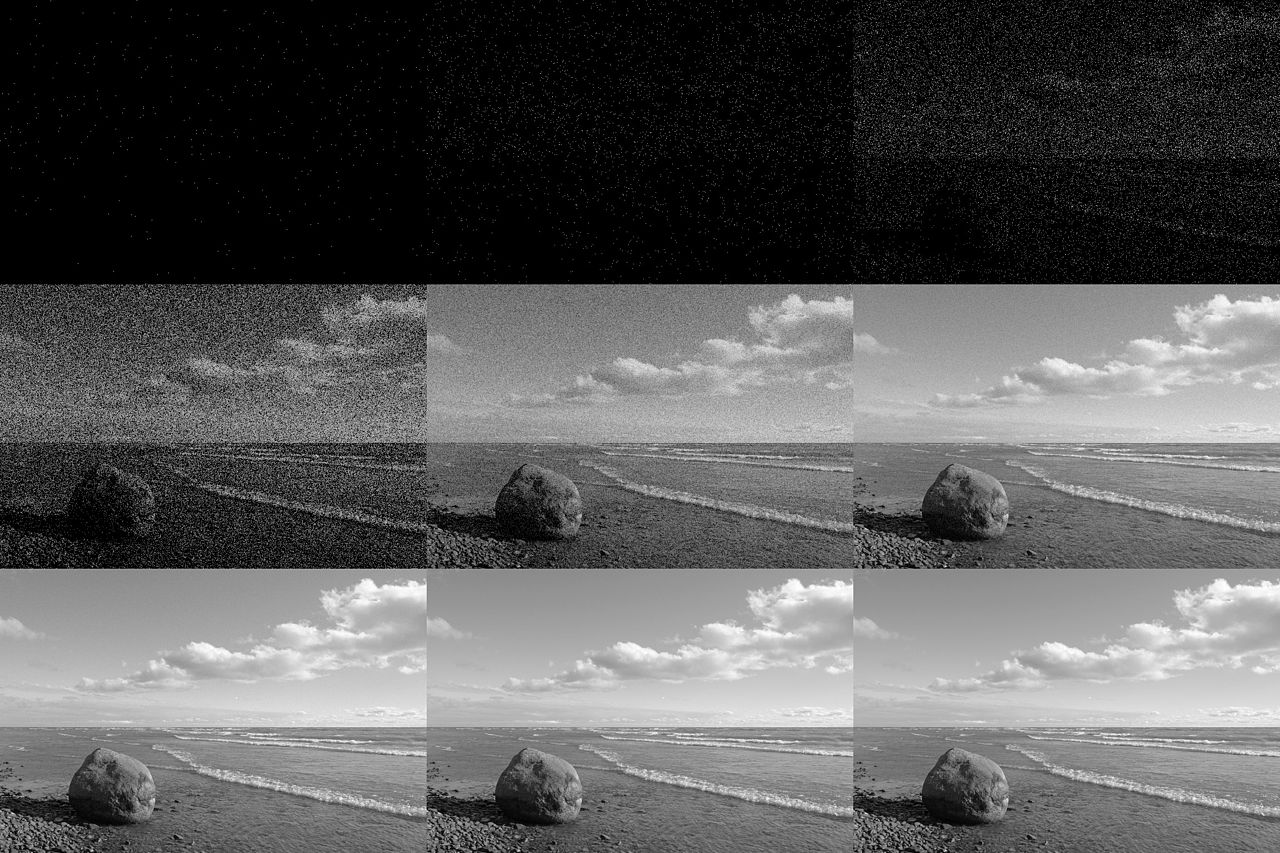
Shot noise - Wikipedia
Upvote
0


