Canon EOS R5 Specifications

Here's the thing. Canon does not yet have two separate (full) lens lineups in both mounts yet, and won't for quite some time.

There are over 80 different EF lenses in their current catalog. The RF stable is not nearly that broad yet.

Correct. And that is why R to EF adapter is so important for the roadmap. As per my previous post, I expect Canon to continue production of EF lenses until there is broad market penetration of R cameras and then they will stop production of the duplicate EF lenses, eg 70-200 f2.8.

As per Canon Rumors a further 8 R lenses are expected this year. The timing of this phase out is really dependent on the success of the new pro level R cameras.
 
  • Like
Reactions: 1 user
Upvote 0
R5 Ergonomics/design. I have a wishlist for the R5's appearance and physical design. Some issues WILL apparently be addressed, namely the touchbar removal, addition of the Control Dial in back and the addition of the Movie/LV switch.

I also really dislike the R's silly, huge power switch. Its looks so amateurish and is a waste of space.

I am NOT crazy about how changing modes works. I would prefer a simple dedicated mode dial.

The possible implementation of a touch sensitive smart button (ala 1D) to move the focus points is interesting BUT it is on the same AF ON button usually configured to back button focus. Wont I likely inadvertently move my focus point as my thumb is on the button awaiting my press. I say make it a separate control.

The overall body design I think is a bit too boxy and toy-like ( too Sonyish) . I prefer more organic smooth curves. A slightly taller design would be nicer hand fit.

I am a 5D user currently and love the feel of that camera design. I dont expect them to copy this design into the R5 but the 5D has kept most of its design elements the same for decades.....for a reason. Users like it and it works.
 
Last edited:
Upvote 0
Say one large pixel has a well capacity of 8 electrons, two smaller ones 4 each. Now the two small pixels receive 8 photons, 5 + 3. The resulting value will be 7 while a larger pixel would have gotten all 8. Smaller well capacity is still a limiting factor.
Yes and no... ;) Yes - it is limiting factor, no - it can be used as an advantage: like in the film days you have the information you can use for highlight recovery.

PS
I do not discus the actual equipment. Their parameters are measured and anyone can pick whatever is good for him/her. An I am also eager to see the Fossum's idea materialized.
 
  • Like
Reactions: 1 user
Upvote 0
And you really think the difference between DSLRs and MILCs is anywhere as revolutionary as the difference between film and digital?

Not in the sense of image quality or convenience (I used to have a dark room, now I have Lightroom!), but the integration between video and stills.

And this is a key consideration for the manufacturers who have to grab as much market share as possible in a rapidly shrinking market. They literally have a choice to make.

Again, I am looking at it from the manufacturers point of view. Given the rapid growth of Sony's mirrorless system market share, there is clearly broad market acceptance for MILC.

Because EVF have gotten so much better over the past few years, there are now more advantages than disadvantages for this format. And I believe Canon is all in now judging by how many R lenses they have and are in the pipeline.

I do like OVF, but as a consumer I have to decide where the market is going to future proof my next $3,500 camera purchase. That R glass is amazing and I will still have full access to existing EF lenses.

Put it this way, if the specs were similar would you put down $3,500 on a 5D5 or R5?

To me the answer is clear.
 
  • Like
Reactions: 1 users
Upvote 0
The Sony and Nikon forums are just like the CR, complaining about their shortcomings and how Sony and Nikon are ignoring them, the new releases are no better than the previous etc. The truth is they are all manufacturers trying to optimise their profits and pay their CEOs and shareholders.

Hold on! Are you saying...are you telling me...that SONY IS DOOMED?!?!? :oops:
 
  • Like
  • Haha
Reactions: 1 users
Upvote 0
Not in the sense of image quality or convenience (I used to have a dark room, now I have Lightroom!), but the integration between video and stills.

And this is a key consideration for the manufacturers who have to grab as much market share as possible in a rapidly shrinking market. They literally have a choice to make.

Again, I am looking at it from the manufacturers point of view. Given the rapid growth of Sony's mirrorless system market share, there is clearly broad market acceptance for MILC.

Because EVF have gotten so much better over the past few years, there are now more advantages than disadvantages for this format. And I believe Canon is all in now judging by how many R lenses they have and are in the pipeline.

I do like OVF, but as a consumer I have to decide where the market is going to future proof my next $3,500 camera purchase. That R glass is amazing and I will still have full access to existing EF lenses.

Put it this way, if the specs were similar would you put down $3,500 on a 5D5 or R5?

To me the answer is clear.

But, and I don't know, has everyone who really wants mirrorless already bought one? Are there millions on the fence and if so what are they waiting for?
 
  • Like
Reactions: 1 user
Upvote 0
But, and I don't know, has everyone who really wants mirrorless already bought one? Are there millions on the fence and if so what are they waiting for?
Everyone who wants an Ford F-150 has one already too. No need to make anymore of them. ;)

1. They're waiting on the $
2. They're waiting on a body they desire.
3. They're waiting for the body they want to drop in price.
4. They're trying to decide whether or not they want to go mirrorless.
5. They recently upgraded a DSLR and it isn't time to buy another body yet.
6. New people entering the hobby.
7. Waiting for the right lenses.
8. etc.
 
Last edited:
  • Like
Reactions: 2 users
Upvote 0
But, and I don't know, has everyone who really wants mirrorless already bought one? Are there millions on the fence and if so what are they waiting for?

I don’t think there are millions on the fence, as only a small percentage of the market are as obsessed as the people on this board. There are however, millions of DSLR owners who just need a compelling reason to upgrade. Amazing glass, and stable, high-performance, second gen Canon mirrorless bodies will likely be compelling enough for a major market shift. I manage an after sales department for a luxury brand product in a different sector, and it’s always interesting to see how the fan boy forum concerns are completely different than the actual concerns and problems that typical users face. They can be remarkably different. Marketing departments are completely data driven these days, Canon has a pretty good idea about how the next few years will shake out I’m sure. I’m looking forward to watching it.
 
  • Like
Reactions: 1 user
Upvote 0
I recall this very argument from you in one of the previous conversations. Digital post-processing manipulations are intrinsically flawed because they change the detail, NR simply decreases the resolution.

If that was all it did it would still alter SNR. But that's not an accurate summary of modern NR algorithms. And it's completely wrong for color NR, color noise being arguably the most intrusive component.

But it's getting even worse when you apply NR to one image and don't apply it to another.

No one is arguing that there's 0 read noise difference between a 5D4 and a D850. And no one is arguing that you can't also apply NR to a D850 file. The question is how perceivable is the read noise difference before processing. And if the answer is "not very" then what happens when NR shoves that difference further towards or below the absolute limits of human perception?

In the real world it plays out this way: the D850 owner does a hard shadow push and prints. The 5D4 owner does a hard shadow push, maybe bumps LNR/CNR a bit, and prints. That's the source of my "it's a processing difference" statement. By analogy to resolution we're not debating 50mp vs 20mp. We're debating 50mp vs 45mp.

5Ds/sR vs D850? Yeah, there are scenes where I will blend two exposures but my friend can simply push the shadows. But the 5D4? Move the NR sliders a bit.

The 70D, which should be roughly the same as your 7D, is significantly worse than 5DIV, but A7RIII is a bit better and I'd be extremely happy if Canon catches up.

That might be the first time I've seen you refer to a 5D4 vs. Sony/Nikon DR difference as "a bit better." I would call the Sony/Nikon sensors a bit better. I guess I would by happy to if Canon closed that gap. But I don't anticipate it because of DPAF.

I know. I still think there's some flaw in their method. 14 stops is the theoretical limit. Any measurement above means they do digital manipulations so they don't actually measure the sensor performance.

Altering the view size simply trades spatial information for SNR. And it doesn't have to be through 'digital manipulation.' Make a print where the shadow noise seems unacceptable to you nose-on-print. Now view it from 10 ft away.

It's not just a matter of human perception or emotion either. Again, at the extreme you can treat an entire visible light digital camera sensor as if it was one single detector and, with a long enough light-blocked exposure, reliably and accurately measure small amounts of ionizing radiation. There's literally an app for that. But if you just look at the SNR and noise specs for the sensor vs. the impact of the radiation being measured you would assume it to be impossible.

But in the filed I don't care about the sensor design tricks. I care if I should shoot with dual pixel enabled and adjust my exposure hoping that DPRSplit will help get 1 stop more in the highlights. Yes it helps but somewhat randomly and often fails, so I can't rely on it.

Not arguing that at all. But the fact that it can work...sometimes...tells us that the 1ev difference is not due to Canon's ADC design. It's due to the dual pixel arrangement.

The difference is small but the IV lags behind in many ISO points at high ISO which is exactly where the pixel size difference should be more prominent.

Not for DR. Even Canon's oldest, worst DR designs converge with Sony's best and have similar DR at high ISO (within 0.5ev) because high ISO is dominated by photon shot noise. Between the latest Sony A7r's the differences are so small that I don't think we can reliably tell if pixel size is related at all. Pixel size should be related...the 1DX2 and 1DX and D5 should absolutely dominate DR measurements...but for some reason that's not what we observe at this time.

 
Last edited:
Upvote 0
But, and I don't know, has everyone who really wants mirrorless already bought one? Are there millions on the fence and if so what are they waiting for?

Me. Here's the thing: most folks aren't looking for a mirrorless camera, they're looking for a *better* camera. And for some sorts of shooting*, mirrorless is just at the point where it's better*. The R didn't offer any improvements over my 5D4 (which I love but misses on a few areas). I expect the next R series to be better all around than the 5D4, while providing some mirrorless advantages:

- Higher fps due to reduced mechanical complexity
- Better AF (full frame coverage, better tracking, eye AF)
- Silent modes for event shooting
- As somebody who occasionally does some video, I'm looking for a "less hassle" video experience than the 5D4.

The R as it stands right now doesn't really nail all those. The FPS in particular really hurts when shooting sports (I shoot beer league stuff, not pro)

*Or, in the Canon ecosystem, about to be better.
 
  • Like
Reactions: 3 users
Upvote 0
That's interesting, do you have a link with more details on ionising radiation?

Look up RadioactivityCounter for iOS.

Regardless, when you scale the image down you no longer measure the sensor performance.

Of course you do. The sensor captured that data. Given the resolution of today's sensors if anything one could argue that DxO's print scores are more relevant than their screen scores...or Photons to Photos graphs...because that's how people will view the image.

Instead, you measure how good the image is for digital noise reduction [through downsampling].

You don't have to actually downsample for the effect. Just step back from the monitor/print.

All absolute values of measured DR become totally meaningless.

One could argue that the 'absolute DR measurement' of a single photoreceptor is meaningless when evaluating a sensor with many millions of receptors.

However they can be used for relative comparison, e.g. A7RIV is better than 5DIV if the images are downsampled and normalised. Very limited use, but it's good enough to create a popular site with the camera scoring system.

The most popular site when it comes to measuring DR is DxO and the measurement most often quoted is the normalized print one.
 
  • Like
Reactions: 1 user
Upvote 0
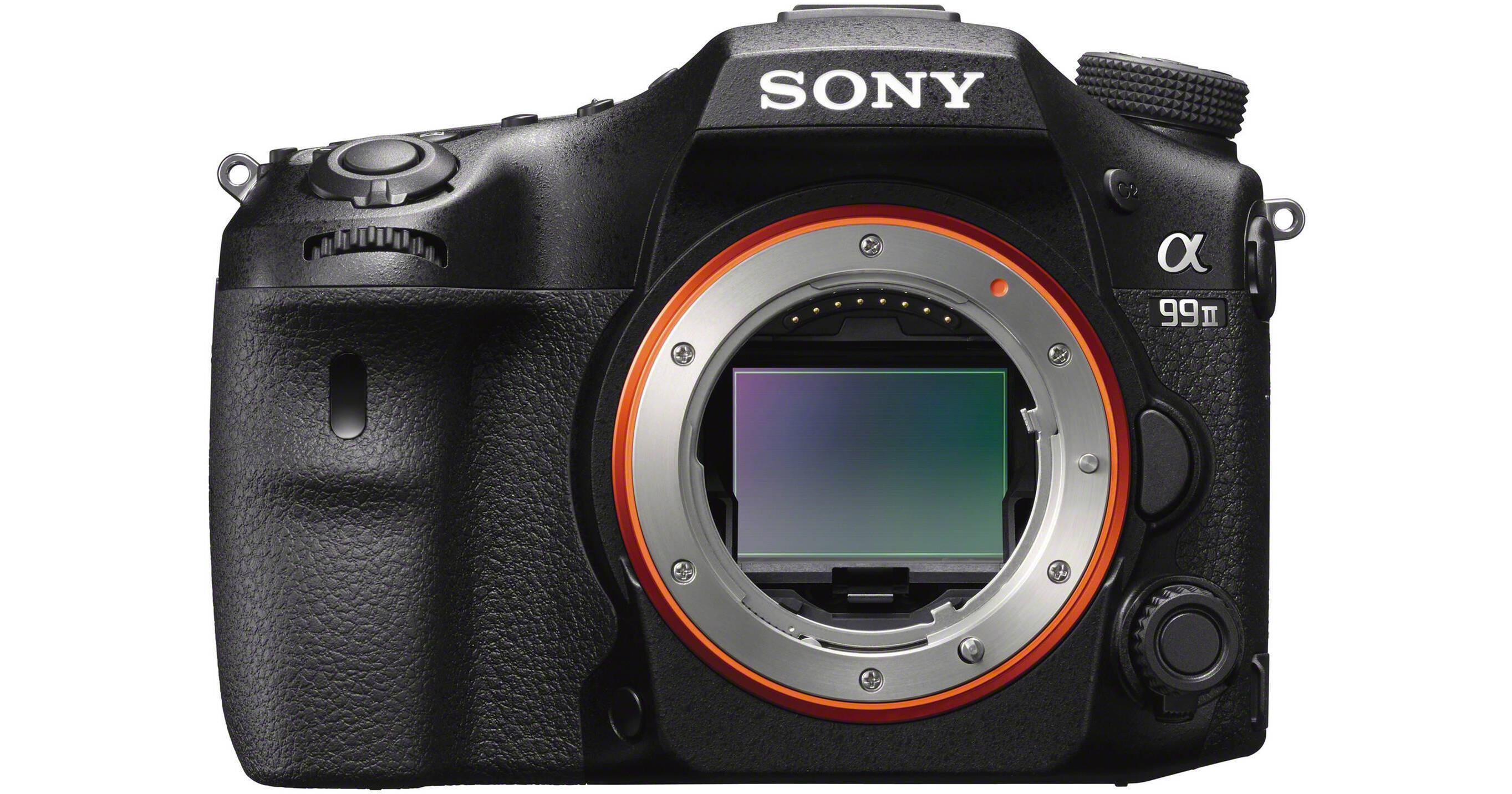
Can you still buy a new α99 II via an authorized Sony dealer?


Apparently, you can:


- A
 
  • Like
Reactions: 1 user
Upvote 0
The 1DX III is the only camera in recent Canon history that got a development announcement before the proper announcement which revealed all the details. I don't think any other bodies will get the same treatment. So we can expect to know most of the details about the next R in the upcoming weeks.


I'm sorry, that prediction probably won't hold up. We may even get all the topline specs CR Guy has posted to be validated in some early preview, but we'll never get all the fine print.

People don't start freaking out about a model until either a manual PDF is found or all of the fine print is outed, which won't be at a sneak peak. Will the AF still track at 20 fps stills? Is there a massive video crop? What's the AF sensitivity, battery life, etc? We probably won't know all that until very close to release.

- A
 
  • Like
Reactions: 1 user
Upvote 0
But, and I don't know, has everyone who really wants mirrorless already bought one? Are there millions on the fence and if so what are they waiting for?

I'm actually a bit resistant to mirrorless because I have yet to see an EVF I liked as much as a good OVF. (I do have an M kit.) I do acknowledge that exposure preview and subject tracking AF can be useful tools. But I'm also old school. I can spot meter a highlight and nail exposure, and keep an AF point on target, both pretty reliably. So these features literally seem less to me than OVF, battery life, and handling with larger lenses.

That said, I'm sure I'll buy an R body when there's one that offers features I want. That may be the R5 given the awesome video specs. At the time it would have been the first R if that camera had just offered oversampled, full width 4k.
 
  • Like
Reactions: 1 user
Upvote 0
The R5 will be laid out like a 5D. You have to make that crowd feel right at home. Nice mock up


Here's hoping, but I want to see how:
  • A proper 5D thumbwheel
  • A tilty-flippy
  • Thumb drag gestures
All coexist. Something tells me we may get all of that but at a price we don't expect -- thumb wheel brought more to the right, thumb wheel reduced in size, thumb drag move is too far to the left for some hands, etc.

Very curious to see what they come up with.

- A
 
Upvote 0
Put it this way, if the specs were similar would you put down $3,500 on a 5D5 or R5?

To me each of us, the answer is clear.


(key edit above)

The answer is clear for each individual in this market segment, and probably with a 40-60, 50-50 sort of outcome. Sony succeeding and Canon focusing resources in RF is not enough to tell me that Canon will abruptly abandon the nontrivial part of the market that got them here.

Logic and pragmatism won't bully EF users into RF -- value and opportunity will. RF cameras will start to outperform their EF counterparts (not just in specs, but in capabilities, workflow, a proper RF portfolio, assistance to the photographer, etc.) until which point some their FF userbase changes in makeup to become predominantly mirrorless.

At that point, sure, Canon would slow down (or not pursue) refreshes of EF SLR product lines, start to obsolete older EF glass, and -- finally -- announce the end of EF lens production. But that will be a good 10 years from now, IMHO.

- A
 
Last edited:
  • Like
  • Love
Reactions: 3 users
Upvote 0
But, and I don't know, has everyone who really wants mirrorless already bought one? Are there millions on the fence and if so what are they waiting for?


Many folks want mirrorless in their current SLR's price point / functionality / level of prestige / expectation of build quality.

So the crude analogy for folks today would be a person who desperately wanted a hybrid automobile in (say) the year 2000... but that's person's daily driver at that time was a truck that they loved. Sure, Toyota had hybrid technology you wanted, but you aren't going to give up all the things your truck's form factor accomplishes brilliantly just to get that technology. So you wait for a hybrid truck to come out.

That's why so many folks are pumped about the R6 and R5. Mirrorless is about to get a sporty coupe and a well appointed truck.

- A
 
Last edited:
  • Like
Reactions: 1 users
Upvote 0