Canon EOS R5 Specifications

That analogy doesn't work because in this case it is really not a F150 anymore. Canon continues to produce the (F150), but this is more like F150's are dead (DSLR) everyone is waiting on the hybrid version of the F150(mirrorless).
I try not to use words like everybody in my posts because I don't live in a vacuum. I don't and can't speak for everyone, nor do I presume to know what everyone wants and when. Everybody is never true (well, everybody dies). Some people go after the Mustang.

I didn't so much want mirrorless when I switched. I wanted the glass. Now I am glad I switched, not just because of the glass, but for the camera too. Different people have different timetables and motives. So when somebody says, "everyone who really wants mirrorless already bought one ," sorry, that is just silly. That's the post I responded to. If that were true then Canon wouldn't be developing the line. I think you misunderstood what I said, because I did not make an analogy between DSLR and Mirrorless.

But, and I don't know, has everyone who really wants mirrorless already bought one? Are there millions on the fence and if so what are they waiting for?
 
Last edited:
  • Like
Reactions: 1 user
Upvote 0
You need three things:
  • Performance levels and features in RF that are not available in EF
  • RF lenses that EF will never or can never offer
  • The knowledge the Canon is eventually moving away from EF -- more frequent RF refreshes, more new glass, etc.
Over time, each three of the above become more and more compelling until there's just a small subset of 1-/5-series pros saying "You can take my mirror out of my cold, dead hands." Canon will keep giving them a new SLR, but at a very high price very infrequently.

But I contend that transition (esp. for the higher end bodies) will still take a good 10 years.

- A

I agree, however, I think the time frame will be more like five years given the contraction of the ILC market.
 
  • Like
Reactions: 1 user
Upvote 0
Canon is too big and has too much money in longer term investments/inventory, etc. to rationalize everything in a rapid manner. Far more likely they will:
  • Phase 1 (in progress): Publicly state that they will no longer make new EF lenses, and not publicly slow down some SLR refreshes or just cancel specific lower-runner SLR refresh projects
  • Phase 2 (3-5 years maybe): Throttle down EF production or make final large EF orders, shut down those lines, and sell to depletion; we start to see bread butter Rebels and XXD bodies go mirrorless only
  • Phase 3 (8-10 years): Once the tipping point is hit for camera bodies in service / in actual use, they'd announce obsolescene of EF lenses and then you see a fire sale at all the resellers. Only 1-series and possibly 5-series keep their mirrors.
They have a way to go.


Again, you are speaking logically, not pragmatically. 'The world will be cheaper to support on one platform' is entirely true but entirely impractical. All EF users won't move to RF just because that's all Canon offers. If Canon (let's say) aggressive terminated their SLR lines across the board in 2-3 years and said 'you must buy a mirrorless camera', Nikon will earn a lot of SLR business. Canon needs to show it users where the next exit is on the freeway -- not force them to take it.

Mirrorless will take over, surely, I don't contend that. But it will not happen overnight. Canon will not burn the people who have trusted it for so long just to get to their desired future state as profitably as possible. That would be cutting their leg off to run faster.

- A
But would Canon users really dump EF lenses for Nikon when they are going through the same process, only slower? So if they get 1 or 2 more years of DSLR use, is it worth switching? I'm not sure the alternatives are that enticing.

In any case I hope that when the R5 is announced, Canon will provide clues as to their road map.
 
  • Like
Reactions: 1 user
Upvote 0
Hmm I think this argument went off the original track :)
Originally it was about downsampling that increases DR but loses resolution. My points were, IIRC,
1. Using noise reduction on 7D, you can't really catch up to 5DIV sensor or A7RIV sensor in terms of DR.
True, but first of all, it receives less photons per sensor (at least when the number of photons is limited by the total well depth of the whole sensor area).

2. After normalisation/downsampling, the resulting absolute DR value is meaningless, especially when it goes above 14 stops in 14-bit sensors. The value can only be used for comparison between the sensors.
Well, it appears to me that you lack the specialized knowledge to understand the complexity of the topic, and that's exactly why that "resulting absolute DR value" is meaningless to you. In the format of this forum, I don't expect me (or anyone else) to be able to tell you enough of the background that I feel is missing in this case (and it's OK, not everyone has a college degree - or equivalent experience - in exactly this topic), but I hope it will suffice to say that for me, it's not a "14-bit" sensor, but a "840-megabit" sensor.

Although, I might also need to add that the the term "DR" is so overused and may mean so many different things that it's rarely meaningful at all when used by a layman.
 
Upvote 0
Disagree. Because it's not the quantum leap forward that film --> digital was,
It can be, but for that, effing Canon needs at least to add (and publish) effing "power on" command to its effing BLE camera control protocol.

What killed film was not image quality and not body lineup, but workflow. Mirrorless has a similar potential for workflow improvements, but it's currently mostly unusable because the manufacturers don't understand what they miss.
 
Upvote 0
Yes I'd like more DR but current 5DIV performance is ok. If Canon increases the resolution and keeps the DR at the same level, it'll be satisfactory.
Same here.
I must say, I NEVER had a problem with DR on my 5D IV. I bought it shortly after release and used it professional ever since. Its pictures are just great. I never god into a situation where I said "oh damn, I cant use this picture, I wish I had more DR". And I also shoot quite some weddings...

The story that Canon is so incredible far away in DR compared to Sony is just a technical Internet topic. It may be true on paper but its just no matter for 99% of the working photographers. And I do own a Sony A7R IV which I mainly use for travel for some month now. Its DR is better, but its not a gamechanging thing. The A7s small and blurry EVF and Display, the bad ergonomics and the not realy beautiful colors are just as important on the negative side, as the DR is on the positive side.
 
  • Like
Reactions: 1 users
Upvote 0
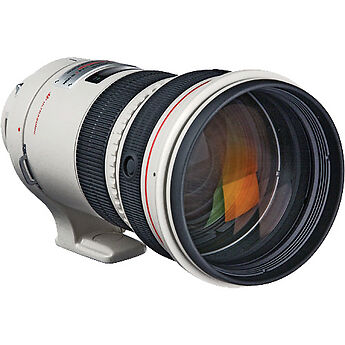
When I sold mine in Sept 2017, the going price for excellent used in the UK was £4,200-£4,500. Art Morris had posted then on his site, where people do buy and sell used lenses, that the price of the 300/2.8 II had collapsed

The price on the top two UK sites for used gear is now £3,100 to £3,500 for really good ones ($4000-4500). There was greater availability before Christmas.
https://www.mpb.com/en-uk/used-equi...-fit-lenses/canon-ef-300mm-f-2-8-l-is-ii-usm/
Excellent £3,500
https://www.wexphotovideo.com/search/?q=canon+EF+300mm+f/2.8+II&search_type=Used
The lightly used (grade 9) are £3,099 to £3,499. (Wex always understates the condition, my experience of their “lightly used” grade 9s is that they look mint).

ps Just checked Art Morris's recent sales: "Charlie Curry sold his lightly used Canon EF 300mm f/2.8 IS II USM lens in like-new condition for only $3299.00"
Last one sold on eBay USA 17 Jan 2020 "excellent plus" $3,919.

I don't post unless I am sure of my facts.

I wasn't doubting you, just surprised that they were going for that much cheaper than what I see listed in the used dept. at places like B&H and Adorama as well as reputable resellers like KEH and lensauthority.

I guess there is a difference, though, between what they're paying for them and what they are reselling them for. I don't do eBay for anything over about $100, buy or sell.Too many scammers here. An "excellent plus" listing on ebay might be "excellent" at KEH or a"9" at B&H, or it might be a "fair" or "7". You never know, because too many sellers tend to overrate them on eBay.
 
Upvote 0
My bad. My finger stutter on keyboard and I missed an I.

So you meant to type:

And using a slow SD card slows down a 5DIII/5DIII/5DS/5DIV. Nothing new there. Not everybody needs the speed at all, and most don't need it all the time. SD cards are WAY cheaper, even the UHSII variety.

Instead of:

And using a slow SD card slows down a 5DII/5DIII/5DS/5DIV. Nothing new there. Not everybody needs the speed at all, and most don't need it all the time. SD cards are WAY cheaper, even the UHSII variety?

Um Hmm...
 
Upvote 0
1. Using noise reduction on 7D, you can't really catch up to 5DIV sensor or A7RIV sensor in terms of DR.

For the record, no one claimed this. The 7D comes up because when people complain about DR on a 5D4 I like to show what can be done with a "bad" Canon sensor, to put the issue into perspective.

2. After normalisation/downsampling, the resulting absolute DR value is meaningless, especially when it goes above 14 stops in 14-bit sensors.

It's the one that has the most meaning because that's how human beings view photos.
 
Upvote 0
Correct. And that is why R to EF adapter is so important for the roadmap. As per my previous post, I expect Canon to continue production of EF lenses until there is broad market penetration of R cameras and then they will stop production of the duplicate EF lenses, eg 70-200 f2.8.

As per Canon Rumors a further 8 R lenses are expected this year. The timing of this phase out is really dependent on the success of the new pro level R cameras.

10 + 8 = 18 RF lenses by the end of 2020

80+ lenses = Current EF lens lineup (not counting discontinued lenses) in 2020

They've still got a LONG way to go to reach the point where they've got a "duplicate" in RF mount for every currently available EF lens. Your initial post above sounded like you think "... having two separate lens lineups for essentially the same camera (one being mirrorless, the other DSLR) makes no economic sense (today)." Not several years from now.
 
  • Like
Reactions: 1 user
Upvote 0
Not in the sense of image quality or convenience (I used to have a dark room, now I have Lightroom!), but the integration between video and stills.

And this is a key consideration for the manufacturers who have to grab as much market share as possible in a rapidly shrinking market. They literally have a choice to make.

Again, I am looking at it from the manufacturers point of view. Given the rapid growth of Sony's mirrorless system market share, there is clearly broad market acceptance for MILC.

Because EVF have gotten so much better over the past few years, there are now more advantages than disadvantages for this format. And I believe Canon is all in now judging by how many R lenses they have and are in the pipeline.

I do like OVF, but as a consumer I have to decide where the market is going to future proof my next $3,500 camera purchase. That R glass is amazing and I will still have full access to existing EF lenses.

Put it this way, if the specs were similar would you put down $3,500 on a 5D5 or R5?

To me the answer is clear.

How many people use the eye level viewfinder to shoot video with a MILC?

How is shooting video with a MILC revolutionary compared to shooting video with current DSLR in LV? Almost everyone is using external monitors with both. or putting a loupe over the LCD screen. I just don't see the jump between a DSLR and a MILC with the same video specs.
 
  • Like
Reactions: 1 user
Upvote 0
Well, it appears to me that you lack the specialized knowledge to understand the complexity of the topic, and that's exactly why that "resulting absolute DR value" is meaningless to you.

I understand how it works. Nevertheless, the absolute value is meaningless because it's based on arbitrary normalising. You scale down more and get a better DR, don't scale and get it worse. photostophotos has totally different DR figures albeit relative comparison still makes sense.
 
Upvote 0
I never god into a situation where I said "oh damn, I cant use this picture, I wish I had more DR"

I had such situations multiple times when shooting landscapes. In such cases I'd use HDR/exposure blending. But I'm ok with that. More disturbing thing is the banding which appears in the shadows in long exposures at ISOs 400-1600 (and even detectable at ISO 100). Presumably it's thermal noise. It almost disappears when raising ISO to 3200, but that ISO is very hard to deal with (talking about the asto/nightscapes).

I've also shot action and concerts and 5DIV performs very well, although frequently front-focuses in the low light, I have a number of very good otherwise but out-of-focus shots because of this.
 
Upvote 0
In other news, if this R5 has good tracking and true 12 FPS (full AF, etc.), along with good high ISO performance, I'd be fine with selling my 7D II and buying the new one. 17 MP cropped is fine. The 7D is the last DSLR I have; I have three other bodies and they're all mirrorless. I've only held onto the 7D for wildlife.
 
  • Like
Reactions: 1 users
Upvote 0
For what it's worth, those who feel 45MP just is NOT enough, Keith over at Northlight is hearing some things:

"Jan 30th We’re told (thanks) that there will be an ‘s’ version of the R5 at ‘over 100MP’ but it’s not appearing until 2021.
This far out, I’d have to give this a relatively low rating – Canon wants 5D4 and 5Ds/R users to buy an R5"

 
  • Wow
Reactions: 1 user
Upvote 0
I understand how it works. Nevertheless, the absolute value is meaningless because it's based on arbitrary normalising. You scale down more and get a better DR, don't scale and get it worse. photostophotos has totally different DR figures albeit relative comparison still makes sense.
Dynamic range is a characteristic of a transmission system passing (some types of) signals. A signal is not just a sampled result of some measurement, but a message encoded in the measured value and containing information that is interesting to us. For the same transmission channel on the physical layer, different kinds of signals of our interest correspond to different values of DR.

No encoded message = no DR.
 
Upvote 0
But would Canon users really dump EF lenses for Nikon when they are going through the same process, only slower? So if they get 1 or 2 more years of DSLR use, is it worth switching? I'm not sure the alternatives are that enticing.

In any case I hope that when the R5 is announced, Canon will provide clues as to their road map.

No. Pros embedded deeply in the Canon system will just sit on their latest bodies for as long as they can or buy an EOS R or R5. The EF library of glass will ALWAYS be supported long after they cease production of them because it's too easy to make mount adapters for this. The last mount change was from F to EF. The "E" meaning "Electronic". THAT was a revolution. And in so doing, it wasn't practical to maintain F libraries at length. Autofocus was and electronic aperture control was now a thing. Later came stuff like IS.

The change from EF to RF frankly is a minor adjustment so far as glass goes. There's nothing revolutionary here. AF, IS, Electronic control of things... all the same. Yeah we get a new fancy control ring ON the lenses, but honestly, who cares? That's not a HUGE revolutionary change.

Ergo, the viability of EF glass can in theory last as long as the RF mount can provided you have a functional adapter.

Canon users aren't going anywhere. Remember, the Body pros use is frankly the most replaceable element of their craft. Glass has far more longevity as do other accessories. They will buy RF cameras as soon as they feel they can use them to replace their existing cameras, and they will maintain their existing glass libraries until they feel the need or desire to upgrade.

This is will be a slow process for Canon. Same for Nikon. Sony and Fuji and the other guys did not ever have huge followings of pros and obviously they still dont compared to Canon. So they had an advantage to enter a new market with frankly ZERO risk compared to the established Patriarchs
 
  • Like
Reactions: 1 user
Upvote 0
10 + 8 = 18 RF lenses by the end of 2020

80+ lenses = Current EF lens lineup (not counting discontinued lenses) in 2020

They've still got a LONG way to go to reach the point where they've got a "duplicate" in RF mount for every currently available EF lens. Your initial post above sounded like you think "... having two separate lens lineups for essentially the same camera (one being mirrorless, the other DSLR) makes no economic sense (today)." Not several years from now.

I have said that having two different camera lines and two different lens lines makes no sense.

The R lenses that are out now and coming out this year will comprise the most popular focal lengths of EF lenses, so while there may not be 80 R Lenses, it will cover probably 75% of EF focal length models purchased with the exception of long glass. There also wont be T&S lenses in R mount for some time.

Once there is a decent market penetration of R cameras, they will cease making the duplicate EF lenses. For example there will never be a compact 70-200 2.8 in the EF mount.

Under the other poster's scenario of 10 year switch over, you would have to make these duplicate lenses for a long time. That doesn't make economic sense.
 
Upvote 0
lol, I'm losing the track in this discussion too.
Yes I'd like more DR but current 5DIV performance is ok. If Canon increases the resolution and keeps the DR at the same level, it'll be satisfactory. However I'm struggling with banding sometimes and would also like to see improvements in this area too.
I just want Canon to keep the DPRAW feature of 5DIV in R5. Thats an extra stop of DR in extreme highlights as a hidden bonus. Otherwise, 5DIV sensor is just fine. All I need in R5 is the 28-70/2.0 compatibility. :)
 
Upvote 0
No. Pros embedded deeply in the Canon system will just sit on their latest bodies for as long as they can or buy an EOS R or R5. The EF library of glass will ALWAYS be supported long after they cease production of them because it's too easy to make mount adapters for this. The last mount change was from F to EF. The "E" meaning "Electronic". THAT was a revolution. And in so doing, it wasn't practical to maintain F libraries at length. Autofocus was and electronic aperture control was now a thing. Later came stuff like IS.

The change from EF to RF frankly is a minor adjustment so far as glass goes. There's nothing revolutionary here. AF, IS, Electronic control of things... all the same. Yeah we get a new fancy control ring ON the lenses, but honestly, who cares? That's not a HUGE revolutionary change.

Ergo, the viability of EF glass can in theory last as long as the RF mount can provided you have a functional adapter.

Canon users aren't going anywhere. Remember, the Body pros use is frankly the most replaceable element of their craft. Glass has far more longevity as do other accessories. They will buy RF cameras as soon as they feel they can use them to replace their existing cameras, and they will maintain their existing glass libraries until they feel the need or desire to upgrade.

This is will be a slow process for Canon. Same for Nikon. Sony and Fuji and the other guys did not ever have huge followings of pros and obviously they still dont compared to Canon. So they had an advantage to enter a new market with frankly ZERO risk compared to the established Patriarchs
Actually I disagree. The R glass is quite different than EF mount due to the much closer flange distance. I am no optical engineer but I understand that new lens designs that cannot be done on EF mount will be available for R mount.
 
Upvote 0