EOS-1D X Mark II Claims of 15 Stops of DR [CR3]

OK, I haven't read the entire thread - I am not generally an early adapter - but I want to express my appreciation for the really beautiful Orion nebula photos (looking at you, rfdesigner, and of course the Hubble folks) and the blown out one for comparison.

Yes, I would love more DR - who wouldn't?
I am a dull dog, and am working on getting the most out of my 6D.
 
Upvote 0
jrista said:
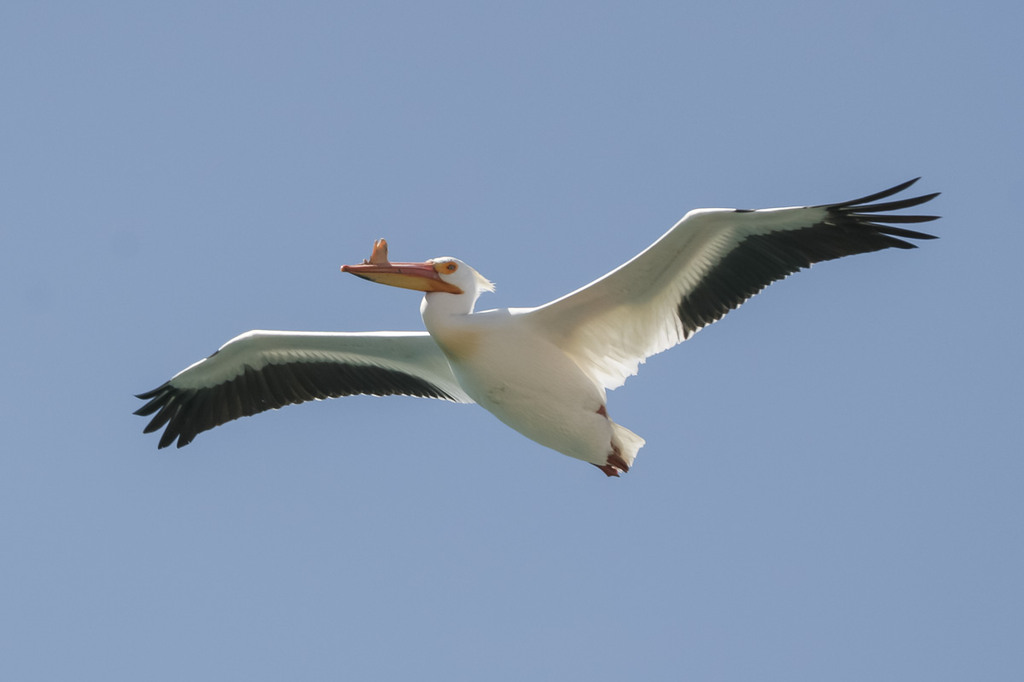
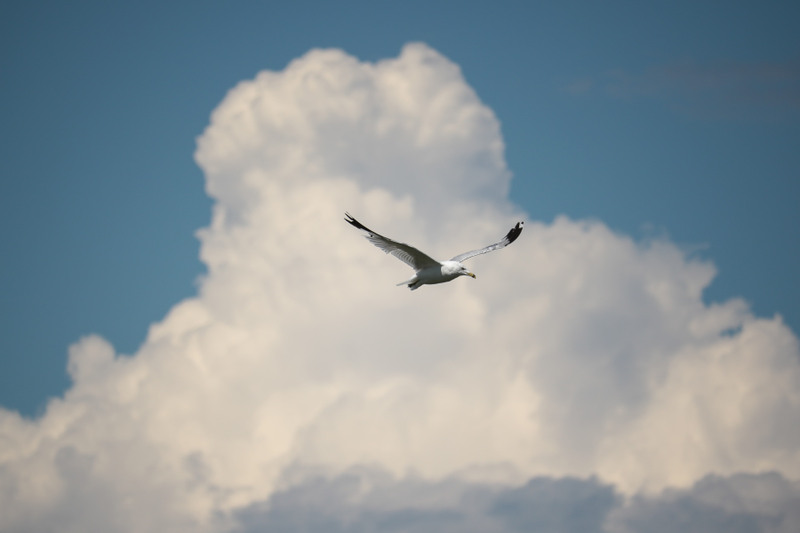
You can't always expose a scene such that nothing needs to be pushed or pulled. Not when the scene has more dynamic range than the camera. One of the most difficult subjects for me to shoot as a bird photographer are birds with white and black feathers in direct sunlight.

I'm not much of a bird photographer (I've never gone out to shoot birds, only getting a few bird shots when I was doing something else) but I've never found this to be a major problem.

7D2_11587.jpg


20D51704.jpg
 
Upvote 0
jrista said:
One of the most difficult subjects for me to shoot as a bird photographer are birds with white and black feathers in direct sunlight. Even if I've got the sun behind me, black feathers don't reflect much, and white feathers reflect a ton.

<snip>

Sometime you just can't get that perfectly exposed shot without the need to recover anything, and it's in those moments when having more DR is invaluable.

I have this problem as well: white feathers blown (by a stop or two) and dark feathers indistinct. I've attributed this to the fact that I don't have a top-end camera, but this is a situation where just a few stops more DR would help me. A more common problem is a bright but overcast day, shooting birds on the water or in flight.

To be fair, these are niche problems, but real to me.
 
Upvote 0
scyrene said:
*You talk about black and white birds later in the thread. I shoot birds more than any other subject, and certainly black and white ones are a challenge (in direct sunlight). But I don't feel like it's the massive problem you make out - I can only conclude you want images with brighter shadows than I do (a legitimate difference of taste). You can ETTR a fair bit before the highlights are truly blown. Much more and the shadows would look weird imho.

Agree, Jon you're almost frightening me away from shooting any more birds. Personally, my eyes seem to accept deep shadow better than blown highlights. Still, the present discussion has been quite educational for someone just learning the basics. Thanks to all.

Jack
 
Upvote 0
Lee Jay said:
I'm not much of a bird photographer (I've never gone out to shoot birds, only getting a few bird shots when I was doing something else) but I've never found this to be a major problem.

20D51704.jpg

That's because you haven't processed the image properly. You've left the underside unacceptably dark, and when you correct that in post, it has a horrible effect on IQ as you can clearly see from the 100% crop.

;)
 

Attachments

Upvote 0
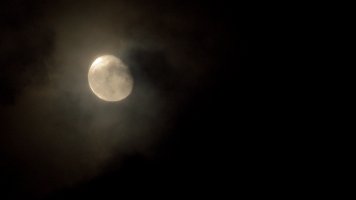
"Shadows must be destroyed". This thread has shifted to DR as I guess they always do but in this case I'm really benefiting from the information and understanding a lot more. Here is a recent experience where I decided I'd like to try the moon with clouds and see if something close to what the eye sees is feasible with a single shot. This was pushed and pulled in DPP as much as I was able and it doesn't do justice to the clouds. Just a single hand held exposure where DR is relevant no doubt. Any comments or suggestions?

Jack
 

Attachments

  • Moon_1D4_11170.JPG
    Moon_1D4_11170.JPG
    1.7 MB · Views: 156
Upvote 0
The moon can be a difficult target, especially when full or near full because of two problems. First, your eyes tend to adapt to the dark sky around it thus making it appear very, very bright to an observer, and because it has very low surface contrast (it's all the same color, and that color is charcoal).

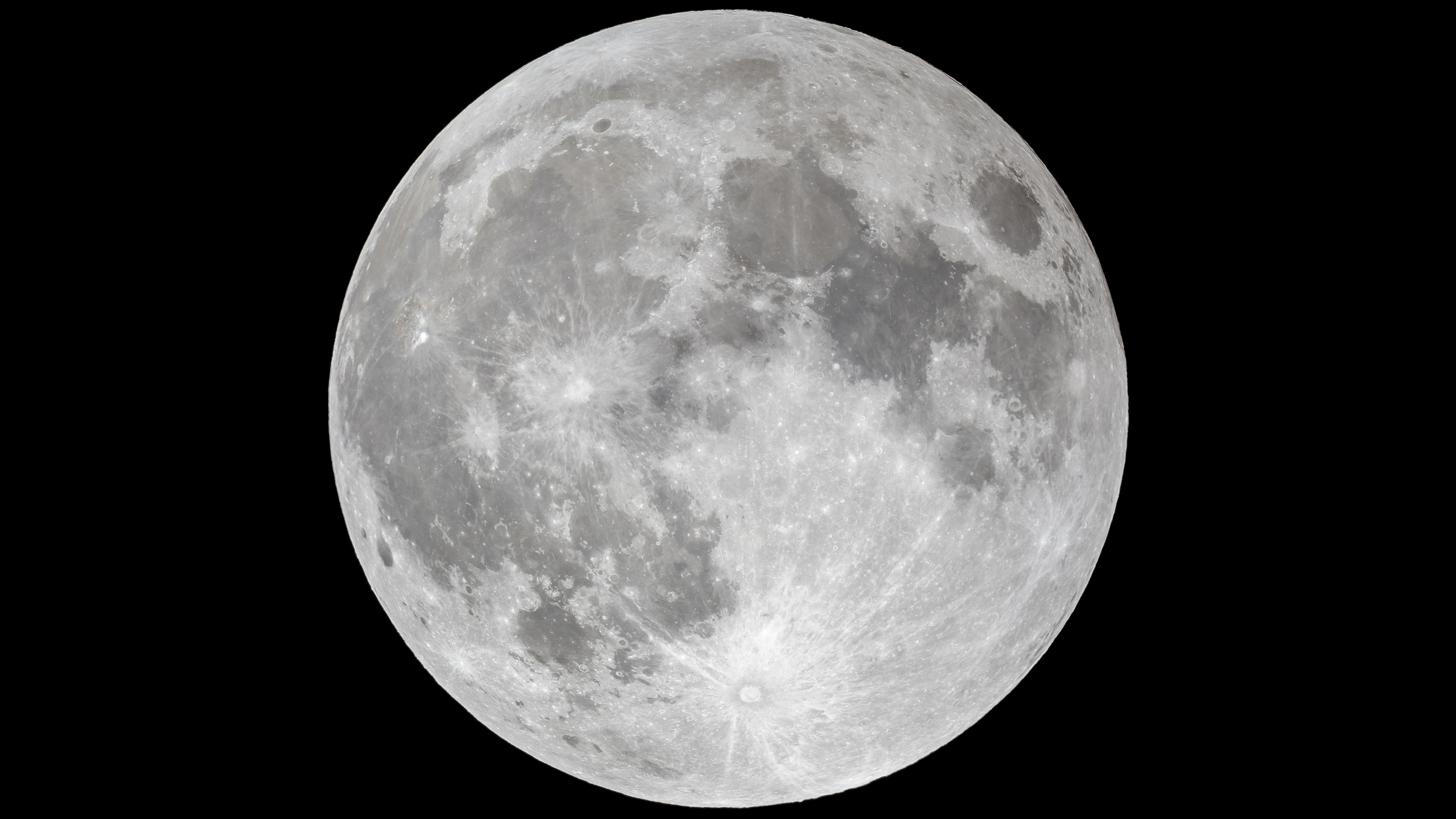
I tried to shoot the fullest full moon you could ever shoot from Earth (it was taken during a penumbral lunar eclipse with the penumbra shadow filled in) and I tried to process it so that it appears similarly to the way it appears through a telescope. This is a two-shot panorama, but there was no HDR type blending. The key to this, in my opinion, is capturing it exposed pretty far to the right, and processing so that the brightest areas are right at blow-out.

7D2_17945-Pano-4k.jpg
 
Upvote 0
Lee Jay said:
The moon can be a difficult target, especially when full or near full because of two problems. First, your eyes tend to adapt to the dark sky around it thus making it appear very, very bright to an observer, and because it has very low surface contrast (it's all the same color, and that color is charcoal).

I tried to shoot the fullest full moon you could ever shoot from Earth (it was taken during a penumbral lunar eclipse with the penumbra shadow filled in) and I tried to process it so that it appears similarly to the way it appears through a telescope. This is a two-shot panorama, but there was no HDR type blending. The key to this, in my opinion, is capturing it exposed pretty far to the right, and processing so that the brightest areas are right at blow-out.

7D2_17945-Pano-4k.jpg

That's great but what if you want some context to the moon, like a beautify cloud pattern with that iridescence that we see?

Jack
 
Upvote 0
Jack Douglas said:
That's great but what if you want some context to the moon, like a beautify cloud pattern with that iridescence that we see?

Jack

If the actual contrast is really, really large, I don't have a problem letting things crush and blow a bit.

Yours looks over exposed to me (too blown) and like you pushed the shadows way too much.

SX50__0065.jpg
 
Upvote 0
3kramd5 said:
Jack Douglas said:
This thread has shifted to DR

Um.

Thread title: EOS-1D X Mark II Claims of 15 Stops of DR [CR3]
First sentence: We’re told that Canon will claim 15+ stops of dynamic range for the new Canon EOS-1D X Mark II.

No more from me here since I'm not qualified to comment on Canon's 15+ stops. Actually, how could a thread with that title go on for so many pages, almost has to take twists and turns. I was just selfishly trying to extract some useful information (so much to learn and CR helps a lot). My apologies :-[ ;)

Jack
 
Upvote 0
Jack Douglas said:
3kramd5 said:
Jack Douglas said:
This thread has shifted to DR

Um.

Thread title: EOS-1D X Mark II Claims of 15 Stops of DR [CR3]
First sentence: We’re told that Canon will claim 15+ stops of dynamic range for the new Canon EOS-1D X Mark II.

No more from me here since I'm not qualified to comment on Canon's 15+ stops. Actually, how could a thread with that title go on for so many pages, almost has to take twists and turns. I was just selfishly trying to extract some useful information (so much to learn and CR helps a lot). My apologies :-[ ;)

Jack

The difference in EV range (and so available DR of the camera) between a full moon and anything else other than the stars is huge - more than any 15 stops. The moon has become the source of light for lighting everything else, so you are trying to expose for not only what is being lit but the light source itself.

Also all this extra recoverable latitude in the bottom of the file (because that's what it really is) is a fraction of the light available mid range, so it's not as much as it sounds. Still, if it come at no loss anywhere else who's going to not welcome it ?

What would excite me is a sensor with greater DR at the upper - highlight end. Now that would make a difference, but it will be harder to achieve as you are talking about much much more of a light intensity increase.
 
Upvote 0
Jack Douglas said:
No more from me here since I'm not qualified to comment on Canon's 15+ stops. Actually, how could a thread with that title go on for so many pages, almost has to take twists and turns.

Jack

Threads with no explicit reference to DR can go on this long. :P

I agree regarding the twists and turns - that's usually where the good information comes from.

Sporgon said:
What would excite me is a sensor with greater DR at the upper - highlight end. Now that would make a difference, but it will be harder to achieve as you are talking about much much more of a light intensity increase.

Couldn't you do that with larger pixels?
 
Upvote 0
Jack Douglas said:
"Shadows must be destroyed". This thread has shifted to DR as I guess they always do but in this case I'm really benefiting from the information and understanding a lot more. Here is a recent experience where I decided I'd like to try the moon with clouds and see if something close to what the eye sees is feasible with a single shot. This was pushed and pulled in DPP as much as I was able and it doesn't do justice to the clouds. Just a single hand held exposure where DR is relevant no doubt. Any comments or suggestions?

Jack

I'm afraid to say moon-in-context shots are one of the hardest of all, and frankly no photograph can do justice to what we see (or to put it another way, what we see isn't quite what's there).

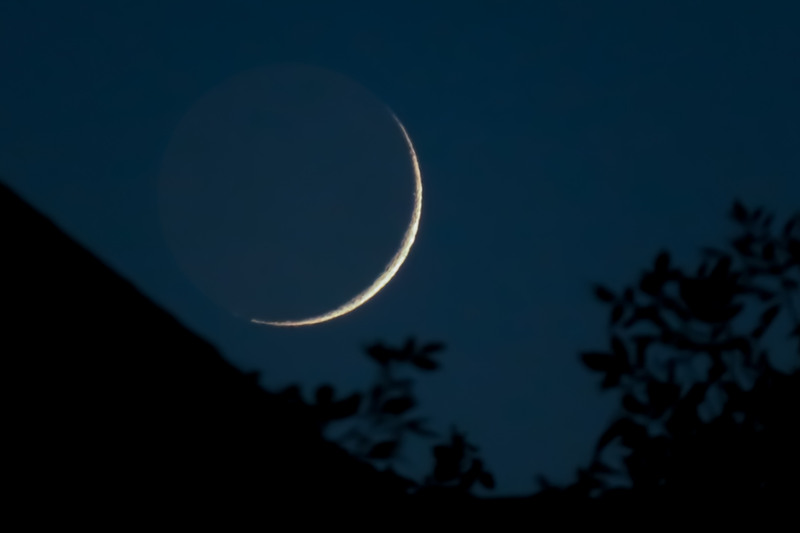
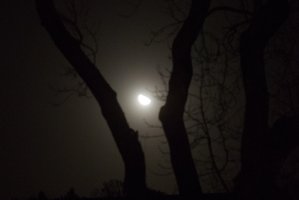
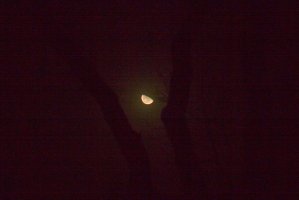
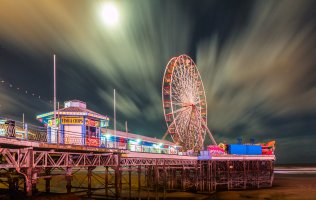
If you shoot it as one exposure, you cannot - with any sensor - get details on the moon's face and the full range of tones in the cloud. If you try a multiple exposure blend, you'll get weird transitions (it's possible someone very skilled could do it with seven or nine exposures blended manually, but that point where the cloud meets the moon will usually look odd or fake in my opinion). And the moon always looks too small in a context shot - we see the moon as larger than it really is, if that makes sense, especially close to the horizon (see https://en.wikipedia.org/wiki/Moon_illusion - note the first shot in that article is a good attempt, but relies on a very long FL, a distant foreground subject, and the fact it's taken before it got dark).

Attached are some recent shots to illustrate what I mean. Shot 1: some context (sky light and tree silhouettes), but moon blown. 2: Moon details, but to get anything in the background it's +5 exposure in Lr plus pulling the highlights down -100 (no sensor will produce a clean result here) - and this was the brightest I could shoot it without blowing the moon. Also at the time, the moon was low and appeared large and yellowish, neither of which is obvious from these shots.

Shot 3: a single exposure from an HDR - moon blown but much better transitions, a much better look overall than shot 4, an attempted HDR with cloud details, showing weird effects around the moon.
 

Attachments

  • HA6A8142-1.jpg
    HA6A8142-1.jpg
    343.4 KB · Views: 138
  • HA6A8150-1.jpg
    HA6A8150-1.jpg
    583.2 KB · Views: 143
  • HA6A7301-1-1.jpg
    HA6A7301-1-1.jpg
    2.2 MB · Views: 147
  • HA6A7300-HDR-1.jpg
    HA6A7300-HDR-1.jpg
    627.8 KB · Views: 155
Upvote 0
3kramd5 said:
Sporgon said:
What would excite me is a sensor with greater DR at the upper - highlight end. Now that would make a difference, but it will be harder to achieve as you are talking about much much more of a light intensity increase.

Couldn't you do that with larger pixels?

I don't think so because it's a result of light density rather than light volume. If you went with really large pixels the base ISO would end up being higher.
 
Upvote 0
Sporgon said:
3kramd5 said:
Sporgon said:
What would excite me is a sensor with greater DR at the upper - highlight end. Now that would make a difference, but it will be harder to achieve as you are talking about much much more of a light intensity increase.

Couldn't you do that with larger pixels?

I don't think so because it's a result of light density rather than light volume. If you went with really large pixels the base ISO would end up being higher.

Hmm. Larger pixels are the ONLY way I can think of to do this. How else would you be able to collect more light without blowing highlights? I also don't think it makes sense to say "more DR at the upper end." That is not how DR works.
 
Upvote 0
scyrene, thanks! Very kind of you to share that. Most of this is probably common sense, but when one is a beginner sometimes common sense is faulty and wrong conclusions are drawn.

What really tweaked my understanding was the statement that we're photographing a light source and the lit objects together, so the light levels are many magnitudes apart and DR specs will never resolve the issue.

Jack
 
Upvote 0