EOS-1D X Mark II Claims of 15 Stops of DR [CR3]

Sporgon said:
jrista said:
Sporgon said:
For those that show pictures of iridescent black and white subject where the software is showing both highlight and lowlight to be lost; prepare for disappointment in the increased DR. For a given exposure you are getting no more highlight range, so, to preserve the highlight with your new higher DR camera you under expose to hold the highlights. But even with your previous longer exposure you had lost all shadow data, so by under exposing to preserve highlights with a camera that doesn't actually have any more highlight range you use up your extra DR range in the shadows anyway, and you end up trying to lift zero data.

The extra DR does have occasional advantages in a very narrow EV band, but this example isn't one of them.

There is no such thing as "highlight DR", nor is there "shadow DR"...there is simply DR. You either have more dynamic range or not. Dynamic range is by definition the ratio of the full well capacity to the read noise floor. This is something I hear a lot from Canon users, and it's just a misconception, a misnomer. Dynamic range represents the entire range of tones the camera can discern, without segregation.

In practice, with a camera that has nearly 14 stops of DR, you can indeed back off exposure a bit to preserve highlights, and still have plenty of room left to recover detail out of the shadows, and with significantly less noise than a camera that has 11 or even 12 stops of DR. The shadows won't be totally noise-free, but they don't need to be. They just need to have low enough noise to support an acceptable shadow push to reveal the right amount of detail in them.

You know exactly what I mean: ability to record a greater light density within the overall EV range of the camera.

The current greater DR cameras cannot do this so to preserve highlights you have to use a faster exposure - relatively - and then use the greater shadow recovery. Then what I described above is exactly what happens in this situation. I know. I bought an Exmor censored camera with a purported 14.5 stops of DR at 100 ISO, and in the intense back and white scenario that I describe above it is of little benefit - precisely because it clips the highlights at the same exposure as the older Canon camera.

This is my whole argument with those that hype up the odd stop or two of dynamic range; they speak as if it is able to record a higher light density and it can't.

But it can in essence and you are still thinking about it all wrong. You are free to expose so as to not clip the highlights without having to then end up with no shadow detail. You set the exposure as needed to not clip but then with say Exmor vs current Canon you can still make use of a few stops more in the darkest parts and have a real usable signal there.
 
Upvote 0
jrista said:
bdunbar79 said:
jrista said:
Sporgon said:
For those that show pictures of iridescent black and white subject where the software is showing both highlight and lowlight to be lost; prepare for disappointment in the increased DR. For a given exposure you are getting no more highlight range, so, to preserve the highlight with your new higher DR camera you under expose to hold the highlights. But even with your previous longer exposure you had lost all shadow data, so by under exposing to preserve highlights with a camera that doesn't actually have any more highlight range you use up your extra DR range in the shadows anyway, and you end up trying to lift zero data.

The extra DR does have occasional advantages in a very narrow EV band, but this example isn't one of them.

There is no such thing as "highlight DR", nor is there "shadow DR"...there is simply DR. You either have more dynamic range or not. Dynamic range is by definition the ratio of the full well capacity to the read noise floor. This is something I hear a lot from Canon users, and it's just a misconception, a misnomer. Dynamic range represents the entire range of tones the camera can discern, without segregation.

In practice, with a camera that has nearly 14 stops of DR, you can indeed back off exposure a bit to preserve highlights, and still have plenty of room left to recover detail out of the shadows, and with significantly less noise than a camera that has 11 or even 12 stops of DR. The shadows won't be totally noise-free, but they don't need to be. They just need to have low enough noise to support an acceptable shadow push to reveal the right amount of detail in them.

Then would the read noise floor, the weaker part of Canon's sensor, govern the shadow lifting ability? Is that where the noise originates in the shadows?

The way I see it is this. If your working with a scene, or a subject, that has more dynamic range than your camera, then you have options. Risk clipping the highlights with ETTR, to preserve as much as you can in the shadows, or preserve the highlights and lose more detail and color fidelity to shadow noise. The dynamic range is just a range...how you use it is up to you. You can use that range to preserve the highlights or to preserve the shadows. With more limited dynamic range (i.e. 11 stops) you are going to have to make compromises more often, with greater dynamic range (i.e. 13.8 stops or even 15 stops) you are going to have more leeway to move the signal around within the dynamic range, and the ability to preserve more detail...at either or both ends of the tonal range.

This can happen with any camera, because until we get to the point where cameras have like 20 stops of DR, there are always going to be scenes with higher DR. The difference is how much the noise affects your shadows if you end up choosing to preserve the highlights.

The difference with a camera that has 2-3 stops more DR is that when you pull back exposure a bit to preserve the highlights, you have far less noise to eat away at those darker details, making them much more recoverable before the post-push noise levels of the shadows increase to the point where they are unsightly.

I really hope Canon delivers 15 stops of DR. Even if it isn't literal DR a 16-bit RAW, if they find a way to use a non-linear compression curve to preserve more shadow detail in the data that is ultimately stored in a 14-bit RAW, I still think that would be much better than just leaving those extra...what, it would be nearly four stops of DR if we compare to the 5D III's 10.97 stops, buried in the noise. I think that would be a huge step forward, and I'd take it in a heartbeat. ;P I would still prefer true 16-bit RAW with the full precision if it was an option, but I'll take any interim step Canon can give me.

I don't detect anything in this comment that is not on the mark. I guess what it comes down to is how each of us individually relate to the shadows that aren't as defined as some would like.

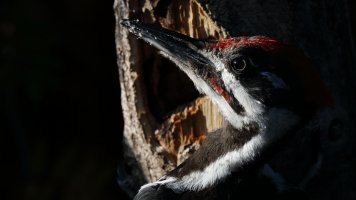
It reminds me of a friends comment that my "black" bird was overexposed because it showed hints of gray. It was the Pileated woodpecker that I now observe daily often up close and it is grayish (more definition in the black) or it is black in real life depending on the quality of the light.

If I choose to lift the shadows then I have more detail but the bird may not really impress the public, depending on their foreknowledge and personal taste. As said by others I think DR has been presented as critically important when it's just important. I'll gladly take whatever more they can deliver but it's not going to phase me too much.

So what should be done with this sample (excluding cleaning the beak!) - trash it, raise the shadows or??

Jack
 

Attachments

  • Bad example_29238.JPG
    Bad example_29238.JPG
    1,021.5 KB · Views: 202
Upvote 0
Jack Douglas said:
So what should be done with this sample (excluding cleaning the beak!) - trash it, raise the shadows or??

Jack


Keeper.

I'd perhaps change is the aspect ratio (3:2, to lose some of the black at the left hand side at the expense of driving the subject towards the center of the frame), and I'd probably brighten the iris slightly. Regardless, fantastic as is. I don't need to see the right hand side of the frame lifted, it's dramatic this way.
 
Upvote 0
3kramd5 said:
Jack Douglas said:
So what should be done with this sample (excluding cleaning the beak!) - trash it, raise the shadows or??

Jack


Keeper.

I'd perhaps change is the aspect ratio (3:2, to lose some of the black at the left hand side at the expense of driving the subject towards the center of the frame), and I'd probably brighten the iris slightly. Regardless, fantastic as is. I don't need to see the right hand side of the frame lifted, it's dramatic this way.

I agree here. Bit too much negative black space around the bird, I'd crop a little of that out. I'd do the same with the iris. I might also brighten the dark part of the beak just a bit to improve contrast along the upper edge with what's behind it.

Jack kind of hit the nail on the head though. I've received similar comments about many of my bird photos...that they look too overexposed on darker feathers because those feathers "should be black". Chickadees are probably the most common case. Chickadees have "black" feathers...but if you spend any amount of time watching them, you'll quickly learn that those feathers are not black...they are dark gray. They usually end up getting crushed to black because Chickadees also have very light grey and nearly white feathers, and the two side by side results in a very high contrast ratio...making the scene a high dynamic range scene. Depending on the angle of the light, that may fit within 11 stops (i.e. light directly behind you) or it might expand to 12, 14, or more stops (light over your shoulder or off to the side a bit more). Once that contrast kicks up, the noise in the black feathers when they are increased to that proper dark gray level ticks up significantly with a Canon DSLR (and with my 5D III, I get a bit of the salt and pepper speckled noise as well...hate that.)

I compensate for the issue by usually shooting birds with the sun right behind me tight over my left or right shoulder. That balances out the dynamic range, gives me better illumination on the darker feathers...but it's not ideal. Those tend to make for more bland compositions. I like birds in action, at a bit of a higher angle (but not too high), but that is usually where I run into DR limitations and higher noise in darker feathers.
 
Upvote 0
StudentOfLight said:
3kramd5 said:
Lee Jay said:
fentiger said:
if i want to see detail in the shadows i use a flash gun :-)

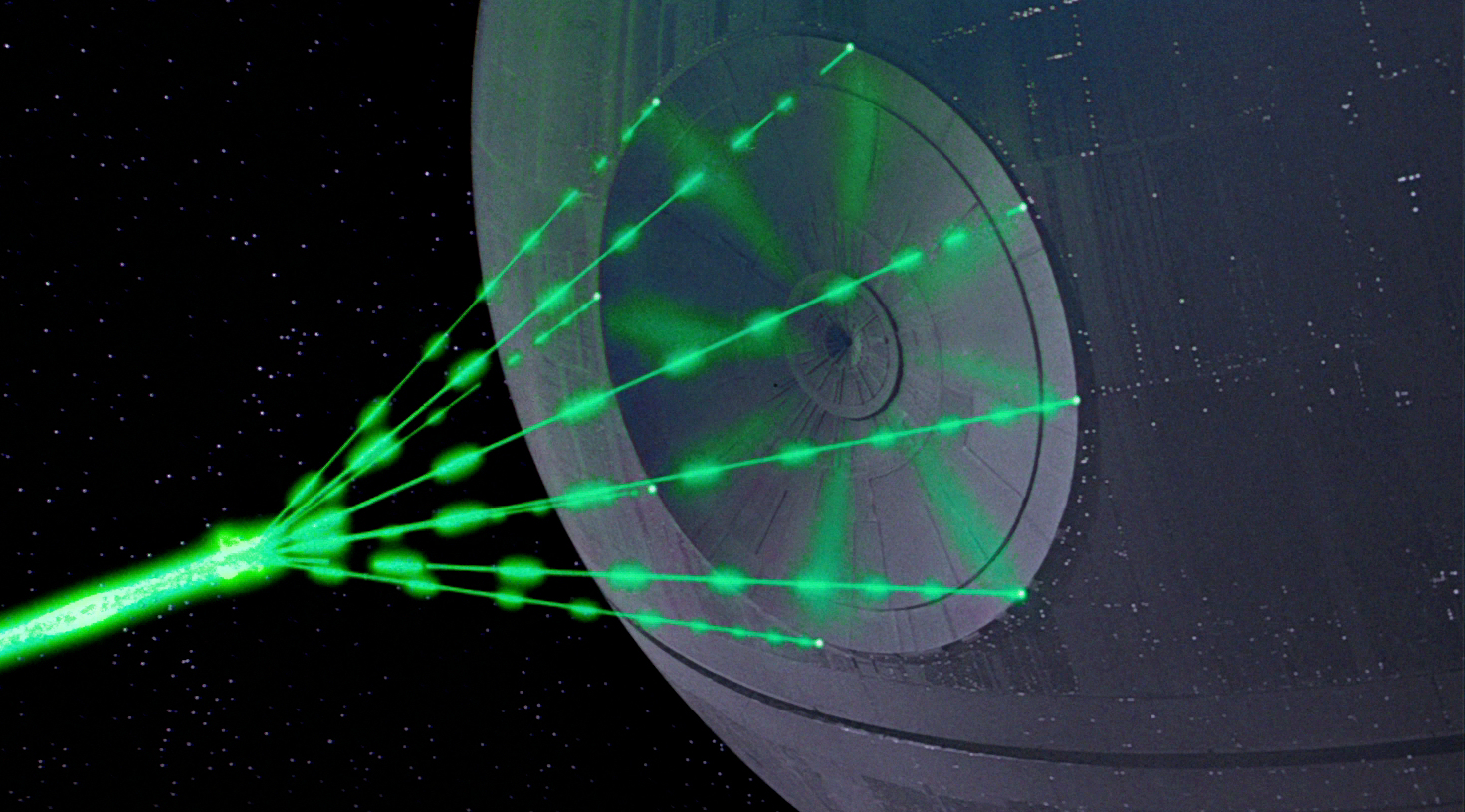
Sound's good. What model do I need to illuminate the dark side of the moon?

Superlaser2.jpg
That recycle time won't keep up with the 1D-X II :P

I heard the Empire used Canon FD glass back in the day to focus the Death Star's laser beams...
 
Upvote 0
3kramd5 said:
Jack Douglas said:
So what should be done with this sample (excluding cleaning the beak!) - trash it, raise the shadows or??

Jack


Keeper.

I'd perhaps change is the aspect ratio (3:2, to lose some of the black at the left hand side at the expense of driving the subject towards the center of the frame), and I'd probably brighten the iris slightly. Regardless, fantastic as is. I don't need to see the right hand side of the frame lifted, it's dramatic this way.

Actually, I really just dropped the shot in to see if it would provoke more thoughts regarding the acute need for DR; not my intention to sidetrack the thread . I never sensed I needed it but that's in a more artistic context, not rendering the bird for inclusion in Stokes. Is that part of the debate, artistic vs. accurate rendering?

Jack

Jack
 
Upvote 0
Jack Douglas said:
3kramd5 said:
Jack Douglas said:
So what should be done with this sample (excluding cleaning the beak!) - trash it, raise the shadows or??

Jack


Keeper.

I'd perhaps change is the aspect ratio (3:2, to lose some of the black at the left hand side at the expense of driving the subject towards the center of the frame), and I'd probably brighten the iris slightly. Regardless, fantastic as is. I don't need to see the right hand side of the frame lifted, it's dramatic this way.

Actually, I really just dropped the shot in to see if it would provoke more thoughts regarding the acute need for DR; not my intention to sidetrack the thread . I never sensed I needed it but that's in a more artistic context, not rendering the bird for inclusion in Stokes. Is that part of the debate, artistic vs. accurate rendering?

Jack

Jack

More DR will never limit you artistically. Less DR might, however. ;)
 
Upvote 0
Jack Douglas said:
3kramd5 said:
Jack Douglas said:
So what should be done with this sample (excluding cleaning the beak!) - trash it, raise the shadows or??

Jack


Keeper.

I'd perhaps change is the aspect ratio (3:2, to lose some of the black at the left hand side at the expense of driving the subject towards the center of the frame), and I'd probably brighten the iris slightly. Regardless, fantastic as is. I don't need to see the right hand side of the frame lifted, it's dramatic this way.

Actually, I really just dropped the shot in to see if it would provoke more thoughts regarding the acute need for DR; not my intention to sidetrack the thread . I never sensed I needed it but that's in a more artistic context, not rendering the bird for inclusion in Stokes. Is that part of the debate, artistic vs. accurate rendering?

Jack

Jack

Well, it really is up to you. Did you want to show detail throughout the shadows? If so, you were likely DR limited to some extent, although there is detail in the RHS of the frame and it doesn't appear to be near clipping anywhere (eg ETTR would have helped). From the perspective of an outsider, I like it as is, but since I don't know your goals I would be remiss to tell you "you have plenty of DR."

I don't think there is necessarily a debate between artistic and accurate rendering (and desire for the latter is overblown outside of journalism, anyway, else nobody would want smooth bokeh thin DOF portraiture or motion blur waterscapes, etc). All the matters is that you can show what you want to show, IMO.
 
Upvote 0
3kramd5,

Every comment helps in the process of becoming a better photographer for me personally. I'm all ears and always thankful for criticism and advice. On that shot I dropped the exposure on purpose to get the effect that you see. If I had more expertise and software I'd probably be tweaking it more. Although one should please oneself it's good for the ego to know others like what you're doing. ;)

A few months back a comment by jrista really encouraged me and caused me to look back and reflect on the improvements I've made. The more I read on CR the more I can adjust my shooting. Sure is a fun hobby.

Jack
 
Upvote 0
Jack Douglas said:
jrista said:
bdunbar79 said:
jrista said:
Sporgon said:
For those that show pictures of iridescent black and white subject where the software is showing both highlight and lowlight to be lost; prepare for disappointment in the increased DR. For a given exposure you are getting no more highlight range, so, to preserve the highlight with your new higher DR camera you under expose to hold the highlights. But even with your previous longer exposure you had lost all shadow data, so by under exposing to preserve highlights with a camera that doesn't actually have any more highlight range you use up your extra DR range in the shadows anyway, and you end up trying to lift zero data.

The extra DR does have occasional advantages in a very narrow EV band, but this example isn't one of them.

There is no such thing as "highlight DR", nor is there "shadow DR"...there is simply DR. You either have more dynamic range or not. Dynamic range is by definition the ratio of the full well capacity to the read noise floor. This is something I hear a lot from Canon users, and it's just a misconception, a misnomer. Dynamic range represents the entire range of tones the camera can discern, without segregation.

In practice, with a camera that has nearly 14 stops of DR, you can indeed back off exposure a bit to preserve highlights, and still have plenty of room left to recover detail out of the shadows, and with significantly less noise than a camera that has 11 or even 12 stops of DR. The shadows won't be totally noise-free, but they don't need to be. They just need to have low enough noise to support an acceptable shadow push to reveal the right amount of detail in them.

Then would the read noise floor, the weaker part of Canon's sensor, govern the shadow lifting ability? Is that where the noise originates in the shadows?

The way I see it is this. If your working with a scene, or a subject, that has more dynamic range than your camera, then you have options. Risk clipping the highlights with ETTR, to preserve as much as you can in the shadows, or preserve the highlights and lose more detail and color fidelity to shadow noise. The dynamic range is just a range...how you use it is up to you. You can use that range to preserve the highlights or to preserve the shadows. With more limited dynamic range (i.e. 11 stops) you are going to have to make compromises more often, with greater dynamic range (i.e. 13.8 stops or even 15 stops) you are going to have more leeway to move the signal around within the dynamic range, and the ability to preserve more detail...at either or both ends of the tonal range.

This can happen with any camera, because until we get to the point where cameras have like 20 stops of DR, there are always going to be scenes with higher DR. The difference is how much the noise affects your shadows if you end up choosing to preserve the highlights.

The difference with a camera that has 2-3 stops more DR is that when you pull back exposure a bit to preserve the highlights, you have far less noise to eat away at those darker details, making them much more recoverable before the post-push noise levels of the shadows increase to the point where they are unsightly.

I really hope Canon delivers 15 stops of DR. Even if it isn't literal DR a 16-bit RAW, if they find a way to use a non-linear compression curve to preserve more shadow detail in the data that is ultimately stored in a 14-bit RAW, I still think that would be much better than just leaving those extra...what, it would be nearly four stops of DR if we compare to the 5D III's 10.97 stops, buried in the noise. I think that would be a huge step forward, and I'd take it in a heartbeat. ;P I would still prefer true 16-bit RAW with the full precision if it was an option, but I'll take any interim step Canon can give me.

I don't detect anything in this comment that is not on the mark. I guess what it comes down to is how each of us individually relate to the shadows that aren't as defined as some would like.

It reminds me of a friends comment that my "black" bird was overexposed because it showed hints of gray. It was the Pileated woodpecker that I now observe daily often up close and it is grayish (more definition in the black) or it is black in real life depending on the quality of the light.

If I choose to lift the shadows then I have more detail but the bird may not really impress the public, depending on their foreknowledge and personal taste. As said by others I think DR has been presented as critically important when it's just important. I'll gladly take whatever more they can deliver but it's not going to phase me too much.

So what should be done with this sample (excluding cleaning the beak!) - trash it, raise the shadows or??

Jack

Hi Jack
This picture looks great as it is. But if it was me I would just crop a bit from the sides to get a 3:2 width/height ratio. I was also thinking that the top of the bird's head should have slightly more definition along with slightly more texture of the background tree. Then I downloaded the picture and the image appeared a little more brighter and that gave me the definition I wanted. So, there is a difference when we see a picture in a browser vs when we see it in our own monitor. Just my experience and opinion. No more right than anyone else's.

While we are talking about DR let me tell you my personal experience. I have been a Canon shooter. When D800 and D600 were released lots of people were talking about how good the Nikon DR was. I always wanted to have a second system, so I took this opportunity and got a D600 ( 14 stops of DR). I compared it with my 5DIII and 6D. Clearly, shadows with D600 were much more cleaner. It was exciting. For 2-3 months I kept shooting with D600 and Canons side by side. Soon I realized that I was struggling to find a scene where I needed to lift shadows more than I could do with my Canons with acceptable results. As if I was trying to create scenes to justify D600's shadow lifting abilities. My shooting style and preferences changed. I realized that I was not a happy shooter anymore. The changed photographer was not me. So, I stopped doing comparisons and stopped looking for shadow lifting opportunities. I went back to my 5DIII as my primary camera (nearly 99% of my shots) and to my shooting style. I only use D600 when I feel like I need to use Nikon's fabulous 14-24/2.8 lens, not to lift shadows.
But that's my experience only. I understand that other people may have different needs or taste. So, having cleaner shadows can't be a bad thing. As jrista said, this would give you more artistic leverage if you were inclined.
 
Upvote 0
Diltiazem, thank you for that interesting commentary (always appreciate positive critical feedback). I believe you are bang on. There are aspects of the technology that definitely are more critical than others. We all are enjoying amazing features that allow us, if we really concentrate and challenge our capability, to produce very impressive photos (for me, at least relative to the average person who's not into photography).

So, speaking for myself I get drawn into these discussions because I'm learning an awful lot (my ignorance from 3 years ago is embarrassing, present ignorance too!) Then, if I'm not careful I get caught up in the hype, in this case it's DR.

No question more DR will help but for me I'm always on the edge relative to natural lighting and would greatly appreciate that extra F stop or shutter speed increase without stepping into ISO's that give me grain. For my taste, with the 6D, I don't like going above ISO 1250 given that I often crop 50-60%. With the 1D4 ISO 640 pleased me but 800 was on the edge.

Others have first hand disappointments relative to DR but mine are more ISO related .

Relative to the woodpecker shot, it's just hitting me. I've been converting to 16:9 because it fills the monitor. Often I've sensed that did not work advantageously for the composition, especially since I've framed at 3:2, so I need to rethink that. I'm still working myself out of the idiosyncrasy of feeling compelled to maximize the size of the subject, which is often a small bird (jrista has helped there). The Freeman book, The Photograher's Eye was a very helpful purchase, thanks to other great CR contributors. Anyone else out there new to photography - that's a great book!

Jack
 
Upvote 0
So that means:

1/8000 s
1/4000 s
1/2000 s
1/1000 s
1/500 s
1/250
1/125
1/60
1/30
1/15
1/8
1/4
1/2
1
2
4

so when I shoot into the bright sun at ISO 100... I can sit at 1/60... the sun still wouldn't exceed the sensor's capacity (if 1/8000 is short enough) and I could see features in the image that need exposures of ~4 s to be seen?

I don't believe it ;), even if it's a horror show considering the noise in the images I doubt that's true :P.
A hoax, definitely. Still, I like to be proven wrong by Canon.
 
Upvote 0
Gnocchi said:
jhpeterson said:
dilbert said:
I suspect if Canon said "The Sun will rise in the west tomorrow" lots of people here would go "Cool! Where can I go and see it?"
Hasn't it been rising there there the last few days? :o
Oh, wait! I just got back from a nearly month-long Australia trip and still have trouble remembering to drive on the right side of the road.
Hope you enjoyed your time in straylia
I did and I'll post in more detail on the thread: http://www.canonrumors.com/forum/index.php?topic=26630.msg563135#msg563135
 
Upvote 0
Photographing the sun - yesterday my wife said get that photo, look you can clearly see the moon. It did look like the moon except it was perfectly full and should have been a sliver and it kept fading in and out and didn't have moony characteristics. So out I went to get the "moon" in a good location for a landscape shot, with some definition and lo and behold it was totally blown unless I seriously underexposed.

So, yes, I now have finally, definitively, demonstrated for myself a strong need for more DR! I want more than 15 stops!! And I refuse to be happy until I get it!!! Or else (reader, supply their choice of retributive/destructive/indolent behaviour involving camera brands) !!!!!

Jack
 
Upvote 0