EOS-1D X Mark II Claims of 15 Stops of DR [CR3]

Sporgon said:
3kramd5 said:
hubie said:
Sorry, but 15 stops of DR is bull****... that would mean everything between for example 1/8000 and 4" exposure would be perfectly exposed.

That's not at all what it means.

Indeed. The whole 'DR' think is horribly misunderstood on the internet.

Exactly. Most overrated feature in a camera.

They just want to "mistakenly" take a pitch black picture, move a few sliders and have everything in good exposure.
 
Upvote 0
Alejandro said:
Sporgon said:
3kramd5 said:
hubie said:
Sorry, but 15 stops of DR is bull****... that would mean everything between for example 1/8000 and 4" exposure would be perfectly exposed.

That's not at all what it means.

Indeed. The whole 'DR' think is horribly misunderstood on the internet.

Exactly. Most overrated feature in a camera.

They just want to "mistakenly" take a pitch black picture, move a few sliders and have everything in good exposure.
until I can take a picture with the lens cap on, and adjust it in photoshop to see the white cat in front of a white background, it just won't be good enough!
 
Upvote 0
Don Haines said:
Alejandro said:
Sporgon said:
3kramd5 said:
hubie said:
Sorry, but 15 stops of DR is bull****... that would mean everything between for example 1/8000 and 4" exposure would be perfectly exposed.

That's not at all what it means.

Indeed. The whole 'DR' think is horribly misunderstood on the internet.

Exactly. Most overrated feature in a camera.

They just want to "mistakenly" take a pitch black picture, move a few sliders and have everything in good exposure.
until I can take a picture with the lens cap on, and adjust it in photoshop to see the white cat in front of a white background, it just won't be good enough!

Dxomark wet dream.
 
Upvote 0
Well, the camera has been announced. Hopefully it will hit the streets sooner rather than later, and we'll know for sure what it's really capable of. I'm pessimistic...but that means I'll be pleasantly surprised if it actually does have significantly more DR. ;)
 
Upvote 0
jrista said:
Well, the camera has been announced. Hopefully it will hit the streets sooner rather than later, and we'll know for sure what it's really capable of. I'm pessimistic...but that means I'll be pleasantly surprised if it actually does have significantly more DR. ;)
What is significant? 1/2 stop( well it is Canon) or 1 stop, 2 stop?
 
Upvote 0
jrista said:
Well, the camera has been announced. Hopefully it will hit the streets sooner rather than later, and we'll know for sure what it's really capable of. I'm pessimistic...but that means I'll be pleasantly surprised if it actually does have significantly more DR. ;)

I'm with you Jon, but a couple ok uk sites have informed that it has on chip adc. Check out Andy Rouse blog about it, appreciate he is an EOL, but he does say the noise in darks is reduced.
 
Upvote 0
jrista said:
Well, the camera has been announced. Hopefully it will hit the streets sooner rather than later, and we'll know for sure what it's really capable of. I'm pessimistic...but that means I'll be pleasantly surprised if it actually does have significantly more DR. ;)
me too....

now if it had 16 bit RAW files..... that would be a good indication of some major improvements!
 
Upvote 0
A friend of mine, who is a Canon Ambassador, has spoken with several of the early testers. According to him, they were all "lyrical" about the performance, including noise and DR. I have a preorder in and hold my fingers crossed. The news of an on-chip ADC was encouraging.
 
Upvote 0
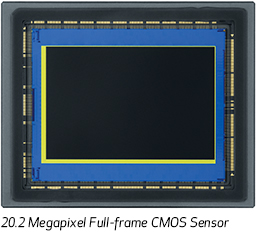
Pictures of the 1DX2 sensor confirms column ADCs top & bottom of the pixel array:

1dxmkii_feature_03a.jpg
 
Upvote 0
MintChocs said:
jrista said:
Well, the camera has been announced. Hopefully it will hit the streets sooner rather than later, and we'll know for sure what it's really capable of. I'm pessimistic...but that means I'll be pleasantly surprised if it actually does have significantly more DR. ;)
What is significant? 1/2 stop( well it is Canon) or 1 stop, 2 stop?

A solid 2 stops minimum is what I would consider significant. That would bring it in line with the competition, and around 14 stops total. I haven't read anything specific yet, but I still doubt it will have 16-bit RAW.
 
Upvote 0
jrista said:
MintChocs said:
jrista said:
Well, the camera has been announced. Hopefully it will hit the streets sooner rather than later, and we'll know for sure what it's really capable of. I'm pessimistic...but that means I'll be pleasantly surprised if it actually does have significantly more DR. ;)
What is significant? 1/2 stop( well it is Canon) or 1 stop, 2 stop?

A solid 2 stops minimum is what I would consider significant. That would bring it in line with the competition, and around 14 stops total. I haven't read anything specific yet, but I still doubt it will have 16-bit RAW.
One of the press releases/spec sheets said in writing that it is 14 bit RAW........
 
Upvote 0
Don Haines said:
jrista said:
MintChocs said:
jrista said:
Well, the camera has been announced. Hopefully it will hit the streets sooner rather than later, and we'll know for sure what it's really capable of. I'm pessimistic...but that means I'll be pleasantly surprised if it actually does have significantly more DR. ;)
What is significant? 1/2 stop( well it is Canon) or 1 stop, 2 stop?

A solid 2 stops minimum is what I would consider significant. That would bring it in line with the competition, and around 14 stops total. I haven't read anything specific yet, but I still doubt it will have 16-bit RAW.
One of the press releases/spec sheets said in writing that it is 14 bit RAW........

Well there ya go. I guess it could use some kind of non-linear amplification pre-ADC, and compress more than 14 stops into the 14-bit RAW, but I also kind of doubt that is the case as well. Still, would be interesting to see if the camera actually scores over 13 stops engineering DR.
 
Upvote 0
jrista said:
Don Haines said:
jrista said:
MintChocs said:
jrista said:
Well, the camera has been announced. Hopefully it will hit the streets sooner rather than later, and we'll know for sure what it's really capable of. I'm pessimistic...but that means I'll be pleasantly surprised if it actually does have significantly more DR. ;)
What is significant? 1/2 stop( well it is Canon) or 1 stop, 2 stop?

A solid 2 stops minimum is what I would consider significant. That would bring it in line with the competition, and around 14 stops total. I haven't read anything specific yet, but I still doubt it will have 16-bit RAW.
One of the press releases/spec sheets said in writing that it is 14 bit RAW........

Well there ya go. I guess it could use some kind of non-linear amplification pre-ADC, and compress more than 14 stops into the 14-bit RAW, but I also kind of doubt that is the case as well. Still, would be interesting to see if the camera actually scores over 13 stops engineering DR.
They could do a non-linear compression on the analog, but once you are 14 bit digital you can not go back to 16 bit without loosing resolution. (it is blazingly fast with a look-up table). When you un-compress you loose resolution. That's why I don't believe anyone who claims more stops of DR than bits of data. If they really had the resolution, they would bump up the number of bits.... after all, that's why we went from 12 bit RAW to 14 bit :)
 
Upvote 0
Don Haines said:
jrista said:
Don Haines said:
jrista said:
MintChocs said:
jrista said:
Well, the camera has been announced. Hopefully it will hit the streets sooner rather than later, and we'll know for sure what it's really capable of. I'm pessimistic...but that means I'll be pleasantly surprised if it actually does have significantly more DR. ;)
What is significant? 1/2 stop( well it is Canon) or 1 stop, 2 stop?

A solid 2 stops minimum is what I would consider significant. That would bring it in line with the competition, and around 14 stops total. I haven't read anything specific yet, but I still doubt it will have 16-bit RAW.
One of the press releases/spec sheets said in writing that it is 14 bit RAW........

Well there ya go. I guess it could use some kind of non-linear amplification pre-ADC, and compress more than 14 stops into the 14-bit RAW, but I also kind of doubt that is the case as well. Still, would be interesting to see if the camera actually scores over 13 stops engineering DR.
They could do a non-linear compression on the analog, but once you are 14 bit digital you can not go back to 16 bit without loosing resolution. (it is blazingly fast with a look-up table). When you un-compress you loose resolution. That's why I don't believe anyone who claims more stops of DR than bits of data. If they really had the resolution, they would bump up the number of bits.... after all, that's why we went from 12 bit RAW to 14 bit :)

It depends. There is a massive amount of highlight information, more than you really need. If you compress properly, what you lose isn't necessarily as important as what you gain. It's 14 bits of data, but that data could represent more than 14 stops of information.
 
Upvote 0
jrista said:
Don Haines said:
jrista said:
Don Haines said:
jrista said:
MintChocs said:
jrista said:
Well, the camera has been announced. Hopefully it will hit the streets sooner rather than later, and we'll know for sure what it's really capable of. I'm pessimistic...but that means I'll be pleasantly surprised if it actually does have significantly more DR. ;)
What is significant? 1/2 stop( well it is Canon) or 1 stop, 2 stop?

A solid 2 stops minimum is what I would consider significant. That would bring it in line with the competition, and around 14 stops total. I haven't read anything specific yet, but I still doubt it will have 16-bit RAW.
One of the press releases/spec sheets said in writing that it is 14 bit RAW........

Well there ya go. I guess it could use some kind of non-linear amplification pre-ADC, and compress more than 14 stops into the 14-bit RAW, but I also kind of doubt that is the case as well. Still, would be interesting to see if the camera actually scores over 13 stops engineering DR.
They could do a non-linear compression on the analog, but once you are 14 bit digital you can not go back to 16 bit without loosing resolution. (it is blazingly fast with a look-up table). When you un-compress you loose resolution. That's why I don't believe anyone who claims more stops of DR than bits of data. If they really had the resolution, they would bump up the number of bits.... after all, that's why we went from 12 bit RAW to 14 bit :)

It depends. There is a massive amount of highlight information, more than you really need. If you compress properly, what you lose isn't necessarily as important as what you gain. It's 14 bits of data, but that data could represent more than 14 stops of information.
agreed! The highlight information is nowhere near as critical as the lows....going from 11 to 13 while skipping 12 is significant, while going from 16371 to 16379 may be 4 times the jump, but the difference in an image would be almost completely undetectable.
 
Upvote 0
Don Haines said:
jrista said:
Don Haines said:
jrista said:
Don Haines said:
jrista said:
MintChocs said:
jrista said:
Well, the camera has been announced. Hopefully it will hit the streets sooner rather than later, and we'll know for sure what it's really capable of. I'm pessimistic...but that means I'll be pleasantly surprised if it actually does have significantly more DR. ;)
What is significant? 1/2 stop( well it is Canon) or 1 stop, 2 stop?

A solid 2 stops minimum is what I would consider significant. That would bring it in line with the competition, and around 14 stops total. I haven't read anything specific yet, but I still doubt it will have 16-bit RAW.
One of the press releases/spec sheets said in writing that it is 14 bit RAW........

Well there ya go. I guess it could use some kind of non-linear amplification pre-ADC, and compress more than 14 stops into the 14-bit RAW, but I also kind of doubt that is the case as well. Still, would be interesting to see if the camera actually scores over 13 stops engineering DR.
They could do a non-linear compression on the analog, but once you are 14 bit digital you can not go back to 16 bit without loosing resolution. (it is blazingly fast with a look-up table). When you un-compress you loose resolution. That's why I don't believe anyone who claims more stops of DR than bits of data. If they really had the resolution, they would bump up the number of bits.... after all, that's why we went from 12 bit RAW to 14 bit :)

It depends. There is a massive amount of highlight information, more than you really need. If you compress properly, what you lose isn't necessarily as important as what you gain. It's 14 bits of data, but that data could represent more than 14 stops of information.
agreed! The highlight information is nowhere near as critical as the lows....going from 11 to 13 while skipping 12 is significant, while going from 16371 to 16379 may be 4 times the jump, but the difference in an image would be almost completely undetectable.

Exactly! Hah! Glad someone gets it. ;)
 
Upvote 0
jrista said:
Don Haines said:
jrista said:
Don Haines said:
jrista said:
Well there ya go. I guess it could use some kind of non-linear amplification pre-ADC, and compress more than 14 stops into the 14-bit RAW, but I also kind of doubt that is the case as well. Still, would be interesting to see if the camera actually scores over 13 stops engineering DR.
They could do a non-linear compression on the analog, but once you are 14 bit digital you can not go back to 16 bit without loosing resolution. (it is blazingly fast with a look-up table). When you un-compress you loose resolution. That's why I don't believe anyone who claims more stops of DR than bits of data. If they really had the resolution, they would bump up the number of bits.... after all, that's why we went from 12 bit RAW to 14 bit :)

It depends. There is a massive amount of highlight information, more than you really need. If you compress properly, what you lose isn't necessarily as important as what you gain. It's 14 bits of data, but that data could represent more than 14 stops of information.
agreed! The highlight information is nowhere near as critical as the lows....going from 11 to 13 while skipping 12 is significant, while going from 16371 to 16379 may be 4 times the jump, but the difference in an image would be almost completely undetectable.

Exactly! Hah! Glad someone gets it. ;)
Yes, but I still think if they had that much DR they would go 16 bit....the marketing people would go nuts :) "Our new 1DX2 has so much dynamic range that we had to expand our RAW files to 16 bits to handle it!!!! Those inferior Sony and Nikon cameras only need 14 bits with their inferior colour depth...."
 
Upvote 0
Don Haines said:
jrista said:
Don Haines said:
jrista said:
Don Haines said:
jrista said:
Well there ya go. I guess it could use some kind of non-linear amplification pre-ADC, and compress more than 14 stops into the 14-bit RAW, but I also kind of doubt that is the case as well. Still, would be interesting to see if the camera actually scores over 13 stops engineering DR.
They could do a non-linear compression on the analog, but once you are 14 bit digital you can not go back to 16 bit without loosing resolution. (it is blazingly fast with a look-up table). When you un-compress you loose resolution. That's why I don't believe anyone who claims more stops of DR than bits of data. If they really had the resolution, they would bump up the number of bits.... after all, that's why we went from 12 bit RAW to 14 bit :)

It depends. There is a massive amount of highlight information, more than you really need. If you compress properly, what you lose isn't necessarily as important as what you gain. It's 14 bits of data, but that data could represent more than 14 stops of information.
agreed! The highlight information is nowhere near as critical as the lows....going from 11 to 13 while skipping 12 is significant, while going from 16371 to 16379 may be 4 times the jump, but the difference in an image would be almost completely undetectable.

Exactly! Hah! Glad someone gets it. ;)
Yes, but I still think if they had that much DR they would go 16 bit....the marketing people would go nuts :) "Our new 1DX2 has so much dynamic range that we had to expand our RAW files to 16 bits to handle it!!!! Those inferior Sony and Nikon cameras only need 14 bits with their inferior colour depth...."

I dunno. I don't think the two are synomous. There is having more true dynamic range, which in the case of a linear sensor means you have lower read noise and thus can actually benefit from 16-bit data. A non-linear sensor, on the other hand, amplifies shallow signals more and changes the relationship of those shallow signals vs. read noise more than it does deeper signals. If Canon has not reduced their read noise enough to actually support 16 stops of linear dynamic range, then going to 16-bit wouldn't help. However a non-linear sensor capable of 15 stops of DR compressed into 14-bit data WOULD help.

I would obviously prefer to have a linear sensor with read noise low enough to support 15 stops of DR. I think that would be much better than applying curves to the information to compress and decompress it. A non-linear sensor would just be a means of overcoming high read noise...it would just be a stop-gap measure. However Canon would have to get their read noise down to around 2e- with a 60ke- FWC (i.e. 5D IV), or 3e- with a 100ke- FWC (i.e. 1D X II), in order to have 15 true stops of linear DR. Rather doubtful they have achieved that...I might believe they have reduced read noise down to the ~10e- range @ ISO 100...that would be almost 1/4 what the 1D X had, and if the II still has around 90ke- FWC, then that would be ~13.2 stops DR (I'd take that, though!!). Sony has barely achieved that even...most FF exmors have 4-6e- read noise at ISO 100, and the A7s has ~25e- (although it also has 150ke- FWC).

 
Upvote 0
jrista said:
Don Haines said:
jrista said:
Don Haines said:
jrista said:
Don Haines said:
jrista said:
Well there ya go. I guess it could use some kind of non-linear amplification pre-ADC, and compress more than 14 stops into the 14-bit RAW, but I also kind of doubt that is the case as well. Still, would be interesting to see if the camera actually scores over 13 stops engineering DR.
They could do a non-linear compression on the analog, but once you are 14 bit digital you can not go back to 16 bit without loosing resolution. (it is blazingly fast with a look-up table). When you un-compress you loose resolution. That's why I don't believe anyone who claims more stops of DR than bits of data. If they really had the resolution, they would bump up the number of bits.... after all, that's why we went from 12 bit RAW to 14 bit :)

It depends. There is a massive amount of highlight information, more than you really need. If you compress properly, what you lose isn't necessarily as important as what you gain. It's 14 bits of data, but that data could represent more than 14 stops of information.
agreed! The highlight information is nowhere near as critical as the lows....going from 11 to 13 while skipping 12 is significant, while going from 16371 to 16379 may be 4 times the jump, but the difference in an image would be almost completely undetectable.

Exactly! Hah! Glad someone gets it. ;)
Yes, but I still think if they had that much DR they would go 16 bit....the marketing people would go nuts :) "Our new 1DX2 has so much dynamic range that we had to expand our RAW files to 16 bits to handle it!!!! Those inferior Sony and Nikon cameras only need 14 bits with their inferior colour depth...."

I dunno. I don't think the two are synomous. There is having more true dynamic range, which in the case of a linear sensor means you have lower read noise and thus can actually benefit from 16-bit data. A non-linear sensor, on the other hand, amplifies shallow signals more and changes the relationship of those shallow signals vs. read noise more than it does deeper signals. If Canon has not reduced their read noise enough to actually support 16 stops of linear dynamic range, then going to 16-bit wouldn't help. However a non-linear sensor capable of 15 stops of DR compressed into 14-bit data WOULD help.

I would obviously prefer to have a linear sensor with read noise low enough to support 15 stops of DR. I think that would be much better than applying curves to the information to compress and decompress it. A non-linear sensor would just be a means of overcoming high read noise...it would just be a stop-gap measure. However Canon would have to get their read noise down to around 2e- with a 60ke- FWC (i.e. 5D IV), or 3e- with a 100ke- FWC (i.e. 1D X II), in order to have 15 true stops of linear DR. Rather doubtful they have achieved that...I might believe they have reduced read noise down to the ~10e- range @ ISO 100...that would be almost 1/4 what the 1D X had, and if the II still has around 90ke- FWC, then that would be ~13.2 stops DR (I'd take that, though!!). Sony has barely achieved that even...most FF exmors have 4-6e- read noise at ISO 100, and the A7s has ~25e- (although it also has 150ke- FWC).

RE pre-de-emphasis.. really what is the point?.. what is easier to encode, 14 bits non-linear or 16 bits linear, CR2 files already do lossless compression of 14 bits into about 9 on average, card costs are now almost zero compared to camera costs. If it were my decision I'd go with CR3 which would merely be 16bit data with TIFF compression and keep everything linear. Perhaps Canon see CR3 as being viewed as a potential problem so want everyone on side (Adobe etc) before letting that little nugget of info out (after all Pros want things to "just work" and don't care so much about specmanship).. but that's pure speculation.

It would explain them only releasing jpegs
 
Upvote 0