More Detailed Specifications for the Canon EOS 6D Mark II

ahsanford said:
One addendum to my last post, though -- I don't think the D750 boo birds aren't going away.

I'm not agreeing with them one bit, but at a body-feature-level, other than DPAF, I'm hard pressed for a killer spec sheet item on the 6D2 that will turn heads from that camp. (I'm obviously disregarding the intrinsic Canon upsides like ergonomics, EF portfolio, menu setup, reliability, resale, etc.)

I'm just guessing that the 6D2 isn't exactly going to steal many crop-to-FF upgraders from Nikon, that's all. Doubly so if a D760 with 30+ MP / 8 fps / 4K rig shows up for $2k in the next year.

- A.

Those specs and that price would likely be enough to hold Nikon upgraders, but can they deliver the specs and live with a $2K price, and when can they roll it out? We shall see. My guess is that the 6DII's $2k price is going to put a lot of pressure on Nikon.
 
Upvote 0
BillB said:
ahsanford said:
One addendum to my last post, though -- I don't think the D750 boo birds aren't going away.

I'm not agreeing with them one bit, but at a body-feature-level, other than DPAF, I'm hard pressed for a killer spec sheet item on the 6D2 that will turn heads from that camp. (I'm obviously disregarding the intrinsic Canon upsides like ergonomics, EF portfolio, menu setup, reliability, resale, etc.)

I'm just guessing that the 6D2 isn't exactly going to steal many crop-to-FF upgraders from Nikon, that's all. Doubly so if a D760 with 30+ MP / 8 fps / 4K rig shows up for $2k in the next year.

- A.

Those specs and that price would likely be enough to hold Nikon upgraders, but can they deliver the specs and live with a $2K price, and when can they roll it out? We shall see. My guess is that the 6DII's $2k price is going to put a lot of pressure on Nikon.

I have to agree with ahsanford, unless there's something surprising in the launch (Ibis and an astro tracker would be great), most of the positives, for myself at least, are the ergonomics and lenses I already own. The tilt screen and dpaf are the only body features that this seems to have over Sony and Nikon, again, at least for my purposes.

The sensor performance will really have to be pretty good to make the upgrade from the original.

I really like some aspects of Canon, but the competition are putting up some really strong arguments too
 
Upvote 0
tr573 said:
lourenco said:
Xsync of 1/160 is not enough for me to do hyper sync with my Paul C Buff Einstein Flash heads and the Flex TT5.

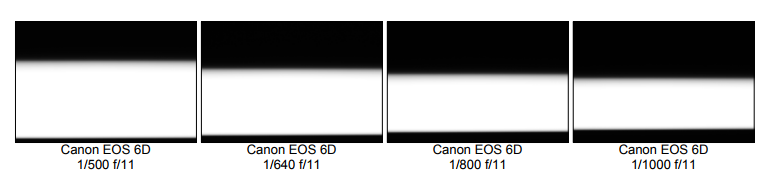
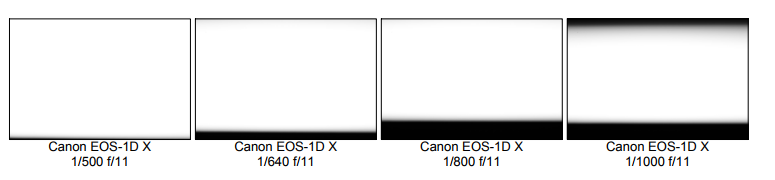
If I am shooting at 1/1000 to freeze action of a car doing a wheelie in the center of the frame, The 1dx having small black bars on frame top and bottom is no big deal. It is a big deal on the 6d since the top part of the car would not have flash given you can see from the photos below it would be completely cut off. That's a big deal for me. I rather not buy new flash heads. I was thinking about this given the low price, but I have to pass.


1dx has 1/250 sync speed

d63a35afc4d2dc6e8b4a4c115088f63f.png


vs

6d , which I am sure would look the same on the 6d Mark II

ac46e8557b7e2ccc89451e44b6fabcc0.png

That looks like what happens when you *don't* use hypersync. The pocketwizard wiki pages for E640's on a 6D don't look like that.

http://wiki.pocketwizard.com/images/0/05/6D_EinsteinE640_HighestEnergy_Ver11.pdf
http://wiki.pocketwizard.com/images/b/bf/6D_EinsteinE640_ReducedClipping_Ver11.pdf

Scroll down to the 1/2 power. It looks like that. I am between 1/4 to 1/2 power on the flash heads. Keep in mind the heads are 640 watts each and I am using big aluminum dish long throw reflector. If I am 1/4 to 1/2 power level ,I can take a 2nd or 3rd photo without having to wait for the flash to cycle.


I.E. The highest wheelie i had of this car was on the 3rd shot. I try to make my best guess at when I should take the photo, but some wheelie higher.
 

Attachments

  • 64f063e255b7446d0a25700df06b5068.jpg
    64f063e255b7446d0a25700df06b5068.jpg
    546.3 KB · Views: 163
Upvote 0
mahdi_mak2000 said:
sorry I m a bit dump in technical matters. sync speed 180 technically means at shutter speeds faster than 180 the shutter 2nd curtains start to close before the 1st one fully open. right???
so flash photography cant be done without HSS, right?

I think you're doing just fine on technical matters. :)
 
Upvote 0
neuroanatomist said:
ScottyP said:
I can't believe they couldn't give a 1/200th sync speed. If they are at 1/18, and if all their other shutters are 1/200th it seems an unnecessary bit of skimpage ...

All their other shutters with a 1/4000 s max on FF cameras have a 1/180 s Xsync? Well, that's true...even if it applies only to the 6D.

To get a faster Xsync, they'd need to put in a shutter with a motor capable of faster movement, and curtains robust enough to withstand the faster movement. The 5-series have a 1/200 Xsync, and the 1/8000 s max shutter to go with it.

The Rebel/xxxD line has a less robust shutter and 1/4000 s max, but a 1/200 s Xsync...because the curtains don't have as far to travel across an APS-C sensor. The more robust shutter in the 80D and 7-series gets you 1/250 s Xsync with the 1/8000 shutter.

Sure, Canon could avoid the 'unnecessary bit of skimpage' and put in a more robust shutter...avoid unnecessary skimpage and make the body a bit more robust with better sealing, avoid unnecessary skimpage and add a few more AF points...avoid unnecessary skimpage and use a better metering sensor...avoid unnecessary skimpage and add 4K video and s second card slot. And avoid unnecessary skimpage on revenue by charging $3500 for it. Oh, wait...that's the 5DIV. :P
Thank you. I was wondering why the 77D had a higher xsync
 
Upvote 0
ahsanford said:
One addendum to my last post, though -- I don't think the D750 boo birds aren't going away.

I'm not agreeing with them one bit, but at a body-feature-level, other than DPAF, I'm hard pressed for a killer spec sheet item on the 6D2 that will turn heads from that camp. (I'm obviously disregarding the intrinsic Canon upsides like ergonomics, EF portfolio, menu setup, reliability, resale, etc.)

I'm just guessing that the 6D2 isn't exactly going to steal many crop-to-FF upgraders from Nikon, that's all. Doubly so if a D760 with 30+ MP / 8 fps / 4K rig shows up for $2k in the next year.

- A

Right, but this is an entry level FF DSLR, that allows any Crop sensor users that have some EF lenses already to move up, stopping migration from Canon to other ecosystems.
 
Upvote 0
ahsanford said:
wildwalker said:
Don Haines said:
Only 2K video? seems a bit disappointing and dated.

2K Video? are you sure? I see 1080P and that is it.

I presume that's what he meant. Some folks throw around 1920x1080 and 2K interchangeably.

- A

Right, but they are not the same thing. Otherwise we would call UHD 8K, and 8K would be 32K!!!!

hehe
 
Upvote 0
wildwalker said:
LonelyBoy said:
Inspired said:
This is ridiculous.
Who makes a camera for working professionals with a sync speed of 180? >:(
why canon why?

Why do you think Canon made this for working professionals?

Agreed, this is a consumer grade product. A professional will use professional products, 5x and 1x.

I think there's a lot more overlap between pro and enthusiast than you think. Pros might use 6Ds and Enthusiasts might own 5- and 1- series cameras.

What I want to know is how 1/180 vs. 1/200 is the end of the world for speedlite users. I rarely use my speedlite, so other than gathering that HSS is not desirable for some needs, can someone please set me straight?

  • Is this a consideration for crazy bright days and they don't sell dark enough NDs to slow the shutter back down to the sync speed?

  • Does the difference between 1/180 and 1/200 sync categorically rule out certain types of photography? Is there some moving subject threshold where 1/180 fails and 1/200 nails it?

I appreciate HSS hammers the batteries, but I'm lost how 1/200 is such a pot of gold vs. 1/180 for the sync speed.

I'm not asking as a windup -- I honestly don't understand and would appreciate the education, thx.

- A
 
Upvote 0
wildwalker said:
ahsanford said:
wildwalker said:
Don Haines said:
Only 2K video? seems a bit disappointing and dated.

2K Video? are you sure? I see 1080P and that is it.

I presume that's what he meant. Some folks throw around 1920x1080 and 2K interchangeably.

- A

Right, but they are not the same thing. Otherwise we would call UHD 8K, and 8K would be 32K!!!!

hehe
What? It's 1920x1080 and 1920 ~ 2000 = 2K, hence "2K". Yes, it's stupid but that's all because some marketing guy thought it'd sound cool if we suddenly started using horizontal resolution with 4K (3840x2160 or whatever) instead of vertical resolution as was usually the case with Full HD being referred as "1080p".
 
Upvote 0
Well, if you think about it :

Full HD 1920 x 1080p - is 2K as 1920 is almost 2000 pixels
And UHD 3840 x 2160 - is 4K as 3840 is almost 4000 pixels.

It is all correct, Sir.

wildwalker said:
ahsanford said:
wildwalker said:
Don Haines said:
Only 2K video? seems a bit disappointing and dated.

2K Video? are you sure? I see 1080P and that is it.

I presume that's what he meant. Some folks throw around 1920x1080 and 2K interchangeably.

- A

Right, but they are not the same thing. Otherwise we would call UHD 8K, and 8K would be 32K!!!!

hehe
 
Upvote 0
It is all about mismatch between the light meter set in 1/3 of a stop steps and 1/180 being not part of that scale. It is on 1/2 of a stop scale instead. So.. 1/160 and 1/200 are 1/3 of a stop steps. 1/180 is 1/2 of a stop step

http://www.canonrumors.com/forum/index.php?topic=32889.msg671270#msg671270

ahsanford said:
wildwalker said:
LonelyBoy said:
Inspired said:
This is ridiculous.
Who makes a camera for working professionals with a sync speed of 180? >:(
why canon why?

Why do you think Canon made this for working professionals?

Agreed, this is a consumer grade product. A professional will use professional products, 5x and 1x.

I think there's a lot more overlap between pro and enthusiast than you think. Pros might use 6Ds and Enthusiasts might own 5- and 1- series cameras.

What I want to know is how 1/180 vs. 1/200 is the end of the world for speedlite users. I rarely use my speedlite, so other than gathering that HSS is not desirable for some needs, can someone please set me straight?

  • Is this a consideration for crazy bright days and they don't sell dark enough NDs to slow the shutter back down to the sync speed?

  • Does the difference between 1/180 and 1/200 sync categorically rule out certain types of photography? Is there some moving subject threshold where 1/180 fails and 1/200 nails it?

I appreciate HSS hammers the batteries, but I'm lost how 1/200 is such a pot of gold vs. 1/180 for the sync speed.

I'm not asking as a windup -- I honestly don't understand and would appreciate the education, thx.

- A
 
Upvote 0
ahsanford said:
wildwalker said:
LonelyBoy said:
Inspired said:
This is ridiculous.
Who makes a camera for working professionals with a sync speed of 180? >:(
why canon why?

Why do you think Canon made this for working professionals?

Agreed, this is a consumer grade product. A professional will use professional products, 5x and 1x.

I think there's a lot more overlap between pro and enthusiast than you think. Pros might use 6Ds and Enthusiasts might own 5- and 1- series cameras.

What I want to know is how 1/180 vs. 1/200 is the end of the world for speedlite users. I rarely use my speedlite, so other than gathering that HSS is not desirable for some needs, can someone please set me straight?

  • Is this a consideration for crazy bright days and they don't sell dark enough NDs to slow the shutter back down to the sync speed?

  • Does the difference between 1/180 and 1/200 sync categorically rule out certain types of photography? Is there some moving subject threshold where 1/180 fails and 1/200 nails it?

I appreciate HSS hammers the batteries, but I'm lost how 1/200 is such a pot of gold vs. 1/180 for the sync speed.

I'm not asking as a windup -- I honestly don't understand and would appreciate the education, thx.

- A

It's pretty much irrelevant when using the flash indoors. Not sure what all the noise is about. Even 1/250s is pathetic and useless when trying to over power the sun or even just add some fill. Also the camera doesn't let me set 1/180 with my manual flash so I end up at 1/160. It's all about controlling the ambient light and having more range just gives more control. A bit like the discussion of max shutter speed of 1/4000 vs 1/8000 (and that one is a full stop so there is at least a case). The difference in the 1/180 vs 1/200 is probably like really blown out background vs blown out background with a few specs of detail.

Like you mentioned you can just use an ND filter. Personally I've never used an ND as I use the flash indoors mostly in controlled conditions like my home. Using ISO 50 is also an option though one I don't like to use.

The other issue you might run into is when trying to nuke all background light and have flash as the only light source. That's when a tiny bit of extra shutter speed helps. Again this can usually be fixed in post by adding shadows or blacks and is mostly unnoticeable.

Edit - also a little trick I sometimes use. I set 1/200 shutter speed and just crop out the black bar caused by the slow shutter curtain. If you shoot vertical it's even less noticeable (use a black background and it's a non issue). With 26Mpix I'm sure there will be enough pixels left after this trick.
 
Upvote 0
SecureGSM said:
Well, if you think about it :

Full HD 1920 x 1080p - is 2K as 1920 is almost 2000 pixels
And UHD 3840 x 2160 - is 4K as 3840 is almost 4000 pixels.

It is all correct, Sir.

Well, no, not at all. In the world of video we talk about vertical resolution, not vertical. I think UHD most people understand that this refers to the horizontal resolution, and yes that is just some marketing department going in to overdrive.

But technically, 4K (UHD) is 2160p, as HD is 1080i or 1080p, depending on the flavour.

I think most people understand HD to be 1080 or 720, but that's the issue, HD doesn't mean 1920xanything. It can be 1280x720. I seem to remember HD being anything with a vertical resolution of 720 or about?

Cinema was the only area I though used 2K, and that is because they actually used 2K horizontal (the same as 4K Cinema is 4K (4096) and not the 3840 of Broadcast UHD:) ))
 
Upvote 0
Definition of full HD is 1920 x 1080
Definition of UHD is:

Ultra HD. 4K UHD is a resolution of 3840 pixels × 2160 lines (8.3 megapixels, aspect ratio 16:9) and is one of the two resolutions of ultra high definition television targeted towards consumer television, the other being 8K UHD which is 7680 pixels × 4320 lines (33.2 megapixels).

https://en.m.wikipedia.org/wiki/4K_resolution

It is pretty close anyway. Give or take.

HD was 720, btw. Up from SD :))

P.S. I think I get it now... your are talking in 720p, 1080p, 2160p referring to the vertical resolution. Fair enough, but 2K, 4K, whatever K is about the horizontal resolution in thousands of pixels to rounded. So yes 1080p equal 2K and 2160p equal to 4K
 
Upvote 0
LonelyBoy said:
MayaTlab said:
It isn't an extra set of moving parts to engineer and assemble, for the simple reason that all Canon cameras with a transmissive LCD still use the exact same mechanism usually used to hold in place the focusing screen, even ones such as the 5DIII. In fact it's quite the contrary : cameras on which the focusing screen can't be easily changed have an extra protecting piece in front of the holding mechanism that's hold in place with a few screws and prevents users from directly accessing the locking mechanism.
This video demonstrates this : https://vimeo.com/83843427

That extra tab for the release (that people noticed was missing from above the mirror) is, definitively, a finicky moving part, no? It can't possible be simpler to make the piece removable than permanently close it, or they'd all be removable. And a few extra screws that stay screwed down are better, from an engineering perspective, than a bunch of hinges and tabs that also need to be screwed down but need to be tested to a certain number of cycles, temperature ranges, sealing, etc.

No. I didn't make myself clear enough and you didn't watch the video. The mechanism holding the focusing screen on the 5DIII is the EXACT SAME as the one found on cameras such as the 5DII or the 6D (hinged metal frame, tabs, etc.). The screws are only holding the extra part in front of it.
So in the 5DIII's case, yep, it would have been simpler to make the part directly removable. Making the 5DIII's focusing screen harder to change isn't a question of reducing costs or tightening tolerances. I don't know why there is an extra part in front of the mechanism. It's only speculation on my part, but maybe Canon found it easier to manage dust ingress or light leaks this way.
 
Upvote 0